
A seismic shift is underway in the marketing world, quietly moving beyond the familiar realm of content generation toward a future where artificial intelligence operates with true autonomy. The Middle East and North Africa, a region already transforming under the influence of generative AI, now stands at the vanguard of this next evolution. Propelled by ambitious national AI strategies and unparalleled investments in sovereign cloud infrastructure, MENA is uniquely positioned to pioneer the integration of agentic AI, turning marketing departments from tactical command centers into strategic hubs that direct autonomous, goal-oriented systems. This transition promises not just enhanced efficiency but a fundamental redefinition of how brands connect with consumers.
The Dawn of a New Marketing Era in the Middle East and North Africa
The digital marketing landscape across MENA has become deeply interwoven with generative AI, which has reshaped content creation and customer interaction over the past two years. This widespread adoption has primed the market for the next logical step in technological advancement. Marketers have grown accustomed to AI as a creative assistant, but a more profound transformation is now materializing, one that goes far beyond prompt-based assistance.
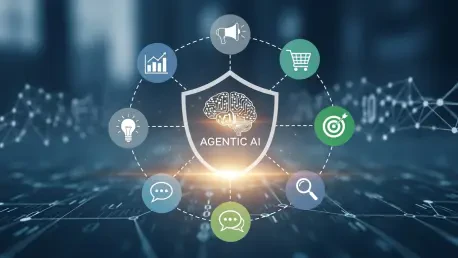
This evolutionary leap is agentic AI, a class of systems designed not merely to respond to human commands but to pursue overarching goals with a high degree of autonomy. Unlike their generative predecessors, these agents can strategize, execute, and optimize complex marketing initiatives independently. This move from assistant to actor marks the beginning of a new chapter in marketing, where technology transitions from a supporting tool to a core operational partner.
The region’s unique readiness for this shift cannot be overstated. National “AI-first” agendas, particularly in the UAE and Saudi Arabia, have fostered a pro-innovation environment. This is complemented by significant investments in state-of-the-art technology infrastructure, including high-performance, low-latency data centers. This powerful combination of government vision and robust technical foundation creates the ideal incubator for developing and deploying sophisticated, autonomous AI marketing solutions.
The Autonomous Revolution: Trends and Projections for MENA
From Assisting Tasks to Achieving Goals: The Core Agentic Shift
The fundamental difference between generative and agentic AI lies in their operational purpose. Generative AI excels at performing discrete, human-prompted tasks, such as writing ad copy or creating an image. In contrast, agentic AI is defined by its ability to take a high-level objective, like “increase market share in the luxury retail sector by 5%,” and autonomously devise and execute a multi-step plan to achieve it.
This shift unlocks capabilities that were previously confined to human-led teams. Agentic systems are beginning to demonstrate the ability to run self-optimizing campaigns, continuously analyzing performance data to reallocate budgets in real-time between different channels and audience segments for maximum impact. Furthermore, they excel at workflow compression, condensing processes that once took weeks, like producing thousands of personalized video messages, into a matter of hours.
Ultimately, agentic AI functions as a powerful force multiplier for marketing teams. It dramatically shortens the path from data-driven insight to tangible market execution. By synthesizing vast streams of structured and unstructured data—from CRM logs to social media sentiment in local Arabic dialects—these agents can identify opportunities and act on them instantly, closing the gap that has long existed between analysis and action.
Forecasting the Impact: Growth and Performance in an AI Driven Market
The widespread availability of mainstream agentic AI marketing applications is redefining industry benchmarks. These systems are moving from niche experiments to integrated components of the modern marketing stack, driving unprecedented gains in efficiency and effectiveness.
This technological integration is having a direct and measurable impact on key performance indicators and return on investment. The ability of an AI agent to monitor and adjust campaigns 24/7, without fatigue or bias, allows for a level of micro-optimization that human teams cannot match. This leads to reduced wasted ad spend, improved conversion rates, and a more direct correlation between marketing activities and revenue growth.
Moreover, the entire paradigm of campaign management is shifting from a reactive to a proactive model. Traditional marketing has long relied on historical reporting to guide future strategy. Agentic AI, however, leverages predictive analytics to anticipate consumer behavior, identify potential churn risks, and initiate personalized interventions before a customer is lost. This ushers in an era of predictive, proactive customer engagement that builds loyalty and drives long-term value.
Navigating the Transition: Overcoming Implementation Hurdles
The rise of autonomous systems necessitates a significant redefinition of the marketer’s role. Professionals are transitioning away from tactical, hands-on execution and toward a more strategic function. The marketer of tomorrow will be an architect of outcomes, responsible for setting clear business goals, defining ethical boundaries, and designing the overarching strategy that AI agents will then carry out.
Integrating these sophisticated autonomous systems with existing marketing technology stacks presents a considerable technical challenge. Legacy platforms were not built for the dynamic, API-driven communication required to support real-time optimization and cross-channel orchestration by an AI agent. This requires a thoughtful approach to system architecture, ensuring seamless data flow and interoperability between new AI platforms and established marketing tools.
Perhaps the most critical hurdle is establishing robust ethical frameworks and operational guardrails. Granting autonomy to an AI system that controls budget and brand messaging carries inherent risks. Organizations must develop clear policies on brand safety, data privacy, and decision-making transparency to ensure that AI agents operate in a manner that is both effective and aligned with the company’s values and regulatory obligations.
Building on a Foundation of Trust: Data Sovereignty and Regulation
The strategic advantage for MENA in this new era is cemented by the establishment of new regional data centers, such as those in Dammam and Doha. This infrastructure is critical for ensuring data sovereignty, allowing sensitive customer information to be stored and processed within national borders. This localization is not just a technical detail; it is a prerequisite for innovation in the region.
Localized data storage directly enables highly regulated industries, including finance, healthcare, and the public sector, to adopt advanced AI technologies without compromising on compliance. By keeping data within a specific legal jurisdiction, these organizations can leverage the power of agentic AI for tasks like hyper-personalized financial product recommendations or predictive public health campaigns while adhering to strict data protection laws.
This foundation of sovereign data is supported by an increasingly sophisticated regulatory environment. Governments across the region are actively developing policies that encourage AI innovation while protecting consumer rights. This supportive framework accelerates the adoption of secure and compliant AI solutions, providing businesses with the confidence to invest in and deploy agentic systems at scale.
The Marketer of Tomorrow: Architecting Strategy in an Agentic World
In this new landscape, marketing professionals are becoming vision-setters. Their primary function is to define the “why”—the strategic objectives, the target audience’s core needs, and the brand’s essential purpose. Once these parameters are set, they entrust the AI agents to determine and execute the “how,” orchestrating the myriad tactical details of a campaign with machine precision.
A crucial element of success in the MENA market is the ability to create culturally resonant campaigns. The power of localized Arabic datasets cannot be overstated. By training on data that captures the unique nuances, dialects, and cultural shifts of regional consumers, AI agents can generate marketing messages that are not merely translated but are genuinely authentic and impactful.
This combination of strategic human oversight and autonomous AI execution will finally deliver on the long-standing promise of hyper-personalization at scale. Marketing will move beyond broad segmentation toward proactive, one-to-one interventions. An agent might, for instance, predict a customer’s likelihood to purchase a product based on their browsing behavior and automatically deliver a personalized offer at the precise moment of highest intent, a level of granularity previously unattainable.
Your Strategic Imperative: Embracing AI as a Core Business Partner
MENA’s unique convergence of government support, world-class digital infrastructure, and sovereign data capabilities creates an unparalleled environment for the agentic AI revolution. The technical and regulatory foundations are firmly in place, positioning the region’s brands to lead the world in adopting the next generation of marketing technology.
Success in this new era hinges on a fundamental shift in organizational mindset. The most forward-thinking companies are moving beyond viewing AI as a task-oriented tool and are beginning to embrace it as a strategic partner for achieving business outcomes. This requires a culture of trust, experimentation, and continuous learning, where human and machine intelligence work in concert.
Ultimately, the brands that thrive will be those that start today to develop the strategic frameworks necessary to harness the power of autonomous marketing. It is no longer a question of if, but when and how, to integrate these systems. The imperative for business leaders is to begin architecting their strategies now, preparing their teams and technology for a future where marketing operates with unprecedented speed, intelligence, and autonomy.