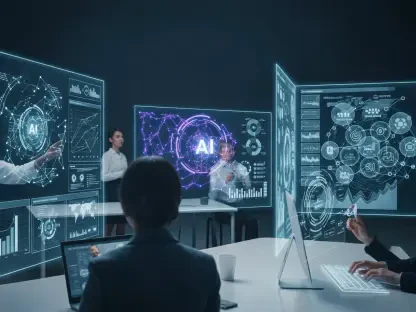

Marketing leaders currently face a paradox where the speed of consumer culture consistently outpaces the capacity of human operations, leaving a gap that traditional management cannot fill. While executive boards demand rapid integration of generative technologies, many departments remain stuck in a cycle of manual prompting and disjointed tool usage. This review evaluates the current state of AI marketing orchestration, a framework designed to bridge the executive “AI gap” by shifting from isolated task automation to a holistic ecosystem of intelligent workflows. By examining the technical underpinnings and strategic deployment of these systems, it becomes clear that the value lies not in the individual tools but in the seamless coordination of cognitive offloading.
The emergence of this orchestration layer marks a transition from the experimental phase of AI to a structured operational standard. In the broader technological landscape, this shift is critical because it addresses the “last mile” problem of digital transformation: the distance between having access to powerful models and actually generating measurable business value. This evolution has moved beyond simple chatbots toward integrated agents that understand the specific context of a brand’s profit and loss data, market positioning, and historical performance, effectively turning AI into a strategic partner rather than just a sophisticated typewriter.
The Genesis of AI-Driven Marketing Orchestration
The transition toward AI-driven orchestration began when organizations realized that individual productivity gains were being swallowed by the friction of managing too many disparate platforms. The core principles of this technology involve the centralization of data processing and the standardization of output across multiple creative and analytical channels. This context is vital because it explains why CMOs are moving away from being “users” of software to becoming “architects” of systems. The technology under review functions as a connective tissue, allowing different specialized models to communicate and execute complex, multi-step projects without constant human intervention.
Relevance in the modern sector is defined by how effectively a brand can close the gap between an executive’s vision and the department’s execution. Most failures in AI adoption stem from a lack of strategic alignment, where teams use AI for trivial tasks while the big-picture strategy remains stagnant. Orchestration solves this by embedding AI into the very fabric of the marketing funnel, from the first spark of market research to the final click on a personalized ad. This systematic approach ensures that the technology serves the business goals rather than just acting as a flashy distraction for the creative team.
Core Technical Components and Strategic Workflows
Predictive Market Intelligence and Deep Research
The shift from historical reporting to predictive intelligence is powered by tools like Gemini Deep Research and NotebookLM, which fundamentally change how data is synthesized. Unlike traditional search engines that return a list of links, these systems process search intent and internal financial data to identify “Market Alpha”—those rare, profitable opportunities that haven’t been saturated by competitors. By analyzing rising search trends alongside a company’s internal P&L, these tools allow a strategy team to stress-test budgets against hypothetical market shifts, such as a sudden spike in cost-per-click rates or a dip in consumer sentiment.
This technical capability moves the marketing department away from being reactive. Instead of waiting for a quarterly report to show that a campaign failed, teams use AI to simulate market volatility and adjust their approach in real-time. The unique advantage here is the ability to ingest massive amounts of unstructured data and output a grounded, data-backed contingency plan. This allows a CMO to enter a boardroom with the confidence that their strategy has been mathematically vetted against various economic scenarios, a feat that would previously have required weeks of manual labor from an entire analytics department.
Scalable Creative Production and Governance
High-fidelity video generation and automated brand governance have addressed the chronic problem of “bland” automated content. Using specialized AI agents like Veo, social media teams can now produce cinematic-quality assets for platforms like YouTube Shorts at a fraction of the traditional cost. However, the technical achievement isn’t just the video quality; it is the implementation of “custom Gems” or specialized agents that act as automated brand police. These agents are programmed with a brand’s specific visual and tonal guidelines, ensuring that every piece of content—no matter how fast it is produced—remains consistent with the core identity.
This level of governance is crucial for maintaining brand integrity at the breakneck speed of modern social media. When an agency submits creative work, it is first run through a rigorous AI diagnostic that checks for alignment with brand colors, voice, and strategic objectives. This allows senior leaders to focus their creative capital only on the work that has already passed a technical consistency check. This workflow transforms the creative process from a bottleneck into a high-speed pipeline, where human designers focus on high-concept storytelling while the AI handles the mechanical production of thousands of asset variations.
Administrative Automation and Cognitive Offloading
The integration of AI within productivity suites has targeted the “meeting-rich, insight-poor” reality of executive life. By utilizing decision-log extraction and automated slide generation, marketing leaders can offload the mechanical labor of summarizing brainstorms or formatting presentations. The performance of these systems is measured in the reclamation of deep work time; instead of spending hours moving text between documents, a leader can direct an AI to transform a raw strategy memo into a visually compelling deck. This shift allows the CMO to focus on the “so what” of the data rather than the pixel-perfect alignment of a chart.
Cognitive offloading extends to the management of executive energy and focus. Advanced workflows now include auditing calendars to suggest “focus blocks” during peak cognitive periods while pushing administrative tasks to times of lower mental energy. This level of personal optimization ensures that the leader is sharpest when making the most critical decisions. By automating the friction of daily operations, the technology provides a mental buffer that is essential for visionary leadership, effectively turning the AI into a highly sophisticated chief of staff that manages the logistics of the executive’s professional life.
Emerging Trends in Marketing AI Integration
A significant trend currently reshaping the industry is the move away from manual prompting toward true “orchestration.” In this new paradigm, leaders no longer spend their time engineering perfect sentences for a chat box; instead, they guide ecosystems of agents that perform tasks autonomously. This shift is accompanied by the rise of “cultural arbitrage,” where AI systems monitor search behavior in real-time to capitalize on fleeting trends before they hit the mainstream. This allows brands to pivot their messaging in hours rather than weeks, securing a first-mover advantage that was previously impossible for large organizations.
Moreover, we are seeing the emergence of “conversational creative direction,” where performance marketing teams use AI to iterate on hundreds of hyper-personalized ad variations simultaneously. This isn’t just about volume; it’s about relevance. These systems analyze high-lifetime-value segments and automatically tune headlines and copy to resonate with specific audience psychological profiles. As search behavior continues to evolve, these integrated systems are becoming more adept at predicting what a consumer will want next, rather than just reacting to what they wanted yesterday.
Real-World Applications Across Marketing Functions
In the retail and fashion sectors, AI integration has moved beyond basic recommendation engines to sophisticated “stress-testing” of seasonal lines. Brands are using conversational AI to analyze live search trends and internal sales data to identify micro-trends in sustainable fashion or niche aesthetic shifts. This allows for a more agile supply chain and marketing strategy that aligns perfectly with shifting consumer intent. In these applications, the AI acts as a radar, spotting opportunities in the noise of global data and allowing the brand to capture “Market Alpha” with surgical precision.
Creative departments are also seeing a fundamental shift in how they interact with agency partners. By using AI to generate rapid-response creative for short-form video, brands can maintain a constant presence on social platforms without exhausting their human talent. Notable implementations include using AI to draft hyper-personalized ad copy for various customer segments, which is then refined by human copywriters for nuance and emotional impact. This hybrid approach ensures that the output is both high-volume and high-quality, avoiding the common pitfall of “automated blandness” that plagues less sophisticated systems.
Technical Obstacles and Implementation Challenges
Despite the advancements, several obstacles hinder the full realization of AI-driven marketing. A primary challenge is the “AI-savvy” skills gap among leadership; knowing that a tool exists is not the same as knowing how to orchestrate it effectively within a team. Furthermore, data privacy remains a significant concern, particularly when uploading sensitive internal financial forecasts or P&L data into cloud-based models. Organizations must navigate the fine line between leveraging powerful third-party AI ecosystems and protecting the proprietary data that gives them a competitive edge.
There is also the risk of creative nuance being lost in the pursuit of efficiency. High-volume automated cycles can occasionally produce content that feels “uncanny” or lacks the genuine human spark necessary for deep brand loyalty. Ongoing development efforts are focused on mitigating these limitations by creating more sophisticated feedback loops between human directors and AI agents. The challenge for the modern CMO is to ensure that while the “mechanical” labor is offloaded, the “visionary” essence of the brand is not diluted by the very technology meant to amplify it.
The Future of AI-Empowered Leadership
Looking toward the horizon, the role of the CMO is evolving from a manager of tasks to an orchestrator of intelligent systems. Future breakthroughs are expected in the realm of autonomous agency oversight, where AI systems will not only grade work based on guidelines but also predict the long-term performance of creative assets across different cultural contexts. This will lead to a more “performance-optimized” leadership style, where the executive’s primary role is to set the high-level intent and ethical boundaries for a self-correcting marketing engine that operates around the clock.
The long-term impact of this technology will be the total reclamation of mental bandwidth for human-centric visionary leadership. As AI takes over the logistics of data analysis, creative production, and administrative scheduling, the human leader is freed to focus on the elements of marketing that machines cannot replicate: empathy, cultural intuition, and the ability to inspire a workforce. This transformation will eventually redefine what it means to be a “successful” marketing executive, shifting the metric from how much one can produce to how effectively one can guide an intelligent ecosystem.
Conclusion: Assessing the Impact of AI Workflows
The implementation of AI marketing workflow automation has fundamentally restructured the relationship between strategic vision and operational reality. By analyzing the cumulative effect of these micro-efficiencies, it was observed that organizations achieved a level of agility that was previously unattainable. The technology successfully addressed the critical “AI gap” by providing CMOs with the tools to move from reactive management to proactive orchestration. The integration of predictive intelligence and automated governance proved to be the most significant development, as it allowed brands to scale their output without compromising the integrity of their identity or the accuracy of their financial forecasts.
The transition toward cognitive offloading effectively redirected executive focus from mundane logistics to high-stakes storytelling. While technical obstacles regarding data privacy and creative nuance remained, the systems provided a robust framework for future advancements in autonomous oversight. Ultimately, the shift from manual labor to intelligent systems transformed the role of the marketing leader into an architect of efficiency. This evolution ensured that the organization remained competitive in an increasingly rapid digital landscape, proving that the true value of AI lies in its ability to empower human vision through the systematic removal of operational friction.