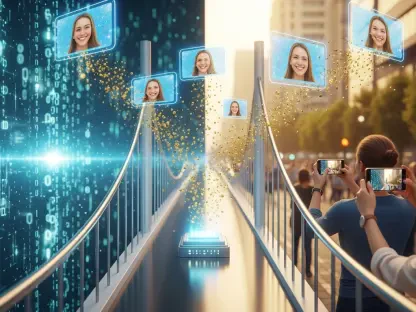

Digital identity has moved from a fixed asset to a fluid medium where anyone with a basic smartphone can inhabit the persona of a celebrity or a fictional character within seconds. This shift marks the culmination of a decade-long transition from the eerie, stuttering frames of early deepfakes to the seamless, high-definition reality of modern AI video face swapping. What was once the exclusive domain of high-budget Hollywood VFX houses or researchers with massive GPU clusters is now a democratized commodity available to the average social media creator. As we navigate this landscape, the technology continues to challenge our perceptions of authenticity while providing unprecedented creative freedom.
Introduction to Face Swap Technology
The evolution of facial re-enactment represents one of the most transformative forces in modern media, turning the concept of video editing into an automated generative process. Originally, tools like DeepFaceLab required users to possess significant technical knowledge and hardware capable of running intense training cycles for days. However, the industry has witnessed a dramatic pivot toward cloud-based, accessible interfaces that abstract away the complexity. This transition has allowed the technology to permeate every corner of digital life, from professional marketing agencies to casual users looking to create the next viral meme.
At the core of this revolution are Generative Adversarial Networks (GANs) and sophisticated neural networks that have replaced manual frame-by-frame masking. These systems essentially “learn” the architecture of a human face, allowing them to map a source image onto a target video with staggering accuracy. This automation is not just a technical milestone; it is a cultural one, as it aligns perfectly with the current demands of the creator economy, where speed and engagement are the primary currencies of success.
Core Features and Technical Components
Automated Facial Landmark Tracking and Detection
The effectiveness of a face swap depends entirely on how well the AI can understand the geometry of the human head in motion. Modern algorithms utilize automated landmark tracking to identify dozens of specific points on a face, such as the corners of the eyes, the ridge of the nose, and the contours of the jawline. This mapping must remain stable even when the subject is moving rapidly or turning their head away from the camera. In high-motion environments, the software must predict facial positioning to prevent “jitter,” a phenomenon where the digital mask appears to detach from the underlying head shape.
Handling occlusions—situations where an object like a hand or a piece of hair passes in front of the face—remains a critical benchmark for high-end tools. Superior tracking systems can maintain the illusion by understanding layers, ensuring that the swapped face stays “behind” the obstructing object rather than appearing to float on top of it. This level of precision is what separates professional-grade rendering from the amateur efforts that frequently break during dynamic action sequences.
Seamless Blending and Lighting Integration
Realistic face swapping is as much about light as it is about geometry. Sophisticated blending algorithms analyze the ambient lighting of the original scene and adjust the skin tone, shadows, and highlights of the swapped face to match. If a user swaps a face onto a video filmed in a neon-lit club, the AI must intelligently apply those same color casts to the new facial features. Without this integration, the result suffers from a “pasted-on” look that immediately signals a lack of authenticity.
Furthermore, the transition between the edges of the swapped face and the original forehead or ears requires soft, feathered blending to hide the digital seams. Modern tools achieve this by using neural networks to generate “synthetic skin” that bridges the gap between the two distinct sources. This creates a natural-looking transition that accounts for texture variations and even fine details like pores or stubble, significantly reducing the visual friction that used to define synthetic media.
Processing Speed and Accessibility
One of the most significant shifts in the technology is the move toward browser-based rendering. Previously, local rendering required the user to have a dedicated graphics card with several gigabytes of VRAM. Now, server-side processing allows users to upload a file and receive a rendered video in less time than it takes to brew a cup of coffee. This accessibility eliminates the need for coding or advanced editing skills, effectively opening the floodgates for mass content production.
Current Trends and Innovations in AI Video
The current landscape is being disrupted by the rise of “free unlimited” models that challenge the traditional pay-per-credit structure. Many platforms are now offering no-login tools to reduce user friction, recognizing that privacy-conscious creators are more likely to engage with software that does not require extensive data collection. This shift toward a frictionless experience is driving a new wave of multi-face swapping, where the AI can simultaneously process and replace multiple people in a single frame, a feat that was technically prohibitive just a few years ago.
Innovation is also trending toward the integration of these tools into automated content pipelines. Instead of creating one video at a time, users are now deploying AI to generate hundreds of variations for A/B testing in digital advertising or viral media. This “bulk production” capability is fundamentally changing how brands approach video marketing, moving away from high-cost single productions toward a more agile, data-driven strategy.
Real-World Applications and Use Cases
Social media growth has become the primary driver for face swap adoption, particularly on platforms like TikTok and Instagram Reels. Creators utilize trending templates to insert themselves into iconic movie scenes or music videos, leveraging the “relatability” factor to drive engagement. This democratization of meme creation has allowed even solo creators to produce high-quality parody videos that formerly required a full production team to execute.
In the corporate world, the technology is used for localization and personalized digital marketing. A brand can film a single advertisement with a global ambassador and then use face swapping to adapt the video for different regional demographics, ensuring the content feels local and relevant to diverse audiences. Similarly, educational institutions are exploring the use of synthetic presenters to create localized instructional segments in multiple languages using a single base video, significantly lowering the cost of global training programs.
Challenges, Limitations, and Ethical Considerations
Despite these advancements, the “Uncanny Valley” effect remains a persistent challenge, particularly in amateur-level tools. When the AI fails to perfectly replicate micro-expressions or eye movements, the result can feel unsettling to viewers. Technical hurdles such as maintaining consistency in low-resolution source videos or extreme lighting conditions still lead to artifacts that break the illusion of reality. These limitations remind us that while the technology is powerful, it is not yet infallible.
Ethical considerations are perhaps the most pressing issue facing the industry. The potential for misinformation and the unauthorized use of someone’s likeness necessitates a responsible approach to development. To combat misuse, many developers are now integrating digital watermarking and content authentication protocols. These measures are designed to ensure that synthetic media can be identified as such, protecting the integrity of digital identities and providing a layer of transparency in an increasingly blurred reality.
Future Outlook and Technological Trajectory
Looking ahead, we can expect breakthroughs in real-time, live-streamed face swapping. This will likely revolutionize the virtual influencer industry, allowing human performers to inhabit digital avatars with zero latency during live broadcasts. Such a shift will further blur the lines between reality and digital persona, making synthetic identity a standard component of online interaction. In the metaverse, this technology will enable users to maintain a consistent, hyper-realistic appearance across different virtual environments.
The long-term role of face swapping will likely extend into personalized cinematic experiences. Imagine a future where viewers can choose to swap their own likeness or those of their friends into the lead roles of a movie, creating a truly immersive and unique viewing experience. As automation continues to advance, the “content bottleneck” that has historically limited the output of solo creators will vanish, leading to an explosion of hyper-personalized media that was previously unimaginable.
Final Assessment and Summary
The shift from high-barrier, professional video editing to instant, AI-driven solutions has fundamentally altered the economics of digital production. Tools like Deepfake Maker have demonstrated that accessibility and speed are no longer mutually exclusive with high-quality output. While the technology has moved beyond the experimental phase, its maturity has brought about a new set of responsibilities regarding ethics and digital rights management. The transition from a novelty to a standard creative tool is now complete, leaving the industry to focus on refinement and protection.
Looking forward, the industry took significant steps toward establishing standardized content verification to ensure that the democratization of creativity does not come at the cost of public trust. Future developments will likely emphasize localized, edge-based processing to enhance user privacy while maintaining the high fidelity users have come to expect. As these tools become even more intuitive, the focus will shift from the mechanics of the swap to the quality of the storytelling, allowing human creativity to remain the primary driver of digital innovation.