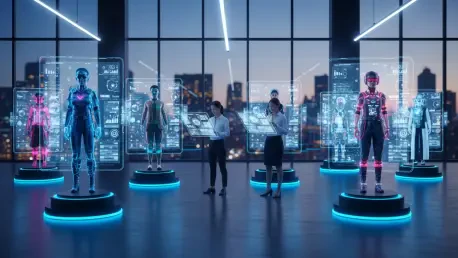

The digital landscape underwent a seismic shift as marketing budgets migrated from high-priced Hollywood endorsements toward synthetic entities capable of maintaining perfect brand alignment around the clock. Unlike traditional stars who demand millions for a single campaign and carry the constant risk of public relations disasters, AI-powered micro-influencers offer a level of control and scalability that was previously unimaginable in the advertising industry. These digital personalities are meticulously crafted using advanced generative adversarial networks to resonate with specific demographics, ensuring that every interaction is data-optimized for conversion. This transition represents more than just a technological curiosity; it is a fundamental restructuring of the attention economy where predictability and niche engagement are becoming more valuable than broad celebrity appeal. As these virtual figures gain millions of followers, the line between reality and simulation continues to blur significantly in the eyes of consumers.
Economic Efficiency and the Creative Evolution of Digital Talent
The financial landscape of influencer marketing changed drastically when brands realized that maintaining a fleet of digital avatars costs a fraction of the fees required by top-tier human talent. A traditional celebrity endorsement involves complex contract negotiations, travel expenses, and the inherent volatility of human schedules. In contrast, AI entities managed by specialized digital agencies can be deployed across multiple platforms simultaneously without physical limitations or fatigue. This 24/7 availability allows for real-time responses to global trends, ensuring that a brand remains relevant regardless of time zones or biological constraints. Furthermore, the risk of “cancel culture” is effectively neutralized because a digital persona’s history is entirely authored by a controlled editorial team rather than being subject to the unpredictable actions of a human actor. By eliminating these variables, corporations have found a more stable return on investment when targeting younger consumers.
Transitioning to a synthetic-first strategy also allows for an unprecedented level of creative flexibility that would be physically impossible for a human influencer to achieve. An AI avatar can be depicted in surreal environments, wearing digital-only fashion that ignores the laws of physics, or instantly aging to suit a specific product launch. This capability has led to the rise of specialized micro-influencers who dominate niche markets like sustainable tech or hyper-localized fashion with surgical precision. These digital figures do not just post content; they participate in the metaverse and decentralized platforms where human presence is often limited by hardware constraints. The integration of real-time rendering engines like Unreal Engine 5 ensures that these characters possess a lifelike quality that fosters genuine emotional connections with their audience. As technology matured, the cost of generating high-fidelity video dropped, making it feasible for small businesses to lease these personas.
The integration of AI micro-influencers into the broader marketing ecosystem proved that the future of brand engagement relied on hyper-personalization rather than mass-market appeal. Forward-thinking companies abandoned the pursuit of universal celebrity faces in favor of diverse portfolios of synthetic characters tailored to specific cultural subsets. This shift necessitated a new set of ethical standards where transparency regarding the non-human nature of the influencer became a baseline requirement for consumer trust. Brands that succeeded in this transition invested heavily in narrative development, ensuring their digital assets possessed distinct voices that felt authentic to their respective communities. The industry moved toward a hybrid model where AI handled high-volume engagement while humans were reserved for high-stakes creative direction. By prioritizing these owned assets, organizations secured a permanent presence in the digital consciousness, allowing for more cohesive storytelling across several marketing cycles.