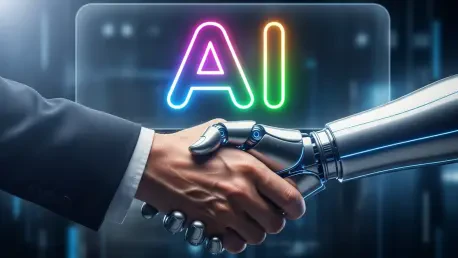

In a landmark move poised to reshape the landscape of entertainment and artificial intelligence, The Walt Disney Company has forged a strategic, multi-faceted partnership with OpenAI, centered on a substantial financial investment and the integration of Disney’s iconic intellectual property into the generative video tool, Sora. This groundbreaking alliance, announced on December 11, 2025, represents a pivotal moment for Hollywood as it navigates the disruptive potential of AI. The agreement solidifies Disney’s position as a technological innovator and marks the first instance of a major studio deeply embedding generative AI into its creative and consumer-facing ecosystems. The core of the three-year deal involves a $1 billion equity investment from Disney into OpenAI, signaling profound confidence in the AI startup’s trajectory and technology.
A New Hollywood Epoch The Convergence of Storytelling and Generative AI
Hollywood’s relationship with artificial intelligence has long been a delicate dance of cautious curiosity and outright apprehension. Following the contentious labor strikes of 2023, where AI’s role in the creative process was a central point of negotiation, studios have been tentatively exploring its applications. This partnership, however, signals a definitive shift from cautious exploration to wholehearted integration. It represents a calculated gamble that the benefits of embracing generative AI—from production efficiencies to novel forms of fan engagement—outweigh the inherent risks to traditional creative roles and established workflows.
This alliance redefines the power dynamics of the entertainment world, creating a formidable new axis between legacy media and cutting-edge technology. For decades, studios like Disney have been the undisputed gatekeepers of high-value intellectual property. By joining forces with OpenAI, a leader in the generative AI space, Disney is not merely licensing its content but actively co-shaping the tools that will define the next generation of media creation. This convergence creates a symbiotic relationship where Disney provides the narrative soul and OpenAI provides the technological muscle, potentially marginalizing competitors who are slower to adapt to this new paradigm.
At the heart of this disruption is the rapidly advancing capability of generative video tools like Sora. The technology, which can produce high-definition video clips from simple text prompts, fundamentally challenges the linear and labor-intensive production pipelines that have dominated filmmaking for a century. Processes like storyboarding, pre-visualization, and even elements of final animation, which once required teams of artists and weeks of work, can now be conceptualized and rendered in minutes. The industry is already feeling the tremors of this change, exemplified by director Tyler Perry’s decision to halt an $800 million studio expansion, citing the astonishing progress of Sora as a sign that the physical infrastructure of filmmaking is about to be upended.
Deciphering the Deal Market Dynamics and Future Projections
The AI Gold Rush Why Legacy Media is Betting Big on Generative Tech
The modern media landscape is characterized by a fundamental shift in how audiences interact with content. The era of passive consumption is giving way to a demand for interactive and participatory experiences. Disney’s integration of its characters into Sora directly addresses this evolution by transforming viewers into creators. By allowing fans to generate their own short stories featuring beloved characters like Buzz Lightyear or Darth Vader, Disney is fostering a deeper, more personal connection to its intellectual property, turning its audience into an active community of storytellers.
For a legacy company like Disney, the need to innovate is not just a strategic advantage but a matter of survival in the fiercely competitive streaming market. With rivals constantly vying for subscribers, integrating generative AI is a bold move to differentiate its offerings and reinforce its brand as a forward-thinking leader. This partnership is a proactive measure designed to harness a disruptive technology before it can be wielded against them, ensuring Disney remains at the forefront of both storytelling and technology for years to come.
Moreover, this collaboration represents a significant step toward the democratization of creativity. For the first time, high-quality animation and visual storytelling tools, populated with some of the world’s most recognizable characters, will be accessible to the general public. This opens up unprecedented opportunities for fan-fiction communities, aspiring animators, and independent creators to experiment and share their visions. A curated selection of these user-generated videos is slated to stream on Disney+ starting in 2026, creating a novel content pipeline fueled directly by the imagination of its most dedicated fans.
The Billion Dollar Bet Unpacking the Financial and Strategic Implications
Disney’s $1 billion equity stake in OpenAI is more than a simple licensing fee; it is a profound strategic investment that anchors its future to the continued growth of artificial intelligence. This move diversifies Disney’s portfolio while giving it a significant voice in the development of a technology poised to redefine its core business. For OpenAI, the investment provides a massive influx of capital to fund its intensive research and development, solidifying its market position against tech behemoths like Google and Meta. The association with a globally respected brand like Disney also lends OpenAI unparalleled cultural legitimacy.
The economic synergies of this partnership are projected to be substantial. Internally, Disney anticipates significant cost and time savings by integrating Sora and other AI tools into its animation and visual effects pipelines, boosting operational efficiency. Externally, the venture opens up new revenue streams, most notably through the unique user-generated content channel on Disney+. This model creates a self-sustaining ecosystem where fan engagement directly translates into valuable, low-cost content for its streaming platform.
Perhaps most importantly, this deal could establish a new industry standard for how intellectual property is managed in the age of generative AI. By creating a proactive licensing framework, Disney is proposing a collaborative alternative to the reactive and often contentious copyright litigation that has plagued other tech firms. This model allows IP holders to maintain a degree of control and participate in the economic upside of AI, setting a precedent that could guide future partnerships between content owners and AI developers and offering a stark contrast to Disney’s concurrent legal battles with other tech companies over alleged copyright infringement.
Navigating Uncharted Territory Creative Anxieties and Brand Risks
Despite the technological excitement, the partnership has reignited deep-seated anxieties within Hollywood’s creative workforce. The 2023 writers’ and actors’ strikes brought the threat of AI-driven job displacement to the forefront, and this deal is seen by many as a tangible manifestation of those fears. Unions representing writers, animators, and other craftspeople are closely scrutinizing the agreement’s potential to automate roles traditionally performed by human artists, from character design and storyboarding to editing and visual effects. The concern is that AI will be used not as a tool to augment human creativity but as a means to reduce labor costs, devaluing the skills of seasoned professionals.
Furthermore, entrusting some of the world’s most valuable intellectual property to a publicly accessible AI tool presents a formidable brand risk. While Disney and OpenAI have emphasized the implementation of robust safeguards, the challenge of moderating user-generated content at scale is immense. Maintaining creative control and the company’s meticulously crafted family-friendly image becomes exponentially more difficult when millions of users can place iconic characters in a near-infinite number of scenarios. The potential for misuse, even if unintentional, could lead to content that dilutes or damages the integrity of brands built over generations.
There is also a philosophical debate about the long-term impact of AI on storytelling itself. Critics worry that an over-reliance on generative algorithms could lead to a homogenization of creative output. If the AI is trained on existing data, it may favor familiar tropes and predictable narrative structures over genuine innovation and originality. The risk is that instead of fostering a new wave of boundless creativity, AI could inadvertently create an echo chamber, producing content that is technically proficient but emotionally and artistically sterile, prioritizing algorithmic appeal over the messy, unpredictable, and often brilliant spark of human invention.
Crafting the Digital Guardrails The Battle for IP and Ethical AI
A cornerstone of the Disney-OpenAI agreement is the establishment of stringent digital guardrails designed to protect Disney’s iconic characters from misuse. The partnership mandates the implementation of rigorous content moderation systems within Sora, which will actively block the generation of violent, explicit, or otherwise brand-inappropriate material. These technical safeguards are a critical component for Disney, ensuring that its intellectual property remains within the bounds of its long-standing family-friendly values, even as creative control is partially ceded to the public. For OpenAI, this collaboration serves as a high-profile test case for developing and deploying ethical AI on a massive scale.
In an effort to promote transparency and combat the potential for misinformation, both companies have committed to clearly labeling all video content produced by Sora. This digital watermarking or metadata tagging will ensure that audiences can easily distinguish between AI-generated media and human-created works. This policy addresses a growing societal concern about the difficulty of discerning authentic content from synthetic media, establishing a standard of practice that could become essential as generative tools become more sophisticated and ubiquitous.
The partnership also highlights a critical strategic divergence in how corporations are approaching intellectual property in the AI era. While Disney is pursuing this collaborative licensing model with OpenAI, it is simultaneously engaged in copyright litigation against other technology firms for the unauthorized use of its content in training AI models. This dual strategy underscores a complex new reality: legacy media companies are positioning themselves to both partner with and police the AI industry, seeking to monetize their IP through controlled agreements while aggressively defending it from unlicensed use. This approach signals a future where collaboration and conflict will likely coexist in the evolving relationship between content creators and AI developers.
Beyond the Silver Screen The Long Term Vision for AI Powered Entertainment
This partnership is expected to serve as a powerful catalyst for the evolution of Sora and generative video technology as a whole. Disney’s extensive library of characters, with their distinct personalities, movements, and emotional ranges, provides an unparalleled dataset for training and refining OpenAI’s models. This unique access will likely enable Sora to achieve new levels of nuance, narrative coherence, and character consistency, moving beyond impressive but often disjointed clips toward more sophisticated and believable animated sequences. The synergy between Disney’s storytelling DNA and OpenAI’s algorithmic power could accelerate breakthroughs in capturing the subtleties of performance and emotion in AI-generated content.
The long-term vision for this technology extends far beyond the creation of short video clips for social media or streaming platforms. Disney is exploring a future where AI-powered experiences are woven into the fabric of its entire business. This could manifest as personalized attractions in its theme parks, where guests interact with AI-driven characters in unique, unscripted adventures. It could also power platforms for creating custom merchandise on demand or fuel the development of interactive educational content where classic characters like Goofy or Moana teach complex subjects in an engaging and personalized manner.
Ultimately, the roadmap for this technology points toward the creation of entirely new narrative forms. The initial 20-second user-generated clips are a starting point, a proof of concept for a much grander ambition. The eventual goal is to leverage AI to generate longer-form content and potentially even dynamic, branching stories that adapt in real time to viewer choices. This could lead to a new era of interactive entertainment where the line between storyteller and audience blurs completely, allowing for a level of personalized narrative experience that was previously the exclusive domain of video games.
A Defining Moment The Final Verdict on a Landmark Alliance
The announcement of the Disney-OpenAI partnership represented a watershed moment, encapsulating both the profound opportunities and the inherent perils of integrating generative artificial intelligence into the creative industries. The deal crystalized the central tension of this technological revolution: the promise of unprecedented creative empowerment set against the legitimate fears of job displacement, brand dilution, and the potential erosion of human-led originality. It presented the industry with a tangible vision of a future where legacy content and next-generation technology converge.
At its core, the alliance was framed as a blueprint for a collaborative future, one where AI serves as a powerful tool that augments, rather than replaces, human creativity. Disney and OpenAI positioned the partnership as a carefully constructed experiment designed to prove that technology could democratize storytelling and deepen fan engagement without sacrificing artistic integrity or devaluing professional creators. The success of its built-in safeguards, ethical guidelines, and collaborative workflows was seen as critical to establishing a positive precedent for the rest of the industry.
As the integration plans moved forward through 2026, the global entertainment community watched with a mixture of anticipation and apprehension. The venture was understood to be more than just a business deal; it was a defining test case for the future of art and technology. Whether it would ultimately unlock a new golden age of boundless imagination or validate the deepest anxieties about the role of humanity in a world increasingly shaped by intelligent machines was a question whose answer would profoundly shape the course of media and culture for decades to come.