
The winding, nonsensical streets of downtown Boston serve as a lasting architectural reminder that paving over a haphazard trail does not create an efficient highway. A compelling urban planning legend suggests these roads follow the meandering paths carved by colonial-era cattle, a shortcut in city design that created a legacy of confusion. Today, a similar phenomenon is unfolding within the corporate world, where organizations, in their frantic race to innovate, are laying a digital veneer of artificial intelligence over deeply flawed and archaic internal processes.
This rush to implement AI is not just about adopting new technology; it is a critical juncture that will separate hyperadaptive organizations from those that merely accelerate their own inefficiencies. The core issue is that applying powerful automation to a broken system does not fix the system—it simply creates faster, more expensive chaos. For businesses aiming for true transformation, the pivotal question is not which AI tool to buy, but whether the foundational workflows upon which they are built are structured for success or are simply digital versions of centuries-old cow paths.
The Boston Legend and Modern Corporate Trails
The story of Boston’s streets offers a powerful metaphor for contemporary business strategy. By choosing the path of least resistance—paving over existing cattle trails—the city’s founders traded long-term efficiency for short-term convenience. The result was a tangled road network that defies logic, a permanent solution built on a temporary and arbitrary foundation. This historical lesson has found a new, urgent relevance in the age of artificial intelligence.
In the corporate rush to integrate AI, many organizations are inadvertently making the same fundamental error. They are identifying existing, often convoluted workflows and applying AI tools to automate specific steps without questioning the validity of the workflow itself. This approach overlooks the possibility that the entire process—the corporate “cow path”—is inherently inefficient. The critical question businesses must ask is whether their modern digital strategies are truly innovative or just high-tech replications of outdated operational habits.
The AI Rush and the Acceleration of Inefficiency
An immense pressure exists for organizations to integrate AI tools, copilots, and advanced skills into their daily operations, driven by a fear of being left behind. This urgency, however, often leads to a critical misstep: applying AI to processes that are already convoluted, siloed, and burdened by excessive approvals. The dangerous outcome is not streamlined efficiency but rather an acceleration of existing dysfunction. A poorly designed, multi-step approval process does not become effective when an AI drafts the email; it just moves a flawed request through a broken system at a slightly faster pace.
This trend has given rise to what can be described as “random acts of AI,” where individual task optimization fails to produce any meaningful improvement to the overall system. When disconnected teams adopt AI tools in isolation, the result is a patchwork of minor efficiencies that are nullified by the friction between them. True progress is not achieved by helping one employee complete a bad task more quickly; it is realized when the entire value stream is re-engineered for a world where intelligent automation is the norm.
From Isolated Tasks to Systemic Redesign
A common scenario within many organizations creates a persistent illusion of progress. A copywriter uses a generative AI to draft marketing emails in minutes, and a designer leverages an AI image generator for mockups. Each individual feels more productive, yet the system of handoffs, reviews, and approvals remains fundamentally unchanged. The time saved in content creation is often lost as the asset sits dormant in a manager’s inbox or gets trapped in a prolonged compliance review cycle. This is the classic sign of a paved cow path: optimizing individual steps within a dysfunctional process.
This highlights a fundamental misunderstanding of AI’s strategic value. Its greatest potential is unlocked not when it is treated as a personal productivity tool for individuals, but when it serves as a powerful catalyst for a complete systemic overhaul. The goal shifts from making a single employee more efficient to redesigning the entire flow of work. This requires moving beyond task-level thinking and adopting a holistic view of how value is created and delivered from conception to completion.
A Dual Engine Philosophy for the Hyperadaptive Organization
A more strategic approach necessitates running two simultaneous and interconnected workstreams: Process Optimization and AI Integration. This “dual engine” philosophy recognizes that these two efforts are codependent and must be pursued in parallel for true transformation to occur. Attempting to optimize a workflow without considering the capabilities of modern AI is to settle for incremental gains when exponential improvements are possible.
Conversely, integrating AI without first optimizing the underlying process leads to the automation of waste and friction. This framework is anchored by the “AI Automation Inversion” principle, which reframes the central question leaders should be asking. Instead of focusing on “Which tasks can AI automate?” the more strategic inquiry becomes, “If machines could handle all routine and repetitive work, what uniquely human capabilities should the organization be designed to amplify?” This shift in perspective moves the focus from simple task replacement to a fundamental redesign of work itself.
A Blueprint for Building the AI Highway
The first step toward building a truly efficient, AI-powered workflow is to meticulously map the friction points. This involves gathering the relevant team to document a specific process, such as a campaign launch, exactly as it happens in reality, not as it is described in an outdated manual. The primary objective is to identify two critical issues: organizational friction, which marks where work comes to a halt, and fidelity loss, which occurs when crucial information is distorted through excessive handoffs. AI operates best on clean data and clear signals; it will inevitably fail if a process relies on ambiguous verbal approvals or fragmented communication.
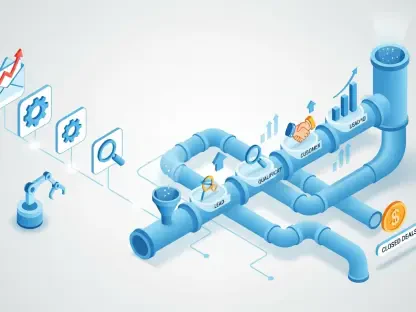
With a clear map of existing inefficiencies, the focus can shift to redesigning the workflow, not just empowering the individual contributors within it. Consider a common marketing newsletter process that involves five handoffs across four team members, taking several days to complete due to idle wait states. The solution is not a faster writer, but a fully automated workflow. By redesigning the process, an AI agent can be tasked to detect a new piece of content, draft the associated newsletter copy, generate a relevant graphic, and stage the entire package for a single human review. This transforms the human role from tactical execution to strategic oversight and reduces the cycle time from days to a single hour.
This evolution requires a strategic decision to move from AI augmentation to agentic AI. Augmentation involves using AI as a helpful tool for discrete tasks, such as generating a headline. The most significant productivity gains, however, will come from deploying AI agents that can execute an entire predefined workflow. Agents require structure, clear rules, and a well-defined process—a paved highway, not a winding dirt path. To escape the “AI time paradox,” where teams are too consumed by manual work to fix the processes that create it, leaders must intentionally pause. It is essential to carve out dedicated time to map the value stream and possess the courage to declare that old, inefficient processes no longer serve the organization’s future.
Ultimately, the journey toward becoming an AI-native enterprise had demanded a willingness to dismantle and rebuild foundational workflows. When organizations took the time to fix the flow of work first, AI ceased to be just another tool to manage. It became the very engine driving a new, more intelligent, and hyperadaptive way of working, leaving the old cow paths to history.