
The relationship between professional sports leagues and their audiences has moved far beyond the simple consumption of a broadcast, evolving into a complex, multi-layered digital dialogue that demands constant novelty. Modern fan engagement is no longer defined by the occasional ticket purchase but by a continuous stream of interactions across social platforms, mobile apps, and augmented reality interfaces. As the volume of data grows, the industry has reached a critical juncture where manual content creation can no longer keep pace with the hyper-segmented needs of a global fan base. Generative AI has emerged not merely as a tool for efficiency, but as the foundational architecture for this new era of personalized entertainment.
The Evolution of AI-Driven Engagement
The transition from static marketing to dynamic, AI-driven engagement represents the most significant shift in sports media since the advent of live streaming. Initially, digital efforts focused on simple data collection, where leagues gathered basic demographics to send mass emails. However, the current landscape has evolved into a sophisticated ecosystem where Large Language Models and generative creative tools work in tandem. This evolution was born out of necessity; as fans shifted toward short-form video and personalized social feeds, the traditional one-size-fits-all broadcast model began to lose its grip on younger demographics.
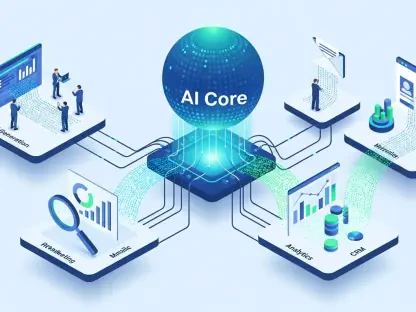
Today, the technology functions as a cognitive bridge between massive data lakes and the end-user experience. By integrating generative capabilities directly into the fan data platform, organizations can now translate abstract behavioral patterns into tangible creative assets. This shift marks the move from “predictive” analytics—which simply guessed what a fan might want—to “generative” execution, which actually builds the personalized content in real-time. It is a fundamental reimagining of the sports brand as a living, breathing digital entity that adapts to every individual supporter.
Core Pillars of the Personalization Ecosystem
Automated Creative Execution and Content Velocity
The primary bottleneck in modern sports marketing is not a lack of ideas, but the sheer physics of production. When a league identifies ten thousand unique fan segments, it becomes humanly impossible for a creative team to design ten thousand unique visual assets. Generative AI solves this “content velocity” problem by automating the design process. Using tools like specialized generative engines, teams can input a single creative brief and produce thousands of variations—ranging from localized social media graphics to personalized video highlights—within seconds.
This performance boost is not just about speed; it is about the relevance of the output. If a fan in Japan follows a specific pitcher, the system can automatically generate highlights, ticket offers, and merchandise advertisements featuring that player, translated and culturally contextualized, without any manual intervention. This level of automation allows small marketing teams to operate with the output capacity of a global agency, ensuring that the brand remains present and personalized across every conceivable digital touchpoint.
Advanced Data Orchestration and Fan Segmentation
Beyond the visual elements, the intelligence of the system lies in its ability to orchestrate data with surgical precision. Unlike traditional CRM systems that group users into broad buckets like “local fans” or “season ticket holders,” advanced AI orchestration looks at micro-behaviors. It analyzes the specific time a fan logs into an app, the players they track in fantasy leagues, and even their physical movement within a stadium. This data is then fed into a segmentation engine that identifies unique “fan journeys,” allowing for marketing that feels like a personal recommendation rather than a generic pitch.
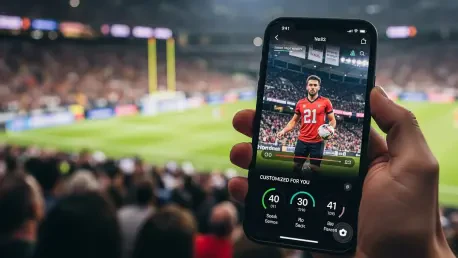
What makes this implementation unique compared to standard marketing automation is its deep integration with real-time athletic performance data. The technology can trigger specific content based on what happens on the field. For instance, a home run by a specific player can instantly trigger a personalized push notification to fans who have that player on their digital “watchlist.” This creates a seamless loop between the physical game and the digital experience, a synchronization that competitors using siloed marketing tools simply cannot match.
Current Trends in Sports Marketing Automation
The sports industry is currently witnessing a move toward “conversational commerce” and AI-powered reputation management. As fans move away from traditional search engines and toward generative AI interfaces to find information, leagues are beginning to use specialized optimization tools to influence how their teams are described by these bots. This trend acknowledges that the first point of contact for a new fan might be a chat interface rather than a website, requiring a proactive approach to digital identity.
Moreover, there is a growing shift toward decentralized content creation. Leagues are increasingly providing fans with AI-powered creative “kits,” allowing them to generate their own high-quality reels and graphics using official, licensed assets. This trend turns the fan into a brand ambassador, leveraging generative AI to ensure that even user-generated content maintains a professional aesthetic. This shift from “broadcast” to “co-creation” is redefining the power dynamics between the league and its audience.
Real-World Applications Across Professional Sports
In practice, Major League Baseball has set the gold standard by deploying these tools across its 30 clubs to manage the grueling pace of a 162-game season. For example, during high-stakes games, the league uses generative systems to instantly produce “milestone” graphics for social media as soon as a record is broken. This allows the league to own the narrative in the seconds following a major event, capturing the peak of fan emotion.
Another notable application is found in stadium experiences, where AI-driven personalization guides fans through the physical venue. By analyzing real-time data, the system can send a personalized discount for a shorter concession line or a notification about a merchandise sale featuring a fan’s favorite jersey, all based on their current location and past purchase history. This creates a “concierge” level of service that was previously reserved only for luxury suite holders, now scaled to every fan in the building.
Challenges in Large-Scale Implementation
Despite the clear benefits, the path to full automation is fraught with technical and ethical hurdles. One of the primary challenges is maintaining “brand safety” in a generative environment. There is a persistent risk that an AI might generate an image or text that is off-brand or offensive, necessitating robust human-in-the-loop oversight systems. Furthermore, the integration of these tools requires a massive overhaul of legacy data systems, which are often fragmented across different departments and third-party vendors.
Regulatory issues also loom large, particularly regarding data privacy and the ownership of AI-generated content. As leagues collect more granular data to power their personalization engines, they must navigate a complex web of international privacy laws. There is also the “uncanny valley” of personalization; if a marketing effort becomes too specific, it can cross the line from helpful to intrusive, potentially alienating the very fans the league is trying to engage.
The Future of Interactive Fan Journeys
Looking ahead, the next frontier for this technology is the integration of predictive generative environments. We are moving toward a reality where the digital broadcast itself is personalized, with AI-generated commentary and overlays that change based on who is watching. Breakthroughs in real-time rendering will likely allow fans to choose their own camera angles or even see “what if” scenarios played out via AI-generated simulations during halftime shows.
The long-term impact will be the total democratization of the premium fan experience. As generative AI drives down the cost of high-end content production and data analysis, even smaller niche sports will be able to offer the same level of personalization as the major leagues. This will lead to a more fragmented but more deeply engaged sports landscape, where every fan, regardless of their location or budget, feels a direct, personal connection to the teams they love.
Assessment of Generative AI in the Fan Experience
The evaluation of generative AI within the professional sports ecosystem revealed a technology that has successfully moved from experimental novelty to an operational necessity. It solved the fundamental paradox of modern marketing: the need to be both global in scale and intimate in execution. By automating the creative process and refining data orchestration, the implementation provided a measurable increase in fan retention and digital interaction rates. The technology stood out from traditional marketing suites through its ability to bridge the gap between live on-field data and instantaneous creative output, a feat that manual workflows could never achieve.
The integration of these systems indicated that the future of sports media lies in a collaborative, AI-augmented model. While technical hurdles regarding data silos and brand safety remained, the strategic benefits of hyper-personalization clearly outweighed the risks. Moving forward, organizations should prioritize the development of ethical AI frameworks and invest in training creative staff to act as “AI directors” rather than traditional designers. The shift from passive viewership to interactive, personalized journeys was not just a trend but a permanent transformation of the industry. Overall, the technology proved to be the essential engine for maintaining relevance in an increasingly distracted digital world.