
Navigating the New Era of Search and the Global Travel Ecosystem
The traditional linear path to purchase in the tourism sector has effectively dissolved into a multifaceted digital journey where consumers might deliberate for several months before executing a transaction in mere seconds. This transformation signals a move toward an ecosystem where artificial intelligence serves as the primary conduit for discovery, filtering through thousands of data points to match specific human desires with real-world experiences. Marketing professionals are now tasked with managing a landscape where the initial spark of inspiration is often separated from the final booking by a vast expanse of research and comparison.
Bridging the window shopping gap has become the fundamental priority for travel brands seeking to maintain a competitive edge in a saturated digital marketplace. This gap represents the critical period of consumer hesitation where interest is high but the confidence to commit remains low due to information overload or economic uncertainty. Successfully navigating this dynamic requires a shift in focus from broad-reach advertising to precision-targeted engagement that provides tangible value at every stage of the traveler’s consideration phase.
Technological progress has introduced agentic search intermediaries that act as proactive advisors, fundamentally changing the way intent is captured and processed. At the same time, the industry must adhere to increasingly stringent data privacy standards that dictate how consumer information is gathered. Modern travel marketing relies on the ability to interpret high-intent signals through the lens of privacy-safe automation, ensuring that the search experience remains personalized without compromising the security of the individual.
Analyzing Market Drivers and the Evolution of Traveler Behavior
Emerging Trends in Visual Discovery and Planning Cycles
The breakdown of traditional seasonality is a defining characteristic of the current market, as 42% of travelers now shift their focus toward shoulder-season trips to maximize value. This year-round planning phenomenon means that the active research phase never truly ends, requiring brands to maintain a constant presence rather than relying on seasonal bursts. Because demand is now distributed more evenly across the calendar, the marketing approach must be equally persistent and adaptable to changing patterns.
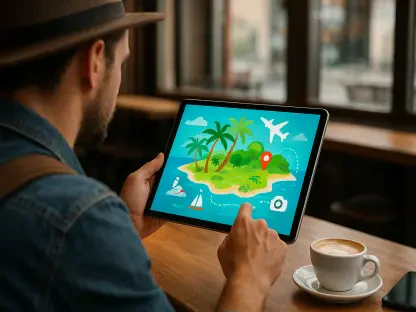
Visual search integration has redefined the research process by combining the power of Google Search with immersive video platforms. Utilizing solutions like Demand Gen on YouTube allows brands to answer the traveler’s questions through rich, sensory content that builds a deeper emotional connection than text alone. This integrated strategy has proven highly effective, as the combination of search and visual storytelling increases the return on investment by providing comprehensive answers to complex travel queries.
The rise of the value-driven consumer has introduced a new layer of complexity to the booking journey, as economic pressures force travelers to be more methodical in their choices. Clarity has become the most effective tool for building confidence, with consumers demanding real-time data on pricing and availability before they are willing to engage. Providing this transparency upfront allows brands to address the hesitation of the value-conscious traveler and positions them as reliable partners in the planning process.
Market Data and Future Growth Projections
Performance indicators for AI adoption highlight a significant shift in consumer efficiency, with data showing that 75% of users reach booking decisions faster when using AI-enhanced search tools. These tools allow travelers to bypass the manual labor of cross-referencing multiple websites by providing synthesized results that account for flights, hotels, and local activities. This reduction in time-to-decision is a key metric for brands aiming to capture demand in a fast-paced environment.
Forecasting the booking window shift indicates a paradoxical trend where the research phase is longer, but the time between the final decision and departure is shrinking. To address this, there is a clear movement toward demand-led, always-on marketing budgets that can capitalize on spontaneous intent. Moving from 2026 to 2028, the industry expects a significant increase in the use of automated systems that reallocate resources in real time to follow the ebb and flow of consumer demand.
Overcoming Complexity and Financial Hesitation in the Booking Journey
Addressing the cognitive load associated with travel planning is essential for reducing the friction that often leads to abandoned searches. AI aggregators simplify this process by organizing fragmented data into coherent itineraries, allowing the traveler to visualize their trip without getting lost in the details. By acting as a filter for the overwhelming amount of information available, these tools help consumers move past the research phase and into the transaction phase with greater ease.
Strategies for removing transactional friction include the implementation of real-time pricing feeds and price guarantees that provide a psychological safety net. When a traveler sees a live feed of costs and a promise of flexibility, the fear of missing out on a better deal or losing money due to a change in plans is mitigated. These features act as a bridge over the final hurdle of financial hesitation, transforming a cautious browser into a confirmed guest.
Solving the budget rigidity crisis requires a departure from fixed spending models that cannot account for the volatility of modern travel demand. Shifting to agile, performance-based budgeting allows marketing teams to stay responsive to sudden spikes in interest caused by social trends or regional events. This flexibility ensures that the brand is always positioned to capture high-value traffic, regardless of how far the actual search behavior deviates from historical norms.
The Regulatory Landscape and Data Transparency Standards
Compliance in real-time data sharing is a mandatory requirement for maintaining visibility in the modern travel ecosystem. Regulations surrounding price transparency mean that the information provided in Hotel Center Feeds must be accurate and up to date at all times to avoid legal complications and consumer distrust. Maintaining this accuracy is not just a regulatory hurdle but a strategic necessity for brands that want to appear in high-intent search results.
The balance between providing hyper-personalized travel itineraries and adhering to evolving global data protection laws is a delicate one. Marketers must leverage advanced modeling and first-party data to deliver the level of customization that travelers expect without overstepping privacy boundaries. Transparent data practices build the trust necessary for consumers to share their preferences, which in turn allows for more effective and relevant search experiences.
Security in automated transactions plays a vital role in maintaining consumer trust during the high-stakes final booking phase. Frictionless checkout processes must be backed by robust encryption and secure authentication to ensure that the traveler feels safe committing their financial information. A secure and smooth payment experience prevents late-stage abandonment and reinforces the brand’s image as a professional and reliable entity.
The Future of Travel: Innovation and Agentic Search Assistants
The transformation of search into digital travel assistants represents the next stage of the industry’s evolution. These AI-driven assistants will move beyond answering simple queries to proactively managing logistics and providing real-time support throughout the entire trip. This proactive approach turns the search engine into a lifetime travel companion, further narrowing the gap between the initial idea and the actual experience.
Market disruptors like Search Campaigns for Travel and the integration of property feeds into AI Max are already changing how brands reach their audience. These technologies allow for the automatic creation of highly relevant advertisements that appear across multiple platforms, reaching the traveler at the exact moment their intent peaks. This level of integration ensures that the marketing message is always aligned with the specific needs and context of the user.
Global economic resilience depends on the ability of travel brands to remain agile through the use of automated, goal-oriented marketing technologies. By focusing on performance targets rather than static plans, companies can navigate varying economic conditions with minimal disruption. This technology-driven stability allows the industry to continue growing even as consumer behaviors and global financial trends undergo significant shifts.
Synthesis of the AI-Driven Travel Revolution
The travel industry successfully transitioned toward a model defined by visual discovery and the near-total elimination of the window shopping gap. By prioritizing real-time data and immersive content, brands addressed the primary anxieties of the modern traveler and simplified the path to purchase. This period of change demonstrated that the most effective marketing strategies were those that prioritized the consumer’s need for clarity and speed above all else.
The path forward for marketers was defined by the adoption of intelligent, agentic search tools that acted as an extension of the brand’s customer service. Those who embraced these innovations gained a significant competitive advantage by providing immediate solutions to complex planning problems. This shift moved the industry away from traditional advertising and toward a service-oriented approach that valued utility and precision in every digital interaction.
Strategic investments in integrated YouTube and Search technologies ultimately maximized returns and provided a robust framework for future growth. Marketers who moved away from rigid seasonal budgets and toward automated, demand-led systems were able to remain profitable during a time of significant behavioral change. These final adjustments ensured that travel brands were not just keeping pace with technology but were actively using it to redefine the relationship between global travelers and the destinations they sought to explore.