
Milena Traikovich is a seasoned expert in the B2B demand generation landscape, specifically known for her ability to architect campaigns that bridge the gap between high-volume lead acquisition and genuine, high-quality engagement. With a career rooted in performance optimization and advanced analytics, she has spent years helping organizations move beyond the “spray and pray” methodology toward a more precise, data-driven approach. As the industry grapples with the rapid integration of artificial intelligence, Milena provides a grounded perspective on how marketing professionals can leverage these tools without losing the human touch that defines a successful brand. Her insights focus on the practical application of emerging technologies to eliminate operational friction and accelerate the delivery of verified leads in an increasingly complex digital environment.
The following discussion explores the evolving role of AI in marketing operations, the transition away from manual data reporting, and the tactical shifts required for modern account-based marketing. Milena breaks down the importance of first-party data in a privacy-compliant world and offers a blueprint for professionals looking to stay relevant by using AI as a partner in their personal career development.
How is the integration of AI agents into daily workflows, specifically for automating creative briefs and synthesizing complex data, changing the fundamental role of a modern B2B marketer?
The shift we are seeing is essentially the end of the era of manual drudgery, specifically regarding manual brief writing and sluggish data reporting. In the past, a marketer might spend days synthesizing notes from a kickoff meeting into a creative brief, but now you can take an agent you have built and trained on your team’s specific voice and feed a meeting transcript directly into it. All your tactical thoughts are already expressed in that conversation, so having the AI structure it for you makes the process infinitely more efficient. This same logic applies to data; rather than spending hours wrestling with raw exports from platforms like GA4, we can now feed that data into large language models to generate meaningful reports in a fraction of the time. This frees up the marketer to move away from being a “data puller” and toward being a “data interpreter” who focuses on creative problem-solving. By removing these friction-heavy workflows, we allow our teams to focus on the high-level strategy that actually moves the needle for demand generation.
With AI handling the heavy lifting of reporting and administrative tasks, where exactly does human judgment become the most critical differentiator in a successful marketing campaign?
While the machines are excellent at speed and accuracy, they cannot replicate the nuanced judgment required to navigate a complex technology shift like the one we are experiencing in mid-2026. Human expertise is what ensures that we are delivering on the promise of “Leads. Done Right.” by looking beyond the surface-level metrics to see if an account is truly a fit. It is one thing for an AI to identify an active user, but it takes a seasoned professional to understand the emotional and sensory details of a buyer’s journey and how to build lasting trust. We use technology as a tool to facilitate the connection, but the strategy behind how we engage a qualified decision-maker remains a uniquely human endeavor. If you rely solely on the machine, you risk losing the personalization that makes B2B marketing effective, which is why human verification remains the backbone of any high-performing campaign.
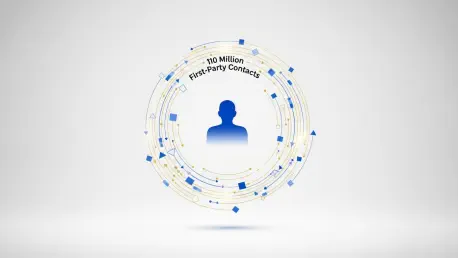
Given that modern demand generation requires a massive scale, how do organizations balance the use of a database of 110 million first-party contacts with the need for a human-led verification process?
The key to success in this environment is a zero-outsourcing model that combines massive scale with meticulous human oversight. At our core, we utilize a team of over 300 professionals to ensure that every single lead generated through our platforms is not just a data point, but a verified, opted-in connection. Having access to 110 million first-party data points is a powerful starting position, but the real value comes from the verified content engagement that happens after the initial contact. Traditional lead sources often fail because they lack this human touch, leading to poor data quality and compliance issues that can damage a brand’s reputation. By keeping the process in-house and focusing on human-led verification, we can deliver leads that consistently perform better than those from automated, third-party aggregators.
In a market that refuses to wait for traditional learning cycles, what strategies should marketing professionals use to build expertise and bridge the gap in their current skill sets?
The most practical blueprint for growth today is to view AI not just as a productivity tool, but as a teaching partner that can help you develop skills that were previously inaccessible. You have to be deliberate about figuring out what you don’t know—whether that is technical data analysis or complex search behaviors—and then use every resource available to become an expert in that niche. This might involve taking specialized courses or experimenting with new tools in a “sandbox” environment to see how they handle real-world demand generation scenarios. The world is truly your oyster if you are willing to use research and AI-driven insights to fill the gaps in your own expertise. Continuous learning is no longer an optional part of the job; it is a fundamental requirement for staying relevant in a landscape that is evolving more rapidly than at any other point in business history.
Why is there a growing shift toward valuing the “unfiltered” perspectives of real practitioners over the traditional whitepapers or vendor-driven content that has long dominated the B2B space?
B2B marketing leaders are increasingly skeptical of vendor talking points because they need actionable insights that come from the trenches, not theoretical perspectives from a marketing department. There is a foundational belief that the most valuable knowledge comes from people who are actively navigating change, testing new approaches, and dealing with the “unfiltered” realities of the job every day. When a director of digital marketing shares their firsthand experience with AI and ABM strategies, it carries a weight that a polished whitepaper simply cannot match. Marketers learn best from other marketers who are doing the actual work, which is why platforms that surface real perspectives are becoming the go-to resource for CMOs and demand generation directors. This shift reflects a broader desire for authenticity and transferable knowledge that can be applied immediately to drive measurable pipeline growth.
What is your forecast for the future of B2B demand generation as AI continues to reshape search behaviors and ABM strategies?
I anticipate that the next two years will see a total convergence of search and account-based marketing, where AI will allow us to predict buyer intent with a level of precision that makes traditional “cold” outreach obsolete. We will see a shift toward even more rigorous data quality standards, where the 110 million data points we currently track will be augmented by real-time behavioral signals that are verified by human experts in seconds. The organizations that thrive will be those that stop fighting the technology and instead use it to amplify their human talent, ensuring every interaction is personalized and privacy-compliant. Ultimately, the future belongs to those who can master the balance of intelligent data strategies and genuine human connection to build trust in an automated world.