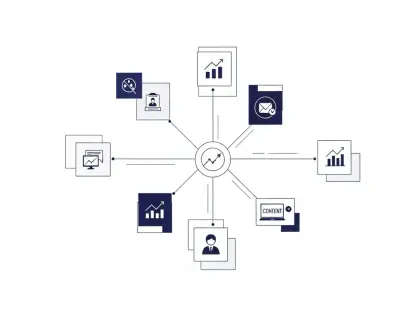

The traditional boundaries between human intuition and machine-driven execution have effectively dissolved as marketing automation matures into a fully cognitive operational ecosystem. This transformation represents the most significant shift in digital commerce since the inception of the search engine, moving businesses away from rigid, scheduled workflows toward fluid, autonomous decision-making environments. As of 2026, marketing automation is no longer a luxury reserved for the technological elite but has instead become the essential nervous system for organizations of all sizes. This analysis explores how the integration of Artificial Intelligence (AI) has redefined the industry, examining the economic growth, operational impacts, and the strategic pivot toward hyper-personalized customer engagement that defines the current market landscape.
The industry currently stands at a crossroads where massive datasets and machine learning algorithms converge to create a seamless interface between brands and consumers. By synthesizing predictive analytics with generative capabilities, modern platforms are capable of managing the entire customer lifecycle with minimal human intervention. This evolution is driven by a fundamental need for efficiency in an increasingly fragmented digital world. Organizations that successfully navigate this shift are seeing unprecedented returns on investment, while those clinging to legacy systems face a widening gap in competitive capability. The following sections detail the technological leaps and market dynamics that are currently shaping the future of global marketing.
The Evolution of Automation: From Rigid Rules to Fluid Intelligence
To understand the current state of the industry, it is necessary to reflect on the foundational shift from basic “if-then” logic to the sophisticated machine learning models that dominate the landscape today. Historically, marketing automation was a tool designed primarily for repetition—sending an email when a user signed up or posting to social media on a set schedule. These early iterations were reactive and required human marketers to manually map out every possible customer journey, a task that became increasingly impossible as the number of digital touchpoints exploded. These legacy systems, while revolutionary at the time, were ultimately limited by their inability to adapt to real-time behavioral changes without manual reconfiguration.
The transition toward the current AI-driven era was catalyzed by the maturation of cloud computing and the democratization of big data. As the volume of consumer information grew beyond the capacity of human analysis, the industry reached a tipping point where machine intervention became a necessity rather than an option. This historical context is vital because it demonstrates that the move toward AI was not merely a reaction to a trend, but a structural requirement for survival in a data-saturated environment. Today, the move toward “intelligent ecosystems” marks the final departure from one-size-fits-all broadcasting, establishing a new baseline where every interaction is backed by historical data and real-time intent.
The Technological Leap: How Intelligence Redefines Automation
Predictive Modeling: The Shift from Reaction to Anticipation
The most profound technological advancement in the current landscape is the shift from descriptive analytics to predictive modeling. In previous cycles, automation platforms were primarily used to report on what a customer had already done, providing a rearview-mirror perspective on engagement. Modern AI-enhanced systems, however, utilize deep learning to forecast what a customer is likely to do next. By analyzing trillions of data points across diverse industries, these algorithms identify subtle behavioral patterns that remain invisible to the human eye. This allows businesses to intervene at the moment of maximum influence, delivering a solution or offer before the customer has even consciously identified a need.
This predictive capability has fundamentally altered the concept of lead nurturing. Instead of a linear progression through a pre-defined funnel, the customer journey is now a dynamic, multi-dimensional experience. High-efficiency firms are utilizing these tools to score leads with surgical precision, ensuring that sales teams only engage with prospects who demonstrate a high probability of conversion. The result is a dramatic reduction in wasted effort and a significant acceleration of the sales cycle. By removing the guesswork from marketing spend, AI ensures that every dollar is allocated to the touchpoints most likely to generate long-term value.
Hyper-Personalization: Delivering Individualized Experiences at Scale
While the goal of personalization has existed for decades, it is only through the current integration of AI that it has become achievable at a global scale. Modern consumers demand that brands understand their unique preferences and history, and they are increasingly intolerant of generic communication. AI meets this demand by creating a “single view of the customer,” a unified profile that stitches together data from website interactions, social media engagement, purchase history, and even offline behaviors. This data is then used to generate dynamic content in real-time, meaning that no two users experience the same website or email campaign in the same way.
The sophistication of these systems allows for the instantaneous generation of product recommendations, personalized imagery, and tailored messaging that reflects the user’s current context. For example, an automated system might adjust the tone of an email based on a customer’s recent support tickets or change the featured products in a newsletter based on local weather patterns and previous browsing habits. This level of granularity has led to a measurable surge in conversion rates across the board. When every touchpoint feels relevant and informed, the friction between the consumer and the brand is minimized, fostering a level of loyalty that was previously difficult to sustain through automated means.
Autonomous Agents: The Rise of Self-Optimizing Campaigns
A significant trend currently disrupting the industry is the emergence of autonomous agents capable of managing high-level strategic tasks with minimal oversight. These systems are now taking over complex functions such as programmatic media buying and real-time budget optimization. In the past, a human media buyer would need to manually adjust bids and placements based on daily performance reports. Today, AI agents perform these adjustments in milliseconds, moving capital across channels to capture the highest possible return on investment. This shift allows marketing teams to move away from the administrative “drudgery” of campaign management and focus instead on high-level creative strategy and ethical oversight.
Furthermore, generative AI has become deeply embedded in the content production process, with a majority of marketers using these tools to streamline everything from initial ideation to final creative assets. These autonomous systems do not replace human creativity but rather amplify it, allowing for the rapid testing of thousands of creative variations to see which resonates most with specific audience segments. This “test-and-learn” cycle, which used to take weeks, is now completed in hours. The ability to iterate at this speed provides a massive competitive advantage, ensuring that brands can stay ahead of rapidly shifting market trends and consumer sentiments.
Future Horizons: The Projected Evolution of the Industry through 2030
The trajectory of marketing automation from 2026 toward the end of the decade points toward a landscape defined by total autonomy and anticipatory engagement. The global market value is expected to continue its aggressive expansion, with some projections suggesting it will nearly triple in size by 2030 as AI integration becomes the universal standard. This growth will likely be driven by a narrowing of the “readiness gap,” as organizations that previously struggled with implementation finally complete their transition to AI-first architectures. We are also seeing a major shift in how businesses handle data privacy, with the next generation of automation tools focusing on “privacy-by-design” to balance hyper-personalization with increasingly stringent global regulations.
Another critical trend is the democratization of advanced tools for Small and Mid-sized Businesses (SMBs). While high-level automation was once the exclusive domain of global enterprises, cloud-based delivery models have lowered the barrier to entry, allowing smaller firms to utilize the same predictive power as their larger competitors. This leveling of the playing field is expected to fuel a surge in innovation and market competition. As we move closer to 2030, the industry will likely shift toward “anticipatory marketing,” where the software doesn’t just respond to triggers but actively manages the entire customer relationship proactively. In this future, the role of the marketer will evolve into that of an “AI Orchestrator,” overseeing a fleet of autonomous systems that handle the execution of complex, multi-channel strategies.
Navigating the Shift: Strategic Recommendations for Businesses
For organizations seeking to capitalize on these advancements, the first and most critical step is the prioritization of data hygiene and integration. The most sophisticated AI algorithms are ultimately dependent on the quality of the data they process. Therefore, businesses must focus on breaking down internal silos and creating a unified data layer that allows for a seamless flow of information between marketing, sales, and customer service departments. Without a clean, centralized data source, automated systems risk delivering fragmented or irrelevant experiences that can damage brand reputation. Investing in a robust Data Management Platform (DMP) or Customer Data Platform (CDP) is no longer optional; it is the foundation upon which all successful AI strategies are built.
Additionally, companies should adopt an incremental approach to automation, focusing on “low-hanging fruit” such as automated email sequences and basic lead scoring before moving into complex predictive modeling. It is also vital to foster a culture of agility and continuous learning within the organization. As AI takes over repetitive tasks, human talent should be reallocated toward creative storytelling, strategic planning, and ethical governance. Organizations that prioritize the human-machine partnership—rather than viewing AI as a total replacement for human staff—will be best positioned to thrive. Finally, staying informed about the evolving regulatory landscape regarding data privacy and AI ethics is essential to ensure that automation efforts remain sustainable and compliant in the long term.
The New Global Standard for Digital Engagement
The transformation of marketing automation through the lens of Artificial Intelligence represented a fundamental shift in the mechanics of global commerce. By the middle of the decade, the industry successfully bridged the gap between mass-market efficiency and personal, human-centric connection. The transition from reactive, manual workflows to proactive, autonomous ecosystems proved to be the defining factor in determining market leadership. Businesses that embraced these cognitive tools found themselves capable of managing millions of unique customer journeys with a level of precision that was once thought impossible. The data consistently showed that those who integrated these technologies early realized significant gains in both operational efficiency and total revenue growth, effectively setting a new benchmark for what it meant to be a digital-first organization.
Reflecting on this era of rapid change, it became clear that the value of automation was not found in the software itself, but in the data-driven insights it unlocked. The industry moved beyond the simple act of scheduling messages and entered a phase of genuine intelligence, where every interaction was an opportunity to learn and optimize. This evolution ensured that marketing remained a primary driver of business value rather than a traditional cost center. As the landscape continues to evolve, the lessons learned during this period of AI integration provided a roadmap for sustainable growth in an increasingly complex world. Ultimately, the fusion of automation and intelligence became the cornerstone of modern brand-consumer relationships, ensuring that technology served to enhance, rather than replace, the meaningful connections that drive economic success.