
The high-stakes environment of luxury fashion has long been considered the final frontier for digital automation, requiring a level of tactile realism that simple algorithms historically struggled to replicate. While early iterations of synthetic imagery often produced uncanny results, the landscape in 2026 demonstrates a profound shift toward professional-grade utility. This transformation is driven by the need to balance creative experimentation with the rigid demands of commercial photography. Today, the technology is no longer a gimmick but a foundational pillar in the creative director’s toolkit, offering ways to visualize complex draping and atmospheric lighting that were once exclusive to multi-million dollar physical sets.
The emergence of generative models within this sector provides a unique answer to the traditional bottlenecks of production. By integrating diffusion architectures with brand-specific training data, agencies can now bypass the logistical constraints of global travel and sample logistics. This evolution reflects a broader movement within the technological landscape where visual fidelity is the ultimate metric of success. For a luxury brand, a single misplaced pixel in a fabric’s texture can break the illusion of prestige, making the “brutal test” of high-fashion aesthetics the most demanding environment for any artificial intelligence to inhabit.
The Evolution of Generative AI in the Fashion Landscape
The path toward current synthetic production methods began with a move away from simple pattern recognition to deep generative modeling. In the current era, the core principles of these systems rely on massive datasets of high-resolution fashion photography, which have been distilled into latent spaces capable of reconstructing human anatomy and textile physics. This technology has emerged from a need to provide immediate visual feedback during the design process, allowing a conceptual sketch to be rendered as a photorealistic campaign image in seconds. Such a shift has redefined the relationship between the creator and the canvas, turning the creative process into a series of iterative refinements.
In the broader context of visual culture, these tools represent a democratization of high-end aesthetics that was previously inaccessible to smaller retail entities. However, for established luxury houses, the technology serves as a method of brand preservation and extension. It allows for the exploration of historical archives, where past silhouettes can be reimagined in modern settings without endangering delicate vintage garments. This contextual evolution highlights how AI has moved from being a disruptive outsider to a sophisticated partner that respects the heritage and technical standards of the fashion world.
Technical Components and Specialized Creative Features
Production-Grade Engines: Professional Integration
High-end tools like Magnific and Adobe Firefly have redefined the professional pipeline by focusing on resolution and workflow compatibility. Magnific, for instance, utilizes a multi-model architecture that allows users to choose specific neural engines for different tasks, such as enhancing skin texture or refining the intricate details of jewelry. This level of control is essential for production-grade output, where “character consistency” ensures that a model’s features remain identical across an entire digital lookbook. Such a feature addresses the historical problem of AI “drift,” where the subject’s identity would change between frames, rendering the output useless for cohesive storytelling.
Adobe Firefly further bridges the gap between synthetic generation and traditional retouching by existing directly within the software suites that professionals already use. This integration allows for a seamless transition where an AI-generated base can be adjusted using familiar tools for color grading and composition. Performance metrics for these systems are now measured by their ability to respond to reference-driven workflows, where the AI is guided by a specific garment’s photograph rather than just a text prompt. This ensures that the final asset is a faithful representation of the physical product, which is a non-negotiable requirement for retail accuracy.
Editorial Vision: Conceptual Ideation
While production tools focus on accuracy, platforms like Midjourney prioritize the “soul” of the image through an opinionated and stylistically bold output. These engines excel at creating atmospheric visuals that lean into the experimental territories of high-fashion editorials. By using specialized algorithms that understand lighting, grain, and lens distortion, Midjourney allows creative directors to build moodboards that feel like finished art. This capability is vital during the early stages of a campaign when the goal is to establish a “vibe” or a narrative arc that transcends the mere display of clothing.
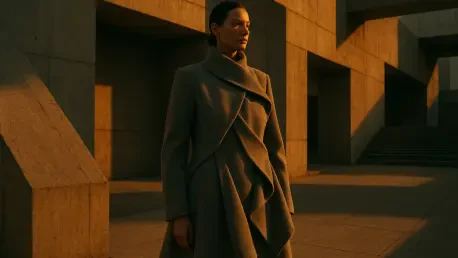
The atmospheric precision of these tools facilitates a form of digital alchemy, where surrealist concepts can be tested without the risk of an expensive location shoot. For example, a brand can visualize a winter collection set in a brutalist desert landscape or an underwater ballroom with startling clarity. This “opinionated” nature of the AI serves as a creative catalyst, offering unexpected visual solutions that a human director might not have initially considered. It shifts the role of the creator from a technician to an orchestrator of possibilities, where the focus is on selecting and refining the most evocative outcomes.
Graphic Systems: Typographic Precision
Beyond the realm of photography, specialized components in tools like Recraft and Ideogram address the structural needs of fashion branding. Recraft is particularly notable for its ability to produce vector-oriented outputs, which are necessary for creating scalable logos, patterns, and iconography. In an industry where branding is as important as the product itself, the ability to generate clean, mathematical lines that can be printed on everything from a silk scarf to a billboard is a significant technical advantage. This specialized focus ensures that the graphic identity of a brand remains sharp and consistent across all touchpoints.
Ideogram has solved one of the most persistent challenges in generative AI: the accurate rendering of text. Fashion layouts often rely on the tight integration of typography with imagery, and this tool allows designers to create mock-ups that include legible headlines and brand names. This precision transforms a simple image generator into a comprehensive layout tool, enabling marketing teams to present “delivery-ready” concepts to stakeholders. By merging the fluidity of AI imagery with the rigidity of graphic design, these platforms provide a holistic solution for the modern fashion ecosystem.
Emerging Trends in Fashion AI Development
The current trend in the fashion AI landscape is moving toward modular manipulation workflows rather than simple, one-shot generations. Professionals are increasingly using a “stacked” approach, where an image is born in one engine, refined in another, and upscaled in a third. This modularity allows for a surgical level of control over every element of the frame, from the specific hue of the background to the tension of a sleeve’s fold. This shift indicates a maturation of the technology, where the objective is no longer to see what the AI can do, but to force the AI to do exactly what the brand requires.
Another significant development is the rise of “invisible AI,” where the primary goal of the technology is to disappear into the established visual identity of a brand. This involves training models on a house’s specific photographic history, ensuring that the AI replicates the exact lighting setups and film stocks used by that brand for decades. By doing so, the synthetic imagery becomes indistinguishable from the brand’s heritage content. This trend prioritizes the preservation of “brand DNA,” ensuring that even the most advanced technology remains a servant to the historical aesthetic of the fashion house.
Furthermore, there is a growing emphasis on “reference-driven” generation that respects the integrity of the physical garment. Instead of letting the AI invent clothing, designers are using image-to-image techniques to drape existing digital garments onto synthetic models. This preservation of the silhouette and fabric texture is critical for high-end retail, where customers expect the online image to match the physical item. This trend bridges the gap between the digital and physical worlds, ensuring that the creative freedom of AI does not come at the cost of commercial honesty.
Real-World Applications Across the Fashion Value Chain
The practical deployment of AI generators is most visible in the creation of high-volume social media assets and global marketing campaigns. Brands are now able to adapt a single hero image into hundreds of localized variations, adjusting the background, the model’s ethnicity, or the styling to suit different regional markets. This democratization of campaign adaptation is often facilitated by platforms like Canva, which allow non-technical marketing teams to deploy AI-powered edits rapidly. Such scalability ensures that a brand can maintain a constant and diverse presence across all digital channels without an exponential increase in production costs.
In the realm of creative direction, conversational AI has become an essential tool for bridging the gap between abstract prototypes and final assets. Creative directors use these tools to iterate on ideas through a natural language dialogue, much like they would with a human photographer. This feedback loop allows for the rapid exploration of “what-if” scenarios, such as changing the time of day in a shoot or swapping a studio background for a Parisian street. This iterative process accelerates the move from a conceptual spark to a delivery-ready asset, significantly reducing the time-to-market for new collections.
Agencies are also deploying these tools to solve the “prototype-to-production” gap. In the past, a creative team might spend weeks building a physical prototype that might eventually be scrapped. Now, AI allows for the generation of “high-fidelity prototypes” that look like finished campaigns, enabling stakeholders to make more informed decisions before any physical resources are committed. This application not only saves money but also reduces the environmental footprint of the fashion industry by minimizing the need for physical samples and unnecessary travel for conceptual shoots.
Technical Hurdles and Market Constraints
Despite the rapid progress, the technology still faces significant technical hurdles, most notably “AI hallucinations” and anatomical errors. Even the most advanced models occasionally struggle with the complexities of human hands or the way a specific fabric should interact with a moving body. These errors create an “uncanny valley” effect that can be detrimental to the prestige of a luxury brand. Ongoing development efforts are focused on mitigating these issues through better physics engines and more sophisticated skeletal mapping, but for now, human oversight remains a mandatory requirement for high-end output.
Regulatory and ethical considerations also present a major constraint on the widespread adoption of synthetic media. There is an ongoing debate regarding the use of AI-generated models and the potential displacement of human talent, as well as the need for transparency in advertising. Some jurisdictions are beginning to mandate labels for AI-generated content to prevent the promotion of unrealistic beauty standards. Brands must navigate this complex legal landscape while trying to maintain a competitive edge, often leading to a cautious approach where AI is used for backgrounds and textures rather than as the primary subject.
Maintaining strict brand DNA across different models and engines remains a difficult task. Each AI engine has its own inherent “bias” or stylistic tendency, which can conflict with a brand’s established look. For a fashion house, consistency is everything, and the difficulty of forcing an “opinionated” AI to adhere to a specific set of visual rules can be a significant barrier to entry. This requires a high level of technical expertise in prompt engineering and model fine-tuning, which many smaller brands currently lack, creating a new digital divide within the industry.
The Future of AI-Driven Fashion Production
The trajectory of the fashion industry suggests a transition toward a hybrid human-AI workflow where the machine acts as an intelligent extension of the artist. Breakthroughs in real-time garment simulation are expected to allow designers to see how a fabric moves and reacts to light instantaneously, merging the worlds of 3D design and generative photography. This will likely lead to a future where the line between a physical photo shoot and a digital generation is completely blurred. The focus will shift from the tools themselves to the quality of the data and the creative vision of the human pilot who directs them.
Long-term, the roles of photographers, retouchers, and creative directors will continue to evolve. Rather than being replaced, these professionals will become “synthetic directors” who manage complex AI pipelines to achieve results that were previously impossible. The ability to maintain perfect consistency across faces, fabrics, and lighting will define the next generation of fashion tools, making the technology an invisible but indispensable part of the creative process. As these systems become more intuitive, the barrier to entry for high-end visual storytelling will continue to fall, allowing for a more diverse range of voices to enter the fashion landscape.
Final Assessment of the Fashion AI Ecosystem
The review of the current AI fashion ecosystem demonstrated that the success of these tools was measured by their ability to serve the brand’s identity rather than the technical novelty of the output. It was found that a clear hierarchy of tools emerged, with platforms like Magnific and Adobe Firefly leading in professional utility, while Midjourney remained the primary engine for conceptual exploration. The industry transitioned away from viewing AI as a total replacement for human creativity, instead embracing it as a sophisticated method for augmenting the traditional creative pipeline.
Stakeholders realized that the most effective actionable step was the implementation of a multi-tool strategy that combined the strengths of various engines. This approach proved that maintaining human oversight was essential for navigating the technical hurdles of anatomical accuracy and brand consistency. Looking ahead, the focus shifted toward developing proprietary models that could protect and leverage a brand’s unique visual heritage. Ultimately, the integration of generative technology confirmed that while the tools of production had changed, the requirement for a strong, human-led creative vision remained the most critical factor in the global fashion industry.