
A single static photograph now holds the latent potential to unfold into a captivating motion picture, a transformation once confined to the realms of cinematic fantasy. Image-to-Video AI represents a significant advancement in the digital content creation sector, fundamentally altering how visual stories are told. This review will explore the evolution of the technology, its key features, performance metrics, and the impact it has had on various applications, particularly within social media. The purpose of this review is to provide a thorough understanding of the technology, its current capabilities, and its potential future development in democratizing video production.
Understanding Image-to-Video AI
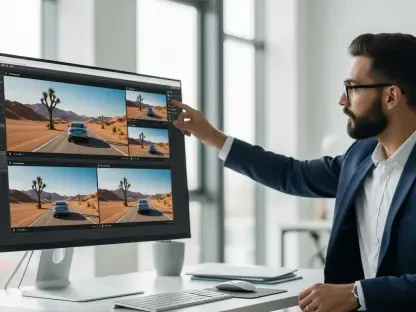
At its core, Image-to-Video AI operates on the principle of converting a static image into a dynamic video sequence. This is achieved through sophisticated generative models, often leveraging architectures similar to those used in text-to-image generation but trained to predict motion and temporal consistency. These algorithms analyze the input image to infer depth, separate objects from their backgrounds, and generate plausible movement, effectively animating the scene. The AI can create subtle motions like flowing hair or rippling water, or more complex camera movements like zooms, pans, and parallax effects.
The technology’s relevance has grown exponentially in a digital landscape that increasingly prioritizes video. Social media algorithms, user engagement metrics, and advertising effectiveness all point toward the dominance of motion-based content. Image-to-Video AI meets this demand by providing an accessible and efficient solution for generating video, allowing creators and brands to maintain a visually dynamic online presence without the high production costs traditionally associated with video shoots.
Core Capabilities Driving the Revolution
Democratizing Video Production
Image-to-Video AI is fundamentally lowering the barrier to entry for creators. The technology automates complex animation and editing processes that historically demanded expensive software licenses and years of technical expertise. Tasks such as creating fluid camera movements, animating characters, or adding cinematic effects can now be executed with a few clicks. This automation places professional-quality video production within reach of hobbyists, small business owners, and independent artists.
This newfound accessibility levels the playing field, empowering a broader spectrum of users to produce visually compelling content that can compete with high-budget productions. Creators can now focus their energy on storytelling and conceptualization rather than on mastering the technical intricacies of video editing. As a result, the visual language of social media is becoming richer and more diverse, driven by a new wave of producers who were previously excluded from the conversation.
Radically Accelerating Creative Workflows
Beyond accessibility, the technology’s most significant impact lies in its dramatic acceleration of production timelines. In the fast-paced ecosystem of social media, the ability to react quickly to trends is paramount to staying relevant. Image-to-Video AI condenses content creation cycles from hours or even days into mere minutes. A single product shot or a portrait can be transformed into a shareable video ad or an engaging social media post almost instantaneously.
This efficiency allows creators to increase their content output, experiment with various visual styles without significant time investment, and maintain a consistent stream of fresh material for their audience. For brands and marketers, this means existing image assets can be repurposed into countless video variations, maximizing their value and extending the life of creative campaigns. This rapid iteration cycle fosters a more agile and experimental approach to content strategy.
Unlocking New Artistic Avenues
This technology is more than just a productivity tool; it is a new medium for artistic expression. It enables creators to generate surreal and imaginative visuals that would be difficult, costly, or physically impossible to achieve through conventional methods. Simple photos can be morphed into fluid animations, static landscapes can be brought to life with atmospheric effects, and portraits can be made to speak or sing, blurring the line between reality and fantasy.
This capability empowers artists and storytellers to turn simple images into compelling narratives. A static product photo can be transformed into a dynamic showcase that highlights its features, while a personal photograph can become the basis for a short, animated story. By providing a direct path from a still image to a moving one, the technology encourages a new form of visual poetry that is uniquely suited to the short-form, high-impact nature of digital platforms.
Current Trends and Technological Advancements
The field of Image-to-Video AI is advancing at a remarkable pace, with recent developments focusing on enhancing motion realism, providing greater stylistic control, and increasing output resolution. Early iterations of the technology often produced results with minor artifacts or unnatural movements, but contemporary models generate far more fluid and believable animations. Users are also gaining more granular control over the final output, allowing them to direct camera paths, adjust the intensity of effects, and fine-tune the overall aesthetic to match their brand or artistic vision.
A key trend is the seamless integration of these tools into existing creative ecosystems. Image-to-Video AI features are no longer confined to standalone applications but are becoming standard components within social media platforms, photo editing software, and digital marketing suites. This integration makes the technology an ambient, almost invisible part of the modern creator’s toolkit, further lowering the barrier to adoption and ensuring its widespread use across the digital landscape.
Transformative Applications in the Creator Economy
The real-world applications of this technology are already reshaping the creator economy. Influencers are using it to add a layer of professional polish to their content, transforming standard photos into eye-catching video posts that boost engagement on platforms like Instagram and TikTok. This allows them to elevate their personal brand and stand out in a saturated market without needing a dedicated video production team.
Small businesses and e-commerce brands are leveraging Image-to-Video AI to create engaging product showcases and advertisements from their existing catalog of static images. This provides a cost-effective way to produce a high volume of video marketing materials, which are proven to drive higher conversion rates. Similarly, digital marketers are repurposing entire libraries of image assets, turning them into dynamic video ads for various platforms and A/B testing different creative approaches with unprecedented speed.
Navigating the Challenges and Limitations
Despite its rapid progress, Image-to-Video AI is not without its challenges. One significant hurdle is maintaining fine-grained creative control; while the AI is adept at generating impressive general motion, achieving specific, nuanced results can still be difficult. Furthermore, the technology sometimes struggles to avoid the “uncanny valley” effect, where generated human movements appear realistic but subtly unnatural, creating a sense of unease for the viewer.
Beyond technical limitations, there are pressing ethical considerations. The same technology that animates a portrait for an artist can be misused to create misleading or malicious content, contributing to the spread of misinformation. The industry is actively working to address these issues through the development of digital watermarking, more transparent AI models, and platform policies aimed at curbing abuse. Ongoing research aims to provide creators with more precise controls while building safeguards to mitigate potential harms.
The Future of Content What’s Next for Image-to-Video AI
The trajectory of Image-to-Video AI points toward even more sophisticated and integrated capabilities. Future breakthroughs are expected to focus on generating longer and more narratively coherent video sequences from a single image, complete with consistent characters and logical scene progression. This would move the technology from creating short clips to producing more substantial storytelling content.
Further ahead, the integration of Image-to-Video AI with 3D environments and augmented reality promises to unlock new forms of immersive experiences. A static photo could become the entry point to an interactive virtual space, completely reshaping how users engage with digital content. In the long term, this technology is poised to fundamentally alter social media feeds, shifting the baseline of content from static visuals toward richer, more dynamic, and increasingly interactive visual experiences.
Conclusion A New Paradigm in Visual Storytelling
This review found that Image-to-Video AI has firmly established itself as a transformative force in digital content creation. It has successfully lowered the technical and financial barriers to video production, radically accelerated creative workflows, and introduced a novel medium for artistic expression. Its impact was evident across the creator economy, where it empowered individuals and small businesses to produce professional-grade visual content with unprecedented ease and efficiency. While it faced ongoing technical and ethical challenges, the technology’s rapid evolution and seamless integration into mainstream platforms underscored its growing importance. Image-to-Video AI was more than a shortcut; it was a new paradigm in visual communication, setting a standard that has begun to reshape the future of digital storytelling.