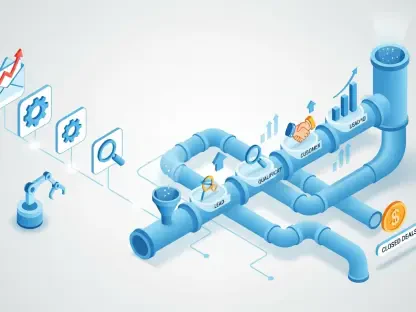

The once-siloed marketing department has now become the central nervous system of the modern enterprise, with its effectiveness entirely dependent on the sophistication of its technological backbone. The evolution of Marketing Technology (MarTech) represents a significant advancement in business strategy, transforming from a collection of support tools into the primary engine for business growth, driving revenue, customer acquisition, and retention. This review will explore the key technologies and trends shaping the industry, their core features, and their impact on modern marketing. The purpose is to provide a thorough understanding of the current MarTech landscape and its established trajectory.
The Dawn of a New Era MarTech as a Core Business Driver
The fundamental role of MarTech within organizations has undergone a radical transformation. No longer confined to a departmental support function, it has emerged as a central and indispensable component of an enterprise’s overall business strategy. This shift reflects a broader market reality where digital-first engagement is the default, and customer expectations for seamless, personalized interactions are at an all-time high.
In this competitive environment, an integrated, intelligent, and customer-centric technology stack is not merely an advantage; it is essential for survival and sustainable growth. Businesses that successfully weave MarTech into their operational fabric are better equipped to understand customer behavior, anticipate market shifts, and deliver value at every touchpoint. Consequently, the strategic deployment of these technologies has become a key differentiator, directly influencing market share and profitability.
Key Pillars of the Next Generation MarTech Stack
The modern MarTech stack is built upon several interconnected pillars that work in concert to create a cohesive and powerful growth engine. These core components are not just individual tools but parts of a larger ecosystem designed to collect, interpret, and act on customer data with unprecedented speed and precision. Together, they enable a level of strategic execution that was previously unattainable.
Artificial Intelligence and Automation Marketings New Superpower
Artificial Intelligence (AI) has moved from a futuristic concept to a practical and powerful tool for achieving data-driven clarity. It serves as the intelligent layer of the MarTech stack, analyzing vast datasets to uncover patterns, predict outcomes, and automate complex tasks. By leveraging AI-powered predictive analytics, marketers can anticipate customer needs and behaviors, moving from reactive guesswork to proactive, informed decision-making that yields consistently higher returns.
The application of AI and automation extends across the entire marketing function. Automated content creation tools help generate personalized messaging at scale, while AI algorithms optimize ad campaigns in real-time for maximum impact and efficiency. Furthermore, hyper-personalized recommendation engines, powered by machine learning, can deliver tailored product and content suggestions that significantly enhance the customer experience and drive conversions, solidifying AI’s role as marketing’s essential superpower.
Customer Data Platforms The Foundation for Unified Marketing
One of the most persistent challenges in marketing has been the fragmentation of customer data across dozens of disconnected systems. Customer Data Platforms (CDPs) have emerged as the critical solution to this problem, serving as the foundational layer for any modern marketing strategy. These platforms ingest data from every conceivable touchpoint—including websites, mobile apps, CRM systems, and offline interactions—to create a single, persistent, and unified customer profile.
By breaking down organizational data silos, CDPs provide a comprehensive 360-degree view of each customer. This unified data foundation is the prerequisite for all advanced marketing initiatives, from personalization to omnichannel orchestration. It ensures that every team, from marketing and sales to customer service, is working from the same complete and accurate information, enabling a truly cohesive and customer-centric approach across the entire organization.
Personalization at Scale Beyond Generic Messaging
With a unified data foundation in place, brands can finally move beyond generic, one-size-fits-all messaging and deliver the highly tailored experiences that modern consumers demand. Personalization at scale is the tactical execution of insights derived from a CDP, allowing brands to communicate with individuals based on their unique preferences, behaviors, and history. This level of customization fosters deeper customer relationships and builds lasting brand loyalty.
This is achieved through a variety of tactics, including behavioral triggers that launch automated workflows based on user actions, such as abandoning a shopping cart. Dynamic content allows for the real-time customization of websites, emails, and ads to reflect individual user data and interests. By designing customized journeys that adapt to each customer’s needs, brands can create interactions that feel relevant and personal, dramatically increasing engagement and lifetime value.
Strategic Shifts Shaping the Marketing Landscape
The trajectory of MarTech is not only being influenced by technological innovation but also by significant industry-wide strategic shifts. These external forces are compelling marketers to rethink their approaches and adapt their technology stacks accordingly. The most impactful of these developments are the evolving dynamics of digital advertising and the non-negotiable importance of data privacy in shaping consumer-brand relationships.
Real World Applications and Evolving Use Cases
The theoretical power of an integrated MarTech stack becomes tangible when applied to real-world marketing challenges. As technologies mature, their use cases continue to evolve, enabling brands to execute sophisticated strategies that were once impossible. These applications demonstrate how a connected ecosystem creates a sum greater than its parts, driving both efficiency and effectiveness.
Omnichannel Marketing Creating a Seamless Customer Journey
An integrated MarTech stack is the engine that powers a true omnichannel experience, ensuring consistency and cohesion across every channel a customer uses. The goal is to make the journey so seamless that the transition between touchpoints is invisible to the consumer. This requires a deep integration of data and systems to ensure that a customer’s context and history travel with them, whether they are browsing on social media, opening an email, using a mobile app, or visiting a physical store.
For example, a customer who browses a product on a mobile app can receive a targeted email reminder with a special offer. If they visit a physical store, a sales associate equipped with a tablet can access their browsing history to provide personalized recommendations. This level of connectivity ensures that the brand presents a single, unified front, strengthening the customer relationship by providing a consistently positive and context-aware experience.
AdTech and Programmatic Advertising in a Privacy First World
The advertising technology (AdTech) landscape has been fundamentally reshaped by the decline of third-party cookies and a heightened global focus on consumer privacy. This shift has forced a significant pivot in programmatic advertising strategies. The reliance on third-party data for targeting is diminishing, creating an urgent need for more privacy-compliant and effective alternatives.
In this new environment, there has been a resurgence of contextual advertising, where ads are placed based on the content of a webpage rather than on a user’s browsing history. Moreover, AI has become indispensable for navigating this complexity. Machine learning algorithms are now used for more efficient real-time bidding, better performance prediction without invasive tracking, and enhanced fraud detection, ensuring that advertising budgets are spent effectively in a privacy-conscious world.
Overcoming Implementation and Integration Hurdles
While the promise of next-generation MarTech is immense, its implementation is not without challenges. Modern marketers must navigate significant technical hurdles, including the complex task of integrating disparate systems to ensure a smooth flow of data. Legacy systems often do not communicate well with newer platforms, requiring substantial investment in technical resources or middleware to bridge the gaps.
Beyond the technical aspects, marketers face a complex web of data privacy regulations like GDPR and CCPA. Compliance is not optional, and the penalties for failure can be severe. This regulatory landscape necessitates a strategic pivot toward prioritizing first-party data collection and consent-based marketing. By building direct relationships with customers and being transparent about data usage, brands can not only ensure compliance but also foster a culture of trust, which has become a powerful brand differentiator.
The Future Outlook Toward a Smarter Faster Ecosystem
The MarTech ecosystem is continuously evolving toward becoming more intelligent, accessible, and efficient. One of the most significant trends driving this evolution is the no-code revolution. The proliferation of no-code and low-code platforms is democratizing technology, empowering marketers to build landing pages, automate complex workflows, and customize systems without needing to rely on engineering resources. This newfound autonomy dramatically increases agility and allows teams to innovate and iterate at a much faster pace.
Simultaneously, the application of predictive analytics is becoming more sophisticated and embedded into core marketing functions. AI-driven models for lead scoring help sales teams prioritize their efforts on the most promising prospects, while churn prediction algorithms allow businesses to proactively retain at-risk customers. Furthermore, predictive analytics is being used for advanced budget optimization, ensuring that marketing spend is allocated to the channels and campaigns that will generate the highest return on investment, shaping more profitable future strategies.
Conclusion The Imperative for a Data Driven Future
This review examined the core technologies and strategic shifts that have redefined the marketing landscape. The analysis highlighted the ascent of AI and automation as transformative forces, the foundational role of Customer Data Platforms in unifying fragmented information, and the necessity of personalization to meet modern consumer expectations. Furthermore, it explored how evolving privacy standards have reshaped advertising and how new tools are empowering marketers with greater agility and predictive insight. The findings consistently underscored a clear and urgent message for businesses of all sizes.
Ultimately, the investigation concluded that the future of marketing belonged to those brands that successfully built and leveraged a sophisticated, integrated MarTech ecosystem. Success was no longer defined by the deployment of individual tools but by the ability to orchestrate a complete system that delivered smarter, faster, and more efficient growth. The imperative was clear: embracing a data-driven culture, powered by an intelligent technology stack, was the only viable path to creating the frictionless customer experiences that will dominate the market for years to come.