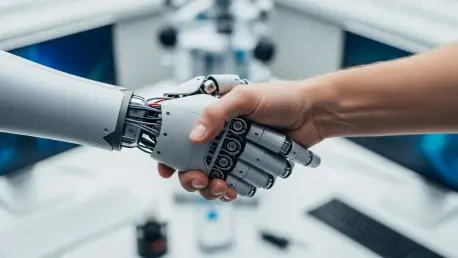

Today, we’re speaking with Milena Traikovich, a demand generation expert who specializes in leveraging technology to optimize marketing performance and drive high-quality leads. With the rapid evolution of AI in the workplace, she offers a critical perspective on how new tools are reshaping not just individual tasks, but the very fabric of team collaboration.
This conversation will explore the tangible impact of advanced AI assistants on marketing teams. We’ll delve into how these tools learn from workplace conversations to automate workflows, function as tireless project managers to enhance campaign visibility, and integrate across different platforms to accelerate decision-making. Ultimately, we will look ahead to understand the shift from reactive commands to a future of proactive, agentic AI partners.
The new Slackbot is described as a personal AI companion that learns from conversational data. How does this capability allow it to automate complex marketing workflows, and what are the first steps a team should take to train it effectively for their specific projects?
The real magic here is that it learns from the natural flow of work. It’s not about manually inputting rules; it’s about context. The AI ingests everything happening in your channels—the strategy debates, the file sharing, the final approvals—and starts connecting the dots. To get started, a team’s first step is really about digital hygiene. You need to create a rich learning environment. This means moving critical campaign conversations into dedicated public channels instead of siloed DMs. It means uploading briefs, drafts, and reports directly into those channels. By doing this, you’re not just organizing your work; you’re actively building the AI’s brain, teaching it the unique language and rhythm of your team’s projects so it can later draft a relevant brief or summarize a status update accurately.
For a marketing team managing campaign timelines and creative reviews, the upgraded Slackbot can act as a project manager. Could you walk us through a scenario of it summarizing a campaign’s status, and what key metrics could measure the resulting gains in team productivity and alignment?
Absolutely. Imagine it’s Monday morning, and instead of digging through emails and messages, a campaign manager simply asks, “What’s the latest on the Q2 launch?” The Slackbot wouldn’t just give you a list of links. It would provide a synthesized, context-rich summary right in the chat: “The social media creative was approved Friday and is scheduled. The blog post draft is still pending review from legal, which is the main bottleneck. Paid media performance is 10% above target, and you can see the full report here.” Suddenly, you’ve eliminated hours of friction and the need to ping five different people. The productivity gains are tangible. You could measure the reduction in time spent in status update meetings, faster creative approval cycles, and a decrease in clarification-seeking messages. You’d feel the alignment immediately because everyone is working from the same single source of truth, updated in real time.
With its ability to integrate with Salesforce data and third-party apps, Slackbot can trigger actions directly from chat. What are some of the most powerful cross-tool workflows marketers can build with this, and how does this change the speed of iteration on a live campaign?
This is where it moves from a convenience to a strategic advantage. Think about a lead generation workflow. A new high-value lead comes through Salesforce. The integration can trigger an instant notification in a dedicated Slack channel, but it goes further. The Slackbot can present buttons to “Assign to Sales Rep” or “Add to Nurture Campaign” right in the message. A marketer can take action with a single click without ever leaving the conversation. For a live campaign, this completely changes the pace of optimization. If a performance marketing channel shows a sudden dip in ROI, the bot can flag it in Slack, pull the relevant analytics report, and a manager can command it to reallocate the budget to a better-performing channel on the spot. It transforms iteration from a weekly or daily cycle into something that happens in near real-time.
Salesforce’s vision is for Slack to become an “agentic operating system,” shifting tools from reactive to proactive. Beyond answering queries, how might this proactive Slackbot anticipate a marketing team’s needs during a product launch, and what challenges might arise in trusting an AI with such foresight?
A proactive Slackbot moves from being an assistant to a collaborator. During a product launch, instead of waiting for you to ask for a status, it might notice that the launch date is one week away, but the final press release hasn’t been moved to the “approved” folder. It could then proactively send a gentle nudge to the project lead: “The product launch is next week, and the press release is still in draft. Would you like me to schedule a 15-minute sync with the content team to finalize it?” The biggest challenge here is trust. An AI with foresight is powerful, but one that makes incorrect assumptions could create chaos, scheduling unnecessary meetings or flagging false emergencies. The key will be starting with low-stakes proactive suggestions and establishing clear guardrails. Teams will need to build confidence in the AI’s judgment over time before they’re comfortable letting it take more significant autonomous actions.
What is your forecast for the evolution of AI agents in the workplace?
My forecast is that AI agents will become the central nervous system of marketing organizations. We’ll move beyond simply asking them questions and start treating them as proactive partners who manage the complex web of our tools, data, and workflows. The focus will shift from a marketer needing to know how to use ten different tools to simply stating the desired outcome—like “launch a lead nurture campaign for our new ebook”—and the AI agent will orchestrate the necessary steps across the entire system. This will free up immense creative and strategic capacity, allowing teams to focus on the ‘why’ and the ‘what,’ while the AI flawlessly handles the ‘how.’