
The rapid evolution of generative video technology has shifted from a novel experiment to an indispensable pillar of the modern media landscape, fundamentally altering how professional creators conceptualize and execute their visual narratives. As of early 2026, the digital marketplace is more saturated than ever, forcing independent filmmakers and marketing agencies to find innovative ways to maintain high-quality output without escalating production costs. Seedance 2.5 and integrated systems like Dreamina have emerged as critical solutions, bridging the gap between imaginative conceptualization and technical realization. These platforms are not merely filters or simple editing tools; they represent a comprehensive paradigm shift where artificial intelligence manages the labor-intensive aspects of lighting, textures, and temporal consistency. By leveraging these advancements, professionals can navigate the complexities of modern demand while ensuring that every frame resonates with cinematic quality. This transition reflects a broader trend where the success of a production is determined more by creative direction than by the size of the technical crew on set.
Overcoming the Bottlenecks of Traditional Filmmaking
Modern content production demands a level of versatility that often pushes individual creators to their physical and creative limits, requiring them to master everything from cinematography to color grading. The traditional workflow, while effective for large studios, often becomes a significant bottleneck for smaller teams or solo entrepreneurs who must produce daily content to remain relevant in a fast-paced algorithmic environment. This relentless pressure frequently leads to creative burnout, where the most innovative ideas are discarded because the time required to visualize them is simply unavailable. Seedance 2.5 addresses this systemic issue by providing a robust framework that handles the preliminary heavy lifting of visual construction. Instead of spending weeks on manual asset creation, professionals can now generate high-fidelity environments and character models that serve as a consistent baseline for their stories. This capability allows for a more agile approach to filmmaking, where the focus shifts back to the core narrative elements rather than technical repetition.
The integration of AI into the creative process provides a necessary psychological and practical buffer against the daunting prospect of the blank canvas, which often stalls professional momentum. By utilizing prompt-based visualization, a director can quickly iterate through multiple aesthetic styles or camera angles before a single physical scene is even scouted or lit. This rapid prototyping ensures that the most challenging phase of production—the initial translation of an idea into a visual format—is executed with unprecedented speed and efficiency. Furthermore, these tools act as a sophisticated sounding board, allowing creators to stress-test their concepts in a virtual space where the cost of failure is virtually zero. When a specific visual direction fails to land, the creator can pivot instantly, refining the parameters until the output aligns with their artistic vision. This iterative flexibility is particularly crucial for commercial projects where client expectations are high and timelines are compressed, ensuring the final product is polished.
Engineering the Seedance 2.5 Creative Ecosystem
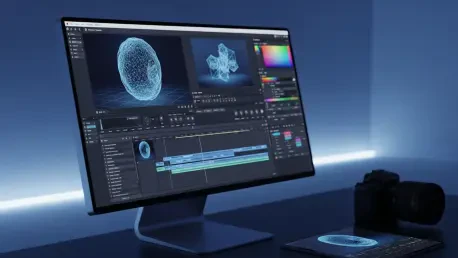
The transition from Seedance 2.0 to the 2.5 update signifies a move toward a more holistic creative ecosystem that prioritizes stylistic continuity and brand-specific customization. While earlier iterations were lauded for their ability to generate surreal and abstract imagery, the current version focuses on providing a stable foundation for professional branding and long-form storytelling. One of the standout features of this new architecture is its refined control over temporal consistency, which ensures that characters and environments remain stable across different shots and sequences. This technical breakthrough is vital for narrative-driven content, as it prevents the distracting visual jitter or artifacts that often plagued earlier AI-generated videos. By maintaining this high level of visual integrity, Seedance 2.5 allows creators to build cohesive worlds that feel grounded and professional, rivaling the output of much larger visual effects houses. This democratization of tools ensures that the quality of a video is no longer strictly tied to the project budget.
Beyond its generative capabilities, the Seedance ecosystem incorporates advanced pre-production features that streamline the transition from a written script to a visual storyboard. Filmmakers can now generate hyper-realistic references for their lighting setups and camera placements, which serves to minimize the guesswork traditionally associated with on-set production. This predictive modeling approach is a game-changer for independent directors who need to maximize their limited filming windows by knowing exactly how a shot should look before the actors arrive. By generating these high-fidelity previews, the software acts as a bridge between the abstract thought and the final frame, reducing the likelihood of costly reshoots and technical errors. Moreover, the platform’s ability to interpret complex atmospheric cues means that creators can experiment with specific moods, such as neo-noir lighting or ethereal palettes, with a degree of precision that was previously unattainable without specialized equipment and years of expertise.
Strategic Implementation and Future Considerations
The industry recognized that the successful integration of Seedance 2.5 into professional production pipelines during the early months of 2026 required a fundamental shift in creative strategy. Practitioners who moved away from linear workflows toward a more iterative process, where visualization occurred simultaneously with scripting, achieved the most significant gains in efficiency. These creators prioritized the mastery of AI-driven systems as a core competency, acknowledging that the ability to direct a generative model was as vital as operating a physical camera. By automating the tedious aspects of asset generation and color correction, teams allocated more resources toward narrative depth and market research. This shift allowed for the development of targeted content that resonated deeply with specific audience segments, ultimately leading to higher conversion rates and stronger brand loyalty. Moving forward, the most effective solutions involved a commitment to continuous learning to keep pace with the software updates.
The final transition into a fully AI-integrated production model emphasized the necessity of maintaining a distinct human element within the digital framework. Successful creators focused on developing proprietary style seeds that allowed them to maintain a consistent aesthetic across multiple platforms and campaigns. This approach ensured that while the generative tools provided the muscle, the creative soul of the work remained unique and irreproducible by competitors. The industry moved toward a standard where the value of a professional was measured by their ability to synthesize disparate technological inputs into a coherent emotional journey. By treating Seedance 2.5 as a high-performance instrument rather than a replacement for skill, professionals secured their place in a landscape defined by rapid innovation. These strategies proved that the most resilient creators were those who adapted their workflows to prioritize conceptual depth, ensuring that the technology served as a force multiplier for original ideas.