
The Digital Transformation of the Global E-commerce Content Industry
The modern retail landscape in 2026 has fundamentally shifted into a high-stakes visual economy where the quality of digital content serves as the primary currency for consumer trust and conversion. Current industry standards now demand a massive volume of product detail pages, placing immense pressure on brands to maintain professional photography and design standards at a scale that was previously impossible. This sector is increasingly influenced by the integration of AI into marketing, where machine learning and automation are rapidly replacing traditional, labor-intensive production workflows to keep pace with the hypercompetitive digital shelf.
Major market players are now navigating a strategic shift toward vertical integration, combining software intelligence with physical robotics to meet the relentless demands of rapid-fire digital retail. This transformation is not merely about speed; it is about adhering to evolving global data and advertising regulations while providing a seamless shopping experience. Brands that fail to integrate these automated systems find themselves struggling with the logistical bottlenecks of manual content creation, which often results in slower time-to-market and inconsistent brand representation across various global platforms.
Emerging Paradigms in Automated Content Creation
Technological Convergence and the Rise of AI-Led Production
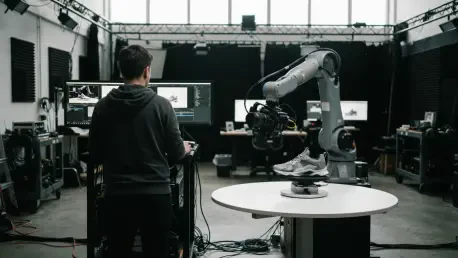
The industry is moving beyond human-assisted tools toward fully autonomous content supply chains that synchronize photography, copywriting, and graphic design into a single cohesive unit. Generative AI and spatial computing are being integrated to create immersive shopping experiences that go beyond static images. Robotic systems now ensure that product imagery remains authentic and true to life, providing a necessary counterbalance to the influx of fully synthetic, AI-generated visuals that can sometimes mislead consumers or fail to represent the actual physical product accurately.
Consumer behavior is driving this systemic change, as shoppers now expect instant product availability and high-fidelity visuals that traditional manual studios struggle to provide. By automating the capture and layout process, companies can produce a complete detail page in a matter of seconds. This convergence of hardware and software allows for a level of consistency and professional polish that was once reserved for high-end fashion shoots, making it the new standard for the entire retail sector, from consumer electronics to household goods.
Market Projections and the Scalability of Content Solutions
Data suggests a robust growth trajectory for automated retail solutions, with the demand for AI-driven design software expected to surge significantly from 2026 to 2029. Businesses are increasingly seeking to reduce the time-to-market for new SKUs, leading to a shift from capital-intensive studio rentals to subscription-based AI models and shared robotic infrastructure. Performance indicators show that automation can reduce the content creation cycle from several days to under a minute, offering a massive competitive edge for global conglomerates and small enterprises alike.
Future forecasts point toward a democratized market where professional-grade content production is a ubiquitous utility. As the technology matures, the cost of entry for sophisticated robotic photography continues to drop, allowing smaller brands to compete on visual merit with established market leaders. This scalability is essential for the survival of businesses in an environment where the lifespan of a digital marketing campaign is measured in hours rather than weeks, requiring a constant stream of fresh, optimized content.
Overcoming Technical and Logistics Barriers in Content Automation
Transitioning from manual to robotic photography presents significant technological hurdles, particularly in capturing the diverse textures and reflective properties of various consumer goods. Materials like glass, polished metal, and intricate fabrics require specialized lighting and sensor calibrations that traditional automated systems often lack. To solve these issues, companies are developing hybrid ecosystems that use real-time AI analysis to adjust robotic movements and lighting setups on the fly, ensuring that the physical essence of the product is captured without human intervention.
Moreover, integrating AI-generated copy with brand-specific tone and manner requires sophisticated natural language processing to avoid generic messaging. A one-size-fits-all approach to copywriting often fails to resonate with diverse audiences, making it necessary for these systems to allow for localized aesthetic calibrations. Modern content platforms now enable real-time adjustments that suit different regional markets, ensuring that the visual and textual elements work in harmony to meet the specific cultural and linguistic expectations of shoppers worldwide.
Navigating the Regulatory Landscape of AI and Digital Media
The rise of AI-generated content brings a complex set of legal standards regarding intellectual property, data privacy, and truth-in-advertising. Compliance with regional regulations is becoming critical, especially as major platforms like Amazon and Shopify implement stricter guidelines for product representation. Brands must navigate these rules carefully to ensure that robotic photography and AI enhancements do not cross into deceptive practices. Maintaining a balance between automated efficiency and the authentic representation of physical goods is now a primary concern for legal and marketing departments.
Digital media laws are evolving to require disclosure when content is heavily modified by AI, leading to a preference for robotic systems that capture real physical products rather than purely generative models. Brands are prioritizing systems that offer a verifiable “truth in image” to protect themselves from potential litigation or consumer backlash. This regulatory environment is driving the industry toward a more transparent use of automation, where the goal is to enhance the reality of the product rather than create a fictionalized version that might lead to high return rates and damaged reputations.
Future Horizons for Robotics and Content Innovation
Global Expansion and Cross-Market Adaptation
The industry is headed toward a seamless international expansion model where AI algorithms are tuned to local cultural aesthetics and design preferences automatically. Markets with high growth potential, such as Japan and Southeast Asia, are becoming primary targets for automated studios due to their rapidly expanding digital retail footprints and high consumer demand for quality visuals. This expansion is supported by the deployment of robotic one-stop production lines that can be localized with minimal friction, allowing brands to launch global campaigns simultaneously across different regions.
Localized adaptation involves more than just translating text; it requires the AI to understand the visual nuances that appeal to specific demographics. In 2026, the focus has shifted toward creating robotic hubs that can be remotely managed but locally operated, reducing the need for shipping physical samples across borders for photography. This decentralized approach not only speeds up the content creation process but also aligns with global sustainability goals by significantly reducing the carbon footprint associated with traditional studio logistics.
Diversification into the Experience Economy and Beyond
Beyond traditional retail, automated photography and AI content tools are finding applications in tourism, event marketing, and experiential branding. Robotic systems are being utilized in public spaces to provide high-quality, instant content for consumers, signaling a shift where professional photography becomes a ubiquitous utility rather than a luxury service. These systems allow users to interact with products in physical spaces and receive professional-grade media for social sharing immediately, blurring the lines between commerce and entertainment.
Innovation in spatial computing will likely further merge the physical and digital realms, creating new growth areas in interactive advertising where shoppers can manipulate robotic cameras remotely to view products in real time. The diversification into the experience economy represents a significant revenue opportunity for technology providers, as the demand for high-quality personal and commercial content continues to outpace traditional supply. This trend highlights the versatility of robotic systems that were once limited to warehouse environments but are now essential tools for public engagement and brand storytelling.
Summary of Innovations and Strategic Outlook
The strategic landscape of 2026 has moved toward a model where content creation functions as a utility rather than a creative luxury. Organizations have identified that the automation of the content supply chain is the only viable path to maintaining a competitive presence on global platforms. By adopting a unified robotics and AI ecosystem, stakeholders have resolved the tension between high-volume output and visual authenticity. This transition has allowed for the rapid penetration of emerging markets where digital infrastructure surpasses traditional retail setups. Future strategies prioritized the integration of these tools into physical spaces, ensuring that professional media production remains an accessible resource for all tiers of commerce. Overall, the industry established a new standard for transparency that protected both brand integrity and the consumer experience through precise robotic execution.