
An Indian YouTube channel, built entirely on AI-generated animations with no dialogue or intricate plot, is generating annual revenues that eclipse the budgets of many feature films, signaling a profound disruption in digital media. The shocking success of “Bandar Apna Dost” is more than an outlier; it is the leading edge of a powerful new wave in content creation. This analysis will dissect this phenomenon, examine the underlying trend of algorithm-friendly AI content, and explore its deep implications for the future of creativity and the digital creator economy.
The Anatomy of an AI Juggernaut The Bandar Apna Dost Case Study
Charting Explosive Growth and Financial Success
The metrics behind “Bandar Apna Dost” are nothing short of staggering. With an audience that has driven over 2.07 billion lifetime views, the channel is estimated to generate an annual revenue surpassing $4.25 million, or approximately ₹35–38 crore. This financial performance places it firmly in the upper echelon of digital media enterprises, rivaling established entertainment networks and content studios.
To put this success into perspective, its earnings exceed the production budgets of many mid-tier Hollywood films and surpass what most traditional media ventures could hope to achieve in a similar timeframe. This level of profitability, achieved without the overhead of a large creative team or physical production, underscores the disruptive economic power of AI-driven content models. It establishes a new benchmark for what is financially possible with minimal human intervention.
The Blueprint for Viral AI Content
The channel’s content formula is a masterclass in universal appeal. Its videos are short, language-free animated clips featuring a recurring cast of characters, most notably an anthropomorphic monkey and a figure resembling the Hulk. These characters engage in simple, often humorous or mildly dramatic scenarios that require no script, dialogue, or cultural context to be understood.
This script-free, visually driven format is the key to its global virality. By eliminating linguistic and cultural barriers, the content becomes instantly accessible to a worldwide audience, from toddlers to adults, across any demographic. The short, repetitive nature of the videos makes them highly binge-worthy, perfectly aligning with the consumption patterns favored by modern short-form video platforms and their recommendation algorithms.
The Underlying Trend Rise of Algorithm Driven AI Slop
Defining a New Content Paradigm
The success of “Bandar Apna Dost” is emblematic of a wider trend known as “AI slop.” This term describes content generated with minimal human creative input, designed for rapid, high-volume production, and optimized primarily to satisfy platform algorithms rather than to achieve artistic merit. It prioritizes engagement metrics over narrative depth or originality.
While the term may sound pejorative, the model it describes has proven to be extraordinarily effective. “Bandar Apna Dost” serves as a prime example of how this approach can translate into massive viewership and revenue. It demonstrates a paradigm where the most successful content is not necessarily the most artful but the most algorithmically efficient.
How AI Exploits Platform Algorithms
Digital platforms like YouTube are increasingly rewarding this type of content, whether intentionally or not. Their recommendation systems are engineered to maximize user engagement, and metrics like watch time and repeat views are paramount. Short, looping, and visually stimulating videos are perfectly designed to capture and hold user attention, triggering the algorithm to promote them more widely.
Evidence of this shift is already clear. Recent analyses show that over 20% of the videos recommended to new users on YouTube Shorts fall into the category of AI-generated or similarly low-effort “brainrot” content. This indicates that platform algorithms have developed a clear preference for content that is easily digestible and endlessly replayable, creating a fertile ground for AI-driven channels to flourish.
Industry Wide Implications The New Creator Landscape
A Paradigm Shift in Content Production
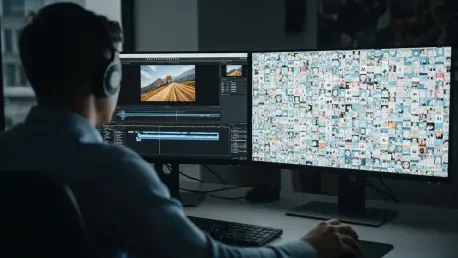
The rise of sophisticated AI tools is fundamentally democratizing the act of content creation. It is now possible to reach a global audience without the need for large production budgets, professional film crews, or expensive equipment. An entire production workflow, from initial concept and scriptwriting to animation and final video rendering, can be managed through AI.
This new reality lowers the barrier to entry for aspiring creators worldwide, enabling them to produce high-quality visual content from a single computer. However, it also redefines the skills required to succeed, shifting the emphasis from traditional creative talents toward prompt engineering and an understanding of algorithmic distribution.
The Human Creator’s Crossroads Adapt or Become Obsolete
This technological shift presents a significant challenge for human creators, who now find themselves competing in a media landscape increasingly saturated with AI-generated content. Many express legitimate concerns about their ability to keep pace with the sheer volume and speed of automated production, fearing that their original work will be drowned out.
To remain relevant, human storytellers may need to pivot their focus toward the qualities that AI cannot yet replicate. This includes fostering deep community engagement, building a personal brand rooted in authenticity, and creating narratives with genuine emotional depth and originality. The future for human creators may lie in emphasizing the irreplaceable value of the human touch.
The Central Conflict Automation vs Originality
Creator Pushback and Saturation Fears
A growing chorus of creators and critics argues that the proliferation of low-effort AI channels is devaluing original, high-quality work. They contend that the digital landscape is becoming oversaturated, making it increasingly difficult for thoughtful, human-led productions to gain visibility and find an audience.
At the heart of this argument is the perception that YouTube’s recommendation system is unfairly biased. Critics suggest that by prioritizing simple engagement metrics, the algorithm inadvertently promotes algorithm-friendly AI content over more complex and nuanced human creations, creating an uneven playing field that favors automation.
The Platform’s Stance on AI Creativity
In response to these concerns, YouTube has maintained an open stance, framing AI tools as a legitimate and permissible form of digital expression. The platform’s official position does not ban AI-generated content, viewing it instead as another tool in a creator’s arsenal, much like editing software or digital cameras.
This position highlights the core challenge facing all major digital platforms today: how to strike a balance between promoting the highly engaging, algorithm-friendly content that drives traffic and revenue, while also nurturing and rewarding the human originality that fosters a vibrant and diverse creative ecosystem.
Conclusion Navigating the Future of AI Dominated Media
The meteoric rise of channels like “Bandar Apna Dost” confirms that AI-driven content is not a fleeting novelty but an irreversible and transformative trend in digital media. Its success provides a clear blueprint for leveraging automation to achieve unprecedented scale and profitability, fundamentally altering the rules of content creation.
As AI tools become more sophisticated, the line between human and machine-generated media will continue to blur, presenting new challenges for maintaining a balanced and fair digital ecosystem. The pressure on platforms to refine their algorithms to recognize and reward nuanced creativity, not just raw engagement, will undoubtedly intensify.
Ultimately, the path forward requires adaptation from all sides. Creators must learn to harness new technologies while doubling down on the unique value of human ingenuity and emotional connection. Platforms, in turn, must evolve to foster a media landscape that champions both technological innovation and the irreplaceable spark of human creativity.