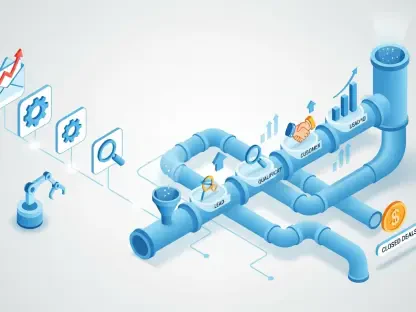

The pursuit of a single, all-encompassing technology platform often leads organizations down a path of compromised functionality and frustrated teams, a stark contrast to the seamless efficiency it promises. Many businesses, in their quest for simplification, attempt to consolidate their marketing, advertising, and sales technologies into one suite. However, this frequently results in sacrificing the very specialized capabilities that give their teams a competitive edge. True unification is not about forcing everything into one box but about creating a harmonious ecosystem where best-in-class tools work together seamlessly.
This article explores a more effective, federated strategy for aligning the modern revenue stack. It addresses the common pitfalls of over-consolidation and provides a clear framework for integrating martech, adtech, and salestech. By focusing on architectural alignment rather than tool replacement, organizations can achieve a unified system that enhances, rather than diminishes, their operational strengths. Readers will gain an understanding of how to build a connected yet flexible technology stack that drives sustainable growth.
A Federated Approach to Stack Unification
Why Does a Single Platform Strategy Often Fail?
The appeal of an all-in-one platform is undeniable, promising a single source of truth, reduced vendor management, and simplified workflows. Yet, this approach frequently overlooks the distinct and highly specialized needs of different revenue-generating departments. The powerful features required for sophisticated programmatic advertising, for instance, are vastly different from the nuanced capabilities needed in a sales engagement tool or an advanced attribution platform.
When companies consolidate into a single suite, they often trade depth for breadth, leaving teams with generic tools that fail to meet their specific operational demands. This sacrifice can lead to decreased agility, less effective campaigns, and a tangible loss of competitive advantage. The reality is that the most successful B2B teams require specialized instruments to excel, and a one-size-fits-all solution rarely provides the necessary power or precision.
What Is the Foundation of a Unified Stack?
The linchpin of a successful federated revenue stack is a shared, persistent identity layer that connects customer touchpoints across every channel. Instead of replacing functional systems, the focus shifts toward unifying the data they generate. This is most effectively achieved through a Customer Data Platform (CDP) or a master identity graph, which serves as a central hub for resolving customer identities and synchronizing information.
This foundational layer allows marketing and sales to operate in complete alignment, even while using separate, specialized systems. For example, insights from sales interactions in a CRM can inform advertising retargeting campaigns powered by a dedicated adtech platform. Consequently, data flows seamlessly between tools, creating a cohesive customer journey and empowering teams with a holistic view of every interaction without forcing them onto a single, restrictive platform.
How Should Teams Restructure Their Technology Architecture?
A fundamental shift in perspective is required, moving away from organizing tools by function (e.g., CMS, DSP, CRM) and toward aligning them around shared business outcomes. This revenue-centric architecture prioritizes goals such as pipeline acceleration, customer expansion, or deal velocity. Such a structure naturally fosters collaboration and ensures that technology investments are directly tied to revenue generation.
This outcome-oriented approach often relies on robust, API-based integrations that connect disparate systems in a meaningful way. For example, campaign engagement data from a marketing automation platform can be fed directly into sales engagement tools, providing sales representatives with timely context for their outreach. Moreover, layering shared business intelligence and analytics tools over this integrated stack allows revenue teams to track influence across the entire funnel, with sales input becoming critical to validating the true drivers of performance.
What Role Does Governance Play in This Process?
Aligning technology across departments is fundamentally a change management challenge, not merely a technical one. Without a strong governance framework, even the most elegantly designed stack will fail to deliver on its promise. Success hinges on establishing shared definitions, cross-functional data standards, and clear lines of ownership for both the technology and the data it produces.
To oversee this complex alignment, many organizations are establishing joint tech councils or centralizing responsibility within a revenue operations (RevOps) team. These bodies are tasked with ensuring that integrations are maintained, data quality is upheld, and the overall technology ecosystem evolves in a way that supports the company’s strategic goals. This structured oversight transforms a collection of disparate tools into a coordinated, high-performance revenue engine.
Summary and Key Takeaways
The convergence of the modern revenue stack is an exercise in sophisticated orchestration, not simplistic consolidation. The goal is to enable specialized tools to work in concert through a framework of shared data, common goals, and robust governance. This federated model allows teams to move faster and more effectively, together.
At its core, this strategy depends on several key pillars: unifying the stack around a persistent data and identity layer, architecting systems to support shared revenue outcomes, and implementing a governance structure to manage the change. By preserving best-in-class capabilities where they provide a competitive advantage, businesses can build a powerful, flexible, and unified ecosystem that drives measurable results.
Final Thoughts on Future-Proofing Revenue Operations
Organizations that successfully navigated the complexities of stack unification found that a federated approach did more than solve immediate integration challenges; it created a foundation for future agility. This model allowed them to adopt new, innovative tools and adapt to market changes without having to overhaul their entire revenue engine.
Ultimately, the process of unifying martech, adtech, and salestech revealed that the most resilient revenue operations were not built on a single, monolithic platform. Instead, they were designed as dynamic ecosystems, where thoughtful orchestration empowered teams to leverage specialized technologies to their fullest potential, ensuring the business was well-equipped to capitalize on future opportunities.