
Milena Traikovich has spent her career at the intersection of data-driven demand generation and high-impact brand storytelling, helping businesses navigate the complex landscape of lead optimization. As an expert in performance analytics and experiential strategy, she understands that modern consumers, particularly in the fan culture space, require more than just passive advertising to form a lasting connection with a brand. In an era where digital impressions are often fleeting, Traikovich champions the power of physical presence and authentic engagement as the ultimate tools for building brand equity. Her insights reveal how the shift from traditional trade show tactics to fully immersive environments has redefined what it means to “show up” at major events like San Diego Comic-Con or PAX.
This conversation explores the evolution of brand activations from simple banner booths to intricate, lore-heavy destinations that resonate with emotionally invested audiences. We discuss the strategic importance of social media shareability, the logistical nuances of taking activations beyond the convention floor into city streets and parking lots, and the critical role of authenticity in winning over discerning fans. Traikovich also sheds light on the creative risks associated with high-scale investments and provides a forward-looking perspective on how the rising standards of fan expectations are shaping the future of experiential marketing.
Many brands have transitioned from simple banner booths to fully realized, walk-through environments. How do these immersive spaces specifically drive higher brand recall compared to traditional displays, and what design elements are essential to making a physical space feel like a destination rather than just a marketing stall?
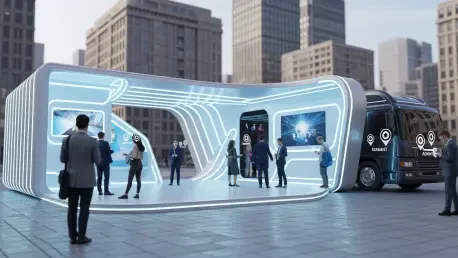
The shift we are seeing is essentially a move from “advertising at” people to “experiencing with” them, which has a massive impact on how a brand is remembered. When a brand like Netflix or Warner Bros. builds a fully realized walk-through environment, they aren’t just showing a product; they are inviting the fan to step inside a physical manifestation of a world they already love. These spaces drive higher recall because they engage multiple senses and create a narrative memory rather than a transactional one. To make a space feel like a true destination, you have to move past the “spinning wheel” giveaways and focus on architectural details that reflect the franchise’s aesthetic. It is about the textures of the walls, the lighting that mimics a specific scene, and the absence of corporate clutter that reminds the visitor they are being marketed to. When you prioritize the atmosphere over the logo, you create a sense of discovery that makes the attendee feel like they have traveled somewhere special, which is exactly what sticks in their mind long after the convention ends.
In an environment where every interaction is a potential piece of social media content, how do you balance aesthetic appeal with functional engagement? What specific steps should a creative team take to ensure an activation is shareable without it feeling forced or disruptive to the fan experience?
The modern fan event is essentially a content engine, where every attendee is a broadcaster, so your activation must be “camera-ready” from every single angle. However, if a space is just a backdrop for a photo, it feels hollow and the engagement ends the second the shutter clicks. We aim for what I call “organic shareability,” where the action the fan is performing is so interesting or rewarding that they naturally want to document it. Creative teams should integrate the “photo op” into the activity itself—perhaps it’s a demo of a new game or a specific lore-heavy interaction—so the social content feels like a report from an adventure rather than a staged advertisement. You have to ensure that the lighting is optimized for mobile sensors and that there are clear, unobstructed lines of sight for those hero shots. If you force a hashtag on a wall, it feels like homework; if you build a world that is so visually striking that people can’t help but pull out their phones, you’ve won.
Convention attendees are often more emotionally invested than the average consumer. How can brands leverage this existing excitement through mobile tours or off-site activations in parking lots and city blocks, and what are the unique logistical challenges of engaging people outside the main venue?
When you engage fans outside the main venue, you are catching them in a completely different headspace where they are often more relaxed but still buzzing with the energy of the event. These off-site activations, whether they are in a nearby parking lot or part of a mobile tour, allow a brand to own a specific territory without the visual noise of a thousand other booths competing for attention. People in these spaces are often waiting in long lines or walking between panels, so providing them with a high-effort experience during that “downtime” can create a powerful positive association. The logistical challenge is that you are often dealing with the elements, city permits, and the flow of local traffic, which requires a much more robust setup than an indoor booth. You might use wrapped advertising trucks that double as mobile stages or sampling stations, ensuring the brand is visible to the thousands of people who might not even have a badge for the main show. It is a way to extend the reach of the campaign into the very fabric of the host city, turning every street corner into a potential touchpoint for the brand.
Fans are notoriously quick to spot a lack of effort or a misunderstanding of a franchise’s lore. How do you vet staff to ensure they meet these high expectations for authenticity, and what metrics do you use to measure the success of an activation that prioritizes “vibe” over sales?
Authenticity is the only currency that truly matters in these spaces, and a single staffer who hasn’t watched the show or played the game can dismantle the entire illusion in seconds. We look for brand ambassadors who are genuinely part of the culture or who have been rigorously trained to speak the “language” of the specific fandom we are targeting. It isn’t just about reading a script; it’s about being able to handle a deep-cut question from a fan who has spent years following the IP. When it comes to measurement, we move beyond just “leads captured” and look at qualitative data like social sentiment, the average dwell time within the space, and the volume of organic mentions across platforms. We track how many people are documenting the experience versus just walking through, as that visual evidence is a direct reflection of the “vibe” and effort we’ve put in. If the fans are comparing your activation favorably to others on the floor in real-time, you know you have achieved a level of success that traditional sales metrics can’t fully capture.
With events like San Diego Comic-Con attracting over 100,000 people, the competition for attention is intense. What are the creative risks of using high-cost custom builds or wrapped advertising trucks, and how do you ensure these large-scale investments actually translate into long-term purchase intent?
The primary risk with high-cost builds is that you might create something beautiful that fails to actually “do” anything for the consumer, leading to a high cost-per-impression but low long-term value. To ensure that an investment at an event with 100,000 attendees translates into intent, the experience must be tied to a tangible product interaction or an exclusive digital “drop” that lives on after the event. For example, using a wrapped truck isn’t just about the visual—it’s about what happens when that truck stops, whether it’s a product sampling or an early-access demo. We rely on industry research showing that these in-person interactions significantly outperform passive digital ads in terms of recall and purchase intent because the fan has a physical memory associated with the product. By providing something of actual value—be it a high-quality exclusive or a genuinely fun interaction—you move the needle from “I saw that brand” to “I trust that brand.” Large-scale investments are only worth it if they serve as the starting point for a deeper relationship, turning a one-time visitor into a long-term advocate.
What is your forecast for the future of brand activations at pop culture events?
I believe the standard for what constitutes a “good” activation will continue to skyrocket as fans become even more sophisticated and digitally connected. We will see a complete move away from the traditional trade show floor model toward “event-within-an-event” structures, where brands act more like entertainment producers than advertisers. Expect to see more integration of augmented reality that layers digital lore onto physical spaces, allowing fans to interact with the environment in even deeper ways through their devices. The competition will shift from who has the biggest booth to who has the most creative and effort-filled presence, with brands increasingly focusing on off-site “destinations” to escape the clutter of the main hall. Ultimately, the future belongs to those who treat fans as partners in a shared experience rather than just a target audience to be sold to.