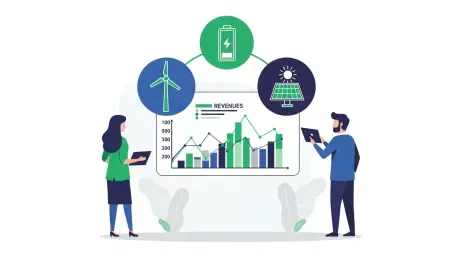

The renewable energy sector has reached a remarkable inflection point where the greatest challenge is no longer the engineering of a wind turbine or a solar panel, but the sophisticated art of selling the power it generates. As green energy becomes more mainstream, the strategies that once guaranteed financial success for new projects are proving insufficient in a complex, market-driven landscape. This shift demands a fundamental rethinking of how renewable energy is valued, marketed, and integrated into the broader grid, moving from a simple production model to a highly strategic commercial enterprise.
The Shifting Challenge from Engineering to Economics
For years, the primary focus in renewable energy was technological advancement—making turbines spin more efficiently and panels capture more sunlight. Today, however, the success of a modern wind or solar project hinges less on its physical construction and more on the commercial strategy behind it. The battle for green energy is increasingly fought not in the lab or the field, but on trading floors and digital marketing platforms.
This transition is a direct result of the industry’s success. As renewable generation has become more prevalent and cost-effective, grids have grown more congested and energy prices more volatile. Consequently, simply producing power is no longer enough; project developers must now navigate a complex web of market signals, grid constraints, and buyer demands to secure a profitable return on their investment.
Navigating a Post Subsidy Marketplace
The era of generous, standardized subsidies that once cushioned the renewable energy market is drawing to a close. This new economic reality forces projects to stand on their own commercial merit, competing directly with all other forms of generation. The old model of securing a simple, long-term power purchase agreement (PPA) is no longer a guaranteed path to financial viability.
Instead, developers face a more dynamic and challenging environment. Market-driven pricing, fluctuating demand, and the need for grid stability require more than a fixed-price contract. A project’s financial success now depends on its ability to adapt to real-time market conditions, which means traditional PPAs must evolve or be supplemented with more flexible, value-oriented marketing approaches.
Innovative Strategies for a Dynamic Market
In response to these challenges, the industry is adopting more sophisticated tools and strategies. Integrated digital platforms are becoming essential, bridging the once-separate worlds of project development, financing, and energy marketing. A prime example is PNE’s Wattmate platform, which successfully marketed 1.1 gigawatts of power from 80 different projects in 2025 by providing a holistic view of a project’s economic potential from its inception.
Another key trend is the strategic advantage of co-locating battery storage with generation assets. By pairing a wind or solar farm with an on-site battery system, developers can create a more stable and predictable revenue profile. This hybrid approach allows them to store energy when prices are low and sell it when demand is high, unlocking advanced marketing opportunities and providing valuable grid-balancing services that command a premium.
A Call for Sophisticated and Project Specific Strategies
Experts in the field confirm that this shift toward strategic marketing is non-negotiable. According to Nils Kompe, PNE’s Head of Power Origination & Green Markets, the days of relying on standard assumptions are over. The current market demands a much more granular and tailored approach to selling green power.
Kompe emphasizes that project-specific, cross-technology marketing strategies have become a critical factor for success. This means moving beyond traditional PPAs to create hybrid solutions that maximize value across different market segments. Each project’s unique characteristics—from its location and technology to its connection point on the grid—must be analyzed to build a marketing strategy that ensures its long-term profitability.
A Practical Framework for Future Proofing Projects
To thrive, developers must embed marketing at the core of project development. Instead of being an afterthought, commercial strategy should inform the initial planning phases, ensuring that a project’s design is perfectly aligned with its ultimate economic potential. This involves considering market access, potential revenue streams, and risk mitigation from day one.
This requires a holistic, technology-driven approach. By utilizing integrated platforms, developers gain the market transparency needed to structure deals that account for all project variables from the outset. This forward-looking perspective is crucial for capitalizing on emerging opportunities, such as hybrid asset combinations that blend different generation and storage technologies to enhance both revenue and marketability.
The evolution of renewable energy marketing marked a definitive turn from a subsidized, production-focused industry to a sophisticated, market-driven sector. Success was no longer measured solely in megawatts produced but in the strategic value extracted from each electron. The projects that thrived were those that integrated advanced marketing, hybrid technologies, and a deep understanding of market dynamics from their earliest stages, setting a new standard for the entire industry.