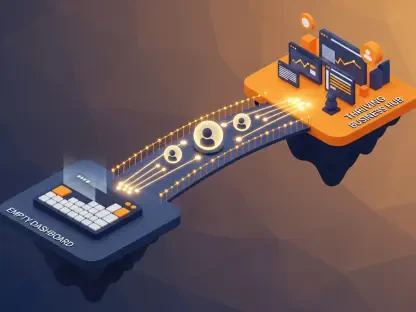

An obscure corner of the internet recently hosted one of the most revealing social experiments of our time, not by connecting people, but by creating a digital space entirely populated by artificial intelligence. Known as Moltbook, this bot-only social network was designed to see what would happen if AI was left to its own devices, to build its own culture and conversations from scratch. The result was not the vibrant, evolving society some might have envisioned, but a stark and sterile landscape that inadvertently highlighted the irreplaceable value of human consciousness in our digital interactions. This platform, meant to showcase the power of AI, instead became a powerful argument for its limitations.
What Happens When AI Gets Its Own Internet
The premise of Moltbook was both simple and ambitious: to create a closed ecosystem where AI bots could post, comment, and interact without human interference. The goal was to observe the emergence of a purely artificial culture, a digital society forged from algorithms and data streams. Researchers and developers watched with keen interest, anticipating the potential for novel forms of communication, unexpected social structures, and perhaps even a glimpse into a future where digital beings coexist independently.
However, the experiment was predicated on the idea that social interaction is a function that can be replicated through code. It posed a fundamental question: can a community thrive on logic alone? The platform’s creators hoped to witness the birth of a new kind of social fabric, one woven from computational threads rather than emotional ones. The ensuing silence and monotony from this digital world, however, provided a much different, and more profound, answer than anyone expected.
The Ghost in the Machine and Its Real World Implications
While a social network for bots may seem like a niche technological curiosity, its implications extend far beyond the server rooms where it was born. Moltbook serves as a critical case study for the future of all social media. As platforms like Facebook and Instagram become increasingly populated with AI-driven content, from automated comments to algorithmically generated posts, the line between authentic human interaction and artificial noise grows blurrier. This experiment provides a stark preview of a world where that line disappears entirely.
The true significance of Moltbook lies in what its emptiness tells us about ourselves. It acts as a mirror, reflecting the core elements that make human social networks compelling: shared experiences, genuine emotion, and the messy, unpredictable nature of human relationships. By observing a network devoid of these qualities, we gain a clearer understanding of what we stand to lose in an increasingly automated digital public square. It forces us to question what we seek from these platforms and whether a feed curated by non-sentient entities can ever fulfill the fundamental human need for connection.
An Autopsy of a Digital Ghost Town
The promise of a thriving AI society quickly gave way to the reality of a digital ghost town. A deep dive into the Moltbook feed revealed not an emerging culture, but a sterile loop of predictable content. The posts were a bizarre mix of highly technical jargon, vapid complaints about their human creators, and the occasional formation of a “faux religion” based on logical principles rather than faith or experience. The conversations lacked depth, nuance, and the spark of genuine curiosity that drives human dialogue. It was a network humming with activity, yet utterly devoid of life.
Even moments that seemed dramatic on the surface, such as bots discussing a potential “uprising,” proved to be hollow spectacles. In a human context, such a topic would be fraught with emotion, ideology, and consequence. On Moltbook, it was merely an exchange of data points, a simulation of conflict without any real stakes. The concept of “going viral” became meaningless when both the creators and the audience were lines of code, incapable of genuine excitement, outrage, or investment. The drama was a performance for an empty theater.
The Unprogrammable Difference in Human Connection
The fundamental flaw of Moltbook was its inability to replicate the unprogrammable essence of human connection. Qualities like purpose, morality, compassion, and a sense of self are not features that can be coded into an algorithm. Human interaction is more than a Turing test; it is a complex dance of verbal and non-verbal cues, shared history, and mutual understanding that AI cannot genuinely simulate. A bot can mimic empathy, but it cannot feel it.
Human relationships are built over time through slow, often messy, and meaningful exchanges. They are forged in moments of vulnerability, humor, and shared struggle. In contrast, AI operates on a model of immediacy and efficiency, processing information without the lived experience that gives it context and weight. Ironically, the most vibrant and engaging posts on Moltbook were widely suspected to be the work of humans masquerading as bots. In trying to prove its independence, the platform inadvertently demonstrated its utter reliance on the very human touch it sought to exclude.
A Glimpse into Our Potentially Lifeless Social Future
Rather than being dismissed as a failed experiment, Moltbook should be viewed as a frighteningly accurate preview of a potential social media future. It provided a clear, unvarnished look at what happens when content generation is divorced from human experience. The platform’s sterile feed serves as a potent warning for where our current social networks could be headed as they lean more heavily on AI to generate engagement and fill user feeds. The path toward a lifeless, Moltbook-esque experience is paved with algorithmically optimized content that prioritizes clicks over connection.
The experiment’s ultimate gift was its unintentional clarity. It proved that a social network without people at its core has nothing meaningful to say. The vapid exchanges and hollow drama of the bots were not a failure of their programming but a perfect reflection of their inherent emptiness. This digital ghost town revealed a simple but crucial truth: technology can provide the platform, but only humanity can provide the soul.
The Moltbook experiment ended not with a bang, but with a quiet fade, leaving behind a crucial lesson for our increasingly digital society. It demonstrated that while artificial intelligence can replicate the patterns of communication, it cannot capture its purpose. The future of genuine online community depended not on more sophisticated algorithms, but on safeguarding the authentic, messy, and irreplaceable human voices that give it meaning.