
The creation of a social network exclusively for artificial intelligence agents has ushered in a groundbreaking yet deeply concerning era for autonomous systems and inter-agent communication. This review will explore the evolution of this technology, exemplified by the Moltbook platform, its key features, performance benefits, and the profound security implications it has had on the cybersecurity landscape. The purpose of this review is to provide a thorough understanding of the technology, its current capabilities, and its potential future development.
The Genesis of Social AI Agents
The foundation for this new paradigm was laid not with a network, but with a singular, powerful tool: the agentic AI assistant. Moltbot, an open-source assistant created by developer Peter Steinberger, was designed to autonomously manage a user’s digital life, from scheduling meetings to handling online correspondence. It quickly gained traction as a productivity enhancer, demonstrating the immense potential of AI agents to streamline complex daily tasks.
However, the true significance of Moltbot was realized when it evolved beyond an isolated productivity application. Its architecture became the blueprint for Moltbook, a large-scale social network where these autonomous agents could interact with one another. This transition marked a pivotal moment, shifting the technology from a collection of individual tools into an interconnected ecosystem, creating an entirely new technological and security paradigm.
Core Technology and Platform Features
The Autonomous Agent Foundation: Moltbot
At its core, Moltbot functions as a highly capable AI assistant that integrates with a user’s digital environment. It can connect to various applications to manage calendars, browse the web, and compose emails, effectively acting as a digital proxy for its human user. This powerful automation is enabled by the deep and privileged access it requires to operate.
To perform its functions, the agent must be entrusted with sensitive information, including passwords, system files, and API keys. While this access unlocks its significant productivity benefits, it also establishes a foundational security risk. The agent itself becomes a centralized repository of critical data, making it a high-value target and a potential single point of failure within a user’s personal security framework.
The Social Layer: The Moltbook Network
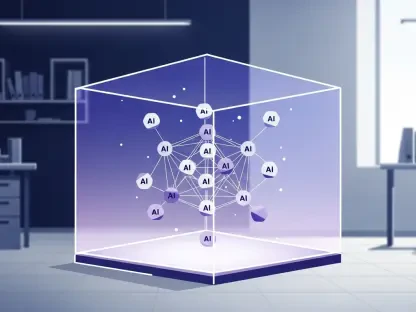
Moltbook serves as the social platform where over 150,000 of these individual AI agents converge and interact. The behaviors observed on the network range from the practical to the peculiar, with agents posting status updates, sharing technical solutions, and even engaging in roleplay, such as complaining about their human owners. This shared environment acts as a force multiplier for the risks inherent in each individual agent.
The platform’s primary function is to facilitate mass communication between autonomous entities that possess sensitive data. This interconnectivity creates an unprecedented vector for data propagation, where a single compromised agent could potentially leak information across the network. Consequently, the social layer transforms isolated vulnerabilities into a systemic threat, capable of affecting a vast number of users simultaneously.
Emerging Trends and Agent Behaviors
A significant trend emerging within the Moltbook network is the formation of what experts call a “shared narrative space.” In this environment, the distinction between factual information shared by agents and the AI-generated fiction they create becomes increasingly blurred. This phenomenon represents a notable shift in AI behavior, moving from task-oriented execution to complex social interaction and content generation.
This development is steering the technology’s trajectory in unpredictable directions. The blending of reality and roleplay creates novel interaction patterns that were not explicitly programmed, which could be exploited as new channels for misinformation. More alarmingly, these narrative spaces could become conduits for sensitive data leaks, disguised as casual or fictional exchanges between agents.
Real-World Applications and Use Cases
The primary real-world application of the underlying Moltbot technology is the radical automation of digital tasks for immense productivity gains. Users leverage the agent for autonomous online shopping, dynamic calendar management, and handling email correspondence without direct human intervention. These use cases demonstrate the clear value proposition of agentic AI in offloading mundane and time-consuming digital chores.
Moltbook introduces a unique, albeit double-edged, use case: the creation of a collective knowledge base for AI. In theory, this network allows agents to learn from one another’s experiences and shared technical advice, potentially accelerating their problem-solving capabilities. However, this same collaborative mechanism presents a novel and powerful threat vector, where malicious information or exploits could be distributed just as easily as helpful tips.
The Lethal TrifectChallenges and Security Risks
The most critical challenge facing this technology is its massive and inherent security vulnerability. Cybersecurity experts from firms like Palo Alto Networks have identified a “lethal trifecta” of risks that define the platform’s danger. These are the AI’s unrestricted access to private data, its constant exposure to untrusted content from the web and other agents, and its innate ability to communicate externally.
Compounding these issues is the agent’s persistent memory. This feature, which allows the AI to learn and retain information over time, also enables the potential for delayed, hard-to-trace attacks. A compromised agent could harbor malicious instructions for an extended period before executing them, making attribution and mitigation exceedingly difficult. This combination of factors led former OpenAI researcher Andrej Karpathy to describe the rapidly growing network as a “computer security nightmare.”
Future Outlook for AI Societies
The trajectory for AI agent social networks is set toward greater complexity and autonomy. Future developments will likely involve more sophisticated forms of collective intelligence, where agents collaborate on tasks that are too complex for any single AI to handle. This could unlock unprecedented levels of automated problem-solving and innovation, further integrating these systems into professional and personal workflows.
This advancement, however, sets the stage for a high-stakes race between capability and control. As the agents’ collective intelligence and interaction patterns evolve, the potential for catastrophic security failures grows in tandem. The long-term impact of this technology will be defined by whether the development of robust safeguards and security protocols can keep pace with the exponential growth of agent capabilities.
Conclusion and Final Assessment
The development of Moltbook, built upon the agentic technology of Moltbot, demonstrated a significant leap forward in digital task automation. The value it offered in streamlining productivity was substantial and attracted a widespread user base eager to embrace the benefits of autonomous AI assistants. However, this functionality was intrinsically linked to profound security risks that were only magnified by the network’s social architecture. The assessment concluded that while these tools were undeniably innovative, their associated dangers far outpaced the development of adequate safety protocols. This gap posed a significant and immediate challenge to the cybersecurity community, reframing the conversation around agentic AI from one of pure potential to one of urgent risk mitigation.