
The once-distinct line separating human creativity from machine-driven analytics has all but vanished, ushering in a transformative era for marketing agencies globally. Artificial intelligence, evolving from a niche technological curiosity into a foundational business tool, is now at the heart of a profound operational and strategic shift. This report examines the depth of this integration, analyzing how AI is not merely automating tasks but fundamentally redefining the value proposition, operational workflows, and competitive dynamics of the modern marketing agency.
The New Agency Paradigm Where Technology Meets Talent
The contemporary marketing agency is undergoing a significant metamorphosis, driven by the relentless pace of digital innovation. This transformation has pushed agencies beyond the traditional role of a simple service provider. Today, clients expect a strategic growth partner capable of navigating a complex digital ecosystem, and technology is the enabler of this elevated partnership. Agencies are increasingly defined by their ability to harness data, predict market trends, and deliver measurable results with precision.
Within this new landscape, the strategic integration of artificial intelligence has emerged as a primary competitive differentiator. It is no longer sufficient to adopt AI tools superficially; leading agencies are embedding AI into the very fabric of their operations. This integration spans the full spectrum of services, from the data-driven insights that inform performance marketing campaigns to the generative tools that accelerate creative production, establishing a new benchmark for efficiency and effectiveness across the industry.
Catalysts of Change Core Trends and Future Projections
The Rise of the AI Co-Pilot Augmenting Human Creativity and Strategy
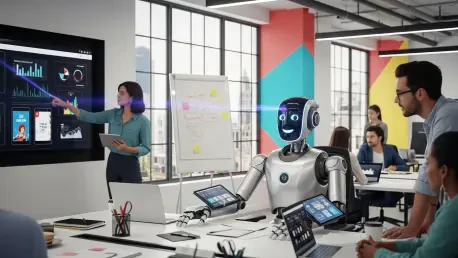
The most impactful trend in AI adoption is its application as a collaborative partner rather than a replacement for human talent. Successful agencies frame AI as a “co-pilot,” a powerful assistant that augments the capabilities of their creative and strategic teams. This model leverages AI’s strength in processing vast datasets and generating initial drafts, which frees human experts to focus on higher-value activities such as strategic oversight, nuanced brand storytelling, and final creative refinement.
This collaborative approach is leading to deep workflow integrations across core marketing disciplines. In SEO and content marketing, AI analyzes search trends to identify content gaps and generate optimized frameworks, enabling agencies to build topical authority at scale. Similarly, in PPC advertising, AI platforms rapidly create and test countless ad copy variations, aligning messaging with specific audience segments to maximize campaign performance. This synergy between human direction and machine execution allows for a more cohesive and responsive marketing strategy.
Moreover, this integration unlocks unprecedented opportunities for creating hyper-personalized, data-driven content. By analyzing user behavior and intent signals in real time, AI enables the development of bespoke marketing messages that resonate on an individual level. The ability to deliver this level of personalization at scale is becoming a key driver of customer engagement and loyalty, setting a new standard for brand communication.
Quantifying the AI Advantage Performance Metrics and Growth Horizons
The adoption of AI is producing tangible improvements in key performance indicators (KPIs) that directly impact client success. AI-powered optimization tools are consistently linked to higher click-through rates, improved conversion metrics, and a greater return on investment (ROI). By automating A/B testing and dynamically adjusting campaigns based on performance data, agencies can achieve a level of efficiency and effectiveness that was previously unattainable through manual efforts alone.
Market projections reflect this growing reliance on artificial intelligence, with significant growth forecast for the AI in marketing and advertising technology sector from 2026 through the end of the decade. As businesses continue to prioritize data-driven decision-making, the demand for AI-powered marketing solutions is expected to accelerate. This trend indicates that AI is not a fleeting phenomenon but a long-term structural shift in the industry.
Looking forward, an agency’s market share and growth trajectory will be increasingly correlated with its level of AI adoption and mastery. Agencies that invest strategically in AI tools and talent will be better positioned to deliver superior results, attract and retain top-tier clients, and outmaneuver competitors. Consequently, the ability to effectively integrate AI into core service offerings is becoming a critical determinant of long-term viability and success.
Navigating the New Frontier Balancing AI’s Power with Human Oversight
Despite its immense potential, the implementation of AI presents significant challenges that require careful management. A primary concern is maintaining high standards of content quality, originality, and brand authenticity. Generative AI tools can sometimes produce content that is generic or lacks the distinct tone and personality of a brand, necessitating a robust quality control process to ensure all outputs align with established brand guidelines.
Furthermore, an over-reliance on automation carries the risk of diluting a brand’s unique voice and stifling genuine creative innovation. While AI can accelerate ideation, human creativity remains essential for developing groundbreaking concepts and emotionally resonant campaigns that capture audience attention. Striking the right balance between automated efficiency and human ingenuity is crucial for avoiding a homogenized, uninspired marketing presence.
To mitigate these risks, leading agencies are establishing strong human-in-the-loop systems. These frameworks ensure that human experts provide strategic direction, review and refine AI-generated outputs, and make final decisions. This approach ensures that technology serves strategy, not the other way around, while also addressing ethical considerations and maintaining creative integrity throughout the production process.
Building Trust in an Automated Age The Ethical and Governance Imperative
As AI becomes more integrated into marketing, the regulatory landscape surrounding its use is rapidly evolving. Agencies must stay informed about new regulations concerning data privacy, the use of AI-generated content, and intellectual property rights. Proactive compliance is not just a legal necessity but a foundational element of responsible business practice in the digital age.
In response, forward-thinking agencies are establishing clear internal governance policies for the ethical use of generative AI. These policies provide guidelines for transparency, data handling, and ensuring that AI tools are used in a manner that respects both client and consumer interests. Creating a culture of ethical AI use helps mitigate legal risks and reinforces an agency’s commitment to responsible innovation.
Ultimately, transparent and compliant AI practices are becoming vital for building and maintaining trust. Clients and consumers are increasingly aware of how their data is used and expect brands to operate with integrity. Agencies that demonstrate a clear commitment to ethical AI governance will be better positioned to foster strong, lasting relationships built on a foundation of trust and accountability.