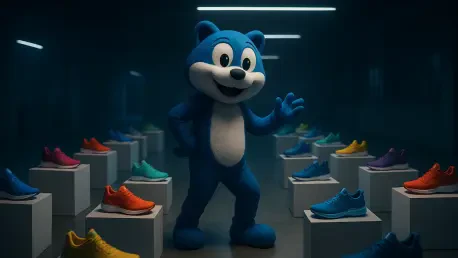

When a six-foot-tall reptilian figure began wandering the corridors of a major corporate headquarters this August, it signaled more than just a marketing stunt; it marked a fundamental pivot in how global retail giants construct their public personas. The footwear industry is no longer merely about the production of durable soles and ergonomic shapes. Instead, the market has shifted toward a landscape where products serve as entry points into a broader, personality-driven ecosystem. As brands compete for diminishing attention spans, the introduction of a permanent, scalable intellectual property like Niles suggests that the next phase of retail dominance will be won through narrative equity rather than just utility.
The Footwear Revolution: From Utility Staples to Cultural Icons
The global footwear industry is currently undergoing a structural transformation, moving away from a model based on functional product manufacturing to one rooted in lifestyle and entertainment. In the current market, “identity footwear” has become a primary driver of consumer spending, where the choice of a shoe reflects a specific cultural alignment or personal philosophy. Major market players are successfully leveraging their historical heritage to maintain relevance, yet they are finding that heritage alone is insufficient to capture the interest of modern demographics.
Consumer expectations have evolved to favor narrative-driven engagement, forcing brands to act less like manufacturers and more like content studios. Technological influences are also accelerating this change, as digital-first strategies allow for more rapid retail cycles and direct-to-consumer relationships. By integrating storytelling into the core product offering, companies are attempting to build a resilient brand identity that can withstand the volatile nature of fashion trends and economic shifts occurring from 2026 to 2028.
The Era of Brands as Storytellers and Cultural Catalysts
Decoding the Rise of Narrative-Driven Marketing and Character IP
Emerging technologies and the proliferation of social media micro-content have fundamentally altered the advertising landscape, making traditional commercials less effective. Consumers, particularly Gen Z, are increasingly gravitating toward brands that possess a distinct personality rather than a static corporate logo. This shift has led to the rise of brands acting as content creators, utilizing sitcom-style archetypes to build emotional connections with their audience. By giving a brand a face and a set of human-like traits, companies can move beyond the transactional relationship and become cultural participants.
The transition toward “personality-led” branding allows for a more relatable form of communication. For instance, the use of a silent mascot that relies on physical comedy creates a universal language that transcends regional barriers. This approach fosters emotional equity, as consumers begin to follow the character’s “life” and “ambitions” as they would a television personality. Such storytelling initiatives provide a platform for viral, relatable moments that keep the brand at the center of digital conversations.
Analyzing Performance Indicators and the Digital Commerce Surge
The investment in proprietary intellectual property is supported by strong financial foundations, such as surpassing the milestone of $1 billion in quarterly revenue. This growth provides the necessary capital to explore “shoppable entertainment,” a sector that is projected to expand significantly as platforms like TikTok Shop become mainstream retail channels. The success of initiatives like Super Brand Day and specialized microdrama series indicates that the fusion of entertainment and commerce is not just a trend but a viable long-term business strategy.
Financial valuations are increasingly being influenced by a brand’s ability to own and scale its intellectual property. Proprietary characters like Niles contribute to brand valuation by providing a consistent and controllable asset that is not subject to the risks associated with human celebrity endorsements. As digital commerce continues to surge, the ability to integrate these characters directly into the purchasing journey will be a key differentiator for successful retail operations.
Navigating the Perils of Personality-Led Branding and Market Saturation
One of the primary challenges in adopting a personality-led strategy is maintaining character authenticity in a saturated digital landscape. As more brands launch their own mascots and digital avatars, the risk of “mascot fatigue” increases. To overcome this, strategies must focus on long-term engagement that goes beyond the initial viral novelty. This requires a complex brand architecture where the character has a genuine role within the organization, rather than appearing as a superficial marketing tool.
The transition from product-focused marketing to narrative-heavy architectures also presents operational difficulties. Brands must balance the need for clear messaging with the nuances of character development, such as physical comedy or silent communication. Ensuring that the character remains aligned with the core brand values while being expressive enough to capture interest is a delicate task. Furthermore, the character must be adaptable enough to inhabit various digital and physical spaces without losing its core identity.
The Legal and Ethical Architecture of Proprietary Intellectual Property
Securing and protecting scalable brand IP requires a robust understanding of the regulatory landscape of digital advertising. As brands create more complex characters, the role of trademarking and copyright becomes crucial in preventing unauthorized use and ensuring that these assets remain exclusive global entertainment ventures. Character assets must be legally fortified to support expansion into new formats, ensuring that the brand retains full control over its narrative and visual representation.
Compliance with evolving data privacy standards is also paramount in the era of integrated digital commerce and shoppable content. As characters interact with consumers on social platforms, brands must maintain transparency in how they use mascot-driven data to influence purchasing decisions. Ethical standards in influencer and character-led marketing are constantly shifting, requiring brands to stay ahead of industry transparency requirements to maintain consumer trust.
Charting the Horizon: The Future of Scalable Intellectual Property in Retail
Looking ahead, the expansion of brand mascots into augmented reality and exclusive digital experiences is inevitable. As the economy shifts and consumer preferences move toward “affordable luxury,” innovation in the footwear sector will likely focus on these immersive brand worlds. Mascots are poised to disrupt traditional celebrity endorsements because they are more controllable and can be scaled across multiple platforms simultaneously without the logistical hurdles of human schedules.
The next wave of innovation will likely involve deep integration between physical products and digital storytelling. As major footwear entities approach significant anniversaries in the coming years, the focus will shift from reflecting on the past to building a future where the brand is an entertainment hub. This evolution will allow retail companies to diversify their revenue streams, potentially moving into media and licensing as their proprietary characters gain global recognition.
The Verdict on Niles: Securing Long-Term Legacy Through Character Innovation
The strategic introduction of Niles successfully repositioned the brand from a traditional footwear manufacturer into a sophisticated, multi-platform storyteller. The initiative demonstrated that humanizing latent brand markers could foster a deeper level of consumer loyalty than product features alone. Strategists recognized that by transforming a passive logo into an active, personality-driven participant, the company secured a sustainable asset that could evolve independently of specific fashion cycles.
Investors and brand managers found that building proprietary intellectual property offered a more stable return on engagement than reliance on external influencers. This shift toward owned character IP provided a blueprint for how retail brands could navigate a crowded digital marketplace. Ultimately, the decision to merge entertainment and commerce through a relatable character provided a clear path for securing a long-term legacy in the global market. Future efforts should prioritize the integration of these characters into emerging technology to ensure continued relevance in an increasingly automated retail environment.