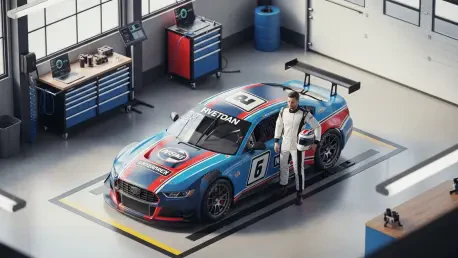

The traditional boundaries separating digital content creation from elite professional stock car racing are officially dissolving as Garrett Mitchell prepares for his highly anticipated entry into the NASCAR circuit. Known to a global audience of millions as “Cleetus McFarland,” Mitchell has successfully leveraged a massive YouTube presence to secure a competitive seat with the legendary Richard Childress Racing (RCR) organization. This transition is not merely a promotional crossover but a calculated career move that follows several years of steady progression through lower-tier racing series and specialized events at his own Florida-based track, the Freedom Factory. By stepping into a 3,400-pound stock car at the historic Rockingham Speedway, Mitchell is testing the hypothesis that digital influence can indeed be forged into genuine athletic prowess. The upcoming debut in the O’Reilly Auto Parts Series marks a pivotal moment where the raw power of the YouTube algorithm meets the high-stakes world of professional motorsports.
Professional Growth and Competitive Foundation
Mitchell’s ascent to the ranks of Richard Childress Racing has been characterized by a disciplined approach to learning the nuances of heavy, high-horsepower vehicles on varying surfaces. While his public persona often emphasizes humor and high-energy automotive antics, his track record since 2026 has demonstrated a serious commitment to technical improvement and racecraft. During his tenure in the ARCA Menards Series, he recorded multiple top-10 finishes, proving that he could maintain pace and composure within a field of professional prospects. These performances were essential in convincing established team owners that his presence on the grid would be defined by competitive results rather than just viral potential. His previous experience in the NASCAR Truck Series also provided valuable data points, even when faced with the high-speed volatility of tracks like Daytona, where he gained firsthand knowledge of the intense drafting and pack-racing dynamics required at the sport’s top levels.
Beyond the statistics, the transition highlights a significant shift in how drivers develop their skills outside of the traditional karting-to-stock-car pipeline that dominated the industry for decades. Mitchell utilized his ownership of the Freedom Factory to log thousands of hours behind the wheel, experimenting with vehicle setups and hosting large-scale events that simulated high-pressure racing environments. This unconventional training ground allowed him to master car control in ways that few modern drivers experience, often pushing machines to their mechanical limits in front of live audiences. By the time the opportunity with RCR materialized, Mitchell had already established a reputation for being an aggressive yet calculating driver who understands the mechanical limits of his equipment. This foundation is critical for tackling the abrasive surface of Rockingham Speedway, a track notorious for chewing through tires and demanding extreme patience from the driver. His ability to manage tire wear while maintaining high corner speeds will be the ultimate test.
Strategic Synergy: The RCR and Tommy’s Express Partnership
The collaboration between Richard Childress Racing and Mitchell is supported by Tommy’s Express Car Wash, a partnership that underscores the changing demographics of NASCAR’s corporate sponsorship. For a legacy team like RCR, which has historically relied on established veterans and traditional marketing channels, embracing a digital-first driver represents a bold move to secure the sport’s long-term relevance. In previous years, additional entries for prestigious events were typically reserved for retired champions or technical specialists, but the inclusion of Mitchell signals a preference for broad-spectrum audience engagement. This alliance provides RCR with direct access to a younger, digitally native fanbase that consumes content via mobile devices and social platforms rather than traditional television broadcasts. The team is betting on the fact that Mitchell’s followers will not only watch the race but will also actively support the brands associated with his career, creating a more dynamic return on investment for all stakeholders.
Furthermore, the technical resources provided by RCR offer Mitchell his most legitimate chance at a podium finish since he began his transition into professional stock car racing. As a multi-car organization with extensive engineering depth, RCR provides the type of data analytics, pit crew support, and aerodynamic modeling that independent teams simply cannot match. This infrastructure is vital for a driver making a debut at a challenging venue like Rockingham, where the “The Rock” nickname reflects the harsh conditions that typically penalize inexperienced competitors. The synergy between RCR’s established mechanical excellence and Mitchell’s unique ability to generate hype creates a blueprint for how future teams might structure their rosters. It demonstrates that the modern professional driver must be as effective behind a microphone as they are behind the wheel. By integrating Mitchell into their formal program, RCR is effectively bridging the gap between the storied history of NASCAR and the rapidly evolving future of digital sports.
Future Implications: Redefining the Modern Athlete
The long-term effects of this debut will likely force a reevaluation of how professional sports leagues identify and cultivate talent in an era where digital influence is a measurable commodity. If Mitchell performs well at Rockingham, it could validate the “creator-athlete” model, encouraging other racing organizations to look beyond traditional feeder series for their next generation of stars. This shift does not imply a lowering of standards but rather an expansion of what constitutes a valuable asset to a racing team. In the current market, a driver’s worth is increasingly tied to their ability to build a community and sustain interest throughout the entire week, not just on race day. The success of this experiment will serve as a bellwether for other professional leagues, from golf to combat sports, as they navigate the complexities of integrating non-traditional influencers into their competitive frameworks. As data continues to show that younger audiences prioritize personality, Mitchell’s professional trajectory offers a compelling case study.
To capitalize on this momentum, stakeholders within the racing industry should consider implementing more formal pathways for digital creators to earn professional credentials through standardized testing and development programs. This approach would ensure that the integration of influencers remains focused on competitive integrity while still capturing the massive reach of online platforms. Racing organizations might also invest in more interactive broadcast technologies that allow fans to follow specific drivers through dedicated digital streams, further blending the viewing experience with the creator’s own content style. The move toward a more inclusive talent pool was a necessary step in modernizing the sport’s appeal to a global market. Ultimately, the partnership between Mitchell and RCR proved that the intersection of high-performance engineering and digital storytelling could rejuvenate interest in legacy venues. This evolution suggested that the next decade of motorsports would be defined by those who can bridge the gap between technical excellence and the digital economy.