
Milena Traikovich has spent her career at the intersection of data and human behavior, helping brands navigate the increasingly complex landscape of digital lead generation. As a Demand Gen expert with a deep focus on performance optimization, she has witnessed firsthand how the creator economy has matured from a niche marketing tactic into the primary infrastructure for global cultural events. With extensive experience in analyzing how authentic engagement translates into bottom-line results, Milena offers a unique perspective on why traditional advertising models are crumbling in the face of creator-led narratives.
The following discussion explores the monumental shift in media value seen at major festivals, the psychological pull of “authentic imperfection” in live streaming, and the strategic evolution of brand activations. We delve into the rise of creator compounds as parallel media stages and how the transition from passive viewing to interactive participation is redefining fan loyalty. Milena also provides insights into how creators can navigate digital burnout while maintaining the high-frequency presence required by modern platforms.
Creator-led festival content now generates triple the earned media value of traditional Super Bowl ad placements. How should companies reallocate their marketing budgets to capitalize on this shift, and what specific metrics prove a creator’s reach is more valuable than a high-end commercial?
The data from 2025 is staggering, showing that creator-led content at Coachella generated $754 million in earned media value. To capitalize on this, brands need to pivot from “buying eyeballs” to “buying trust,” moving funds away from high-production 30-second spots and toward long-term creator partnerships. The most telling metric is the return on investment; currently, brands earn an average of $5.78 for every dollar spent on creator partnerships, a figure most traditional commercials struggle to match. Furthermore, when you consider that 94% of Gen Z trusts influencers over traditional ads, it becomes clear that the value lies in the conversion and loyalty generated by a trusted voice rather than the reach of a polished broadcast.
While official broadcasts offer high-definition quality, many viewers prefer the raw, shaky perspective of an IRL stream. Why does “authentic imperfection” resonate more deeply with younger audiences, and what are the technical trade-offs creators must manage when broadcasting live from crowded, high-pressure environments?
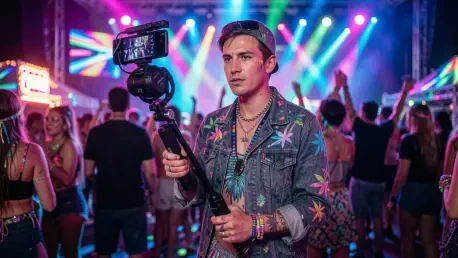
For Gen Z, high production value often translates to a sense of “high distance,” making the viewer feel like a passive observer rather than a participant. “Authentic imperfection”—the wind noise, the dust, and the chaos of the crowd—serves as a sensory proof of life that validates the experience as real and unmanufactured. Technically, creators have to balance this raw feel with the immense pressure of maintaining a stable connection in a desert environment where bandwidth is often stretched thin. They are essentially running a one-person production studio while navigating physical obstacles, meaning they often sacrifice 4K resolution for the reliability and immediacy that their audience craves.
New platform features now allow fans to watch performances alongside their favorite creators in real-time. How does this shift from passive viewing to interactive commentary change the fan experience, and what steps can creators take to keep their audience engaged during the lulls between major sets?
The “Watch With” feature transforms a solitary viewing activity into a collective social event, effectively solving the “loneliness epidemic” by providing a digital space for shared reactions. It moves the audience from being mere spectators to active participants who can influence the stream through chat and real-time interaction. To bridge the gap during lulls, successful creators treat the “in-between” moments—the lines, the heat, and the backstage wandering—as the main event rather than a distraction. By maintaining a continuous narrative and reacting to the unexpected in real time, they ensure that the audience stays emotionally invested even when there is no music playing on the main stage.
Shared creator compounds have become “parallel stages” where fans follow overlapping storylines and recurring characters throughout a weekend. How do these communal living arrangements help build a more cohesive brand narrative, and what are the potential downsides of turning a private residence into a 24/7 content studio?
These compounds function much like the IP universes of major film studios, where different personalities and storylines overlap to create a sticky, multi-layered narrative that keeps fans returning for more. By living together, creators produce a constant stream of organic “crossover” content that feels much more natural to the viewer than a forced collaboration. However, the downside is the extreme pressure of the 24/7 “always-on” environment, which can lead to rapid burnout and the erosion of personal boundaries. When every room is a set and every conversation is potential content, the line between a private life and a professional performance disappears entirely, which is a heavy emotional toll to pay for engagement.
Successful brand activations are moving away from massive physical spectacles toward intimate, creator-integrated experiences like private touch-up rooms. What strategies ensure a product feels like a natural part of a creator’s journey rather than an intrusion, and how do these curated moments drive long-term consumer trust?
The key strategy is organic integration, where the brand provides a utility—like Rhode’s dedicated touch-up rooms—that fits perfectly into the creator’s actual needs during a long festival day. When a product is used to solve a real problem, such as refreshing skin in the desert heat, the content generated feels like a recommendation from a friend rather than a paid placement. This subtle approach is far more effective because it respects the creator’s narrative and the audience’s intelligence. Over time, these curated, helpful moments build deep consumer trust because the brand is seen as an enabler of the experience rather than an interruptive advertiser.
With nearly half of Gen Z reporting burnout from digital trend-chasing, there is a growing appetite for “slow” or unfiltered documentation. How can creators balance the need for high-frequency posting with the demand for genuine, raw access, and what does this mean for the future of professional editing?
Creators are finding balance by leaning into “slow TikTok” and raw, long-form documentation that focuses on the reality of an experience rather than a hyper-edited highlight reel. This shift suggests that the future of professional editing will move away from flashy transitions and toward “invisible” editing that preserves the raw, authentic feel of the footage while maintaining a coherent story. By choosing to show the “boring” or difficult parts of their journey, creators actually reduce the pressure to be constantly “perfect,” which helps mitigate burnout for both themselves and their viewers. It’s a move toward a more sustainable form of content creation that prioritizes longevity and depth over fleeting, viral trends.
What is your forecast for the creator economy’s role in global cultural events over the next decade?
Over the next ten years, I expect the distinction between “official” broadcasts and “creator” streams to disappear entirely as creators become the primary distribution hubs for all major cultural events. We will see festivals and sports leagues designing their entire physical and digital infrastructure around creator needs, moving from a model where creators are “invited” to one where they are the central broadcast pillars. The global influencer marketing industry, already worth $32.55 billion, will likely more than double as brands realize that the cultural narrative is no longer controlled by those with the biggest screens, but by those with the most trusted voices. In this future, the success of a global event will be measured not by ticket sales or TV ratings, but by the strength and authenticity of the creator-led communities it inspires.