
The saturation of digital channels with synthetic, AI-generated content has effectively dismantled the traditional sales funnel by stripping away the inherent trust once granted to professional brand messaging. As the volume of algorithmic noise increases, corporate marketing departments have begun a decisive retreat from purely digital strategies toward a model centered on physical verification and human proximity. This transition marks the end of the era where events were viewed as peripheral hospitality functions designed primarily for brand awareness. Instead, the 2026 landscape treats live engagement as a central evidentiary asset, providing the hard proof required to validate claims that digital media can no longer substantiate on its own.
Corporate marketing mixes are being restructured to prioritize the physical touchpoint as a primary source of truth. The trust deficit created by the proliferation of deepfakes and automated copy has driven a massive return to physical verification, where buyers demand to see a product in action and speak directly to the engineers who built it. This movement has transformed the event ecosystem into a series of strategic nodes, ranging from intimate executive summits to expansive, customer-centric conferences. Each of these formats serves as a critical data-capture channel, allowing organizations to collect high-fidelity signals that are immune to the biases and inaccuracies often found in online behavioral tracking.
The role of technological heavyweights in this space cannot be understated, as they provide the infrastructure necessary to turn these physical moments into measurable business assets. These companies have repositioned events as the ultimate trust channel, integrating them deeply into the broader organizational intelligence framework. By focusing on executive-led forums and expert-led workshops, major players are ensuring that their events serve as a repository of credible evidence. This evidence then feeds back into the marketing loop, reinforcing the brand’s legitimacy in an increasingly skeptical market where presence is the only remaining un-fakeable asset.
Reimagining the Experiential Landscape: From Hospitality to Strategic Evidence
The fundamental purpose of hosting an event has shifted from the pursuit of aesthetic appeal or hospitality toward the generation of strategic evidence. In earlier marketing cycles, the success of a conference was often measured by the quality of the catering or the prestige of the venue, but these subjective experience metrics have been replaced by a rigorous focus on evidentiary value. Organizations now evaluate events based on their ability to act as a witness to brand claims. This requires a transition from the vague concept of brand vibes to a structured model where every interaction provides a tangible piece of proof for the potential buyer.
Defining the core segments of this modern ecosystem is essential for navigating the current trust crisis. Executive summits have become high-stakes environments for closed-door negotiations and strategic alignment, while customer-centric conferences focus on the practical application of technology through tactile testing. Hybrid forums led by recognized experts serve to bridge the gap between theoretical brand promises and real-world results. These segments work together to form a comprehensive evidentiary landscape where the attendee is no longer a passive observer but an active participant in a process of verification.
Major industry players are leading the charge by turning physical venues into data-rich environments. These technological heavyweights recognize that the human signal captured during a live demo or a face-to-face consultation is far more valuable than a click or a download. By repositioning events as critical data-capture channels, they are able to gather insights that inform product development and sales strategies with a level of accuracy that was previously impossible. This shift ensures that the investment in physical presence is fully optimized, serving both the immediate needs of the sales team and the long-term strategic goals of the CMO.
The Mechanics of Credibility: Analyzing Technological Drivers and Market Trajectories
The shift toward scarce proof is a direct response to the dilution of digital reach. As consumers and B2B buyers find themselves inundated with an endless stream of automated content, they have begun to prioritize interactions that require physical commitment. This behavior suggests a move away from digital-first discovery toward a model where credibility is earned through real-world proximity. Organizations that lean into this trend are finding that the human signal is the most powerful tool available for cutting through the noise of synthetic media, as it provides a level of authenticity that algorithms are currently unable to replicate.
Harnessing the Human Signal Amidst the Proliferation of Synthetic Content
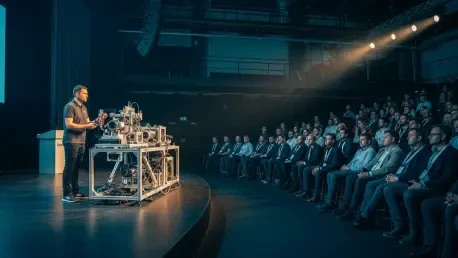
Community-led validation has emerged as the dominant force in modern event content, shifting the focus away from brand-led monologues. Instead of relying solely on internal executives to deliver a message, successful organizations are building a chain of credible witnesses consisting of subject matter experts, practitioners, and current users. These individuals provide a layer of peer-to-peer verification that is essential for building trust in an era of skepticism. When a practitioner demonstrates a solution on a stage, their professional reputation serves as a guarantee of the brand’s claims, creating a powerful signal that resonates far beyond the walls of the venue.
Integrating these physical interactions into the broader Martech stack is necessary to prevent the phenomenon known as signal death. If a crucial objection raised during a technical session is never recorded, or if a high-intent conversation at an executive dinner is lost, the value of the event is significantly diminished. Marketing teams are now focused on ensuring that real-world interactions inform digital sales cycles by capturing qualitative insights and porting them directly into CRM systems. This connectivity allows the organization to maintain a consistent narrative across all channels, ensuring that the trust built during a live event is preserved throughout the entire customer journey.
Quantifying the Resurgence: Performance Indicators and Budgetary Forecasts
Marketing budgets in the 2026 to 2028 fiscal landscape are characterized by a demand for defensible spending. Despite the low cost of AI-generated content, 73% of marketers are increasing their event spend because it provides a more reliable return on investment. This increase is supported by a massive infrastructure investment exceeding one billion dollars from technology leaders, who are betting on the long-term viability of physical engagement. These financial indicators suggest that while digital efficiency is important, it cannot replace the high-value conversions that occur when buyers are given the opportunity to verify a brand in person.
Market data analysis reveals that the resurgence of events is not a temporary trend but a structural change in how budgets are allocated. The necessity for defensible ROI models has pushed CMOs to move away from vanity metrics toward indicators that track the acceleration of the sales pipeline and the closing of high-value accounts. In this environment, the physical event is seen as a high-fidelity data node that provides the clarity needed to make informed financial decisions. The growth of the event technology sector further demonstrates that organizations are willing to pay a premium for tools that can quantify the impact of human connection on the bottom line.
Navigating the Trust Deficit: Overcoming Implementation and Measurement Barriers
The challenge of signal death remains one of the primary obstacles to fully realizing the potential of event marketing. Many organizations still struggle to bridge the gap between the qualitative depth of an in-person conversation and the quantitative requirements of a modern database. When insights are lost in the transition from the event floor to the corporate office, the belief gap between brand awareness and genuine trust remains unaddressed. Overcoming this barrier requires a systematic approach to data collection that prioritizes the capture of high-intent signals without disrupting the natural flow of the human experience.
Moving away from the romanticism trap is another essential step for marketers who wish to protect their budgets during financial scrutiny. Relying on subjective experience metrics like attendee happiness is no longer sufficient in a data-driven corporate environment. Instead, teams must adopt rigorous models that measure how specific physical touchpoints lead to tangible business outcomes. By focusing on tactile product testing and expert interaction, brands can move beyond simple awareness to cultivate a deep-seated belief in their solutions. This transition from subjective feelings to objective evidence is what allows an event strategy to survive a rigorous audit.
The Architecture of Trust: Compliance, Data Integrity, and Ethical Standards
Navigating the regulatory landscape of data collection at live events has become increasingly complex as technology becomes more embedded in the physical environment. Compliance with GDPR and CCPA is a significant consideration when capturing biometric data or engagement heatmaps during a conference. Ensuring that data integrity is maintained throughout the collection process is vital for building long-term trust with attendees. Organizations must be transparent about how data is used and ensure that all high-tech interactions are conducted with the highest ethical standards, balancing the need for efficiency with the consumer demand for privacy.
Ethical AI integration is also playing a major role in how event data is processed and utilized. While AI can significantly enhance the speed of data analysis, it must be used in a way that respects the human-centric nature of the event. Managing this balance involves using technology to facilitate better connections rather than replacing them. Furthermore, security measures for proprietary data shared during closed-door summits or executive dinners have been elevated to protect the sensitive information that often flows through these high-intent environments. Safeguarding these signals is a foundational requirement for any brand that wishes to maintain its reputation as a trusted partner.
The Next Frontier: Integrating Physical Proof into AI Discovery and LLM Visibility
The evolution of the belief per dollar metric marks a shift in how the compound value of an event is assessed across discovery and sales acceleration. This metric calculates the long-term impact of physical proof on the brand’s overall standing in the market. As the discovery phase of the buyer journey moves toward Large Language Models and AI-driven search, the human evidence created at physical events must be formatted for machine recognition. Optimizing for AI discovery ensures that the validation provided by experts and practitioners in a live setting is correctly indexed and prioritized by the algorithms that now guide consumer decisions.
Innovation in event technology is turning physical conversations into structured data sets that can be used for predictive analytics and machine learning. By capturing the nuances of real-world interactions, platforms are providing brands with a source of high-fidelity data that is far superior to generic online noise. This allows organizations to build models that predict buyer behavior with greater accuracy, turning the physical event into a strategic laboratory for future growth. As this technology matures, the ability to translate human sentiment into machine-readable proof will become a key differentiator for companies looking to secure a competitive edge in an automated market.
Securing the Competitive Edge through Evidentiary Engagement and Integrated Strategy
The shift from a strategy of presence to one of proof represented the most significant evolution in marketing during this period. Organizations that moved away from hospitality-focused models toward evidentiary engagement successfully navigated the trust deficit created by synthetic content. These strategic leaders prioritized the creation of physical witnesses and the integration of live data into their broader Martech stacks. The analysis showed that brands which treated events as essential data nodes managed to accelerate their sales cycles and build a level of credibility that was unattainable through digital channels alone.
Executive leadership teams found that the physical venue was the only place where the belief gap could be fully bridged through tactile interaction and expert validation. CMOs who embraced this reality were able to defend their budgets by presenting rigorous, data-backed ROI models that linked event participation to high-value account closures. The strategic recommendations for the coming years centered on the necessity of maintaining this evidentiary focus. By ensuring that every live engagement provided a chain of verification, firms managed to outpace their competitors in an environment where authenticity was the most sought-after currency.
The final outlook on the trajectory of the industry confirmed that physical presence remained the only un-fakeable asset in the global market. While AI continued to transform the efficiency of content production, it could not replicate the deep trust generated by human-to-human interaction. Successful organizations utilized their physical events to create structured data that informed their long-term growth strategies and enhanced their visibility in AI-driven search environments. This integrated approach provided a stable foundation for brand belief, ensuring that even in an era of maximum automation, the human signal remained the definitive source of truth for the modern buyer.