
Milena Traikovich has spent her career at the intersection of consumer behavior and high-stakes performance marketing, specializing in how brands can turn fleeting digital interactions into long-term loyalty. As a leader in demand generation and analytics, she understands that modern retail is no longer about simple transactions but about creating immersive, data-driven experiences that resonate with a global audience. Her work often involves dissecting the complex layers of large-scale events to ensure every touchpoint—from a social media ad to a physical storefront—serves a cohesive strategic purpose. In this conversation, we explore how major venues and retail hubs are adapting to a world where “experience” is the ultimate currency.
Social media platforms like TikTok have accelerated the globalization of music and fashion trends. How do you monitor these digital shifts to decide which genres to highlight, and what visual storytelling techniques do you use to capture the energy of a live, multi-day event for online audiences?
We stay incredibly agile by treating social media platforms as real-time focus groups, acknowledging that trends in music and fashion now move at a lightning-fast, global pace. To capture the energy of a massive three-day event like Country 2 Country, we lean into visual storytelling that feels instant and trend-led, using digital channels to show exactly what the atmosphere on the ground feels like. By monitoring how genres like country are “having a moment” on the radio and across social feeds, we can book legendary acts like Keith Urban or Brooks and Dunn that we know will resonate. Our goal is to use these visual platforms to bridge the gap between the digital scroll and the physical experience, ensuring our marketing feels as vibrant as the live performances themselves.
Large-scale festivals often see a massive gap between ticket holders and total venue visitors. What specific steps do you take to coordinate with retail tenants to ensure their window displays and products, such as denim customization stations, align with the event’s specific theme?
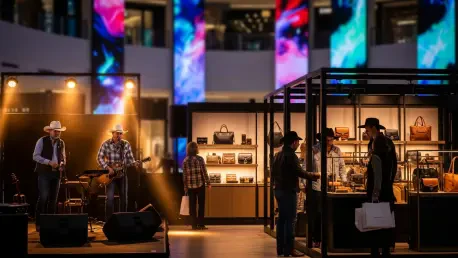
The scale of these events is enormous, as seen when we have 45,000 ticket holders but a total of 150,000 visitors across a single weekend, which requires a truly integrated strategy. We work closely with our tenants to create a “retail environment” that feels sympathetic to the festival, encouraging them to flex their visual merchandising and product displays to match the theme. A perfect example of this was our collaboration with Levi’s, where they set up a free customization station for fans to add patches, like guitar logos, to their jeans. By aligning the shopping experience with the festival’s identity, we ensure that every part of the venue—from the outlet center to the music stages—is telling one cohesive story.
Modern event planning often prioritizes a fanbase’s shared values and social habits over basic demographic data like age or background. How do you identify what a specific audience wants to eat or where they shop, and how does this insight influence your campus-wide layout?
We move beyond basic demographics because a genre like country music attracts every age, creed, and background, so we focus instead on their shared identity as social, fun-loving fans. To determine where they want to eat or shop, we dig deep into the specific values of the fanbase to understand what they expect from a weekend out, rather than just looking at their age. This insight directly influences our campus layout; for instance, we ensure there is live music playing in almost every area, including a main stage outside, to keep people moving. We don’t force a specific path on them, but instead offer a range of integrated choices across the entertainment district so they can curate their own perfect day.
The customer journey often begins a full year before a show when a ticket is first purchased. How do you balance essential logistics, like security information, with marketing messages that encourage fans to explore dining and shopping options long before they actually arrive on-site?
Because the journey starts the moment a ticket is purchased—sometimes an entire year in advance—we have a long window to build anticipation through consistent touchpoints. We use essential logistical communications, such as security updates or show preparation emails, as an opportunity to weave in stories about our dining and retail offerings. This approach transforms a functional message into an invitation to explore the campus, making the fan aware of everything the destination has to offer well before they step foot on-site. By the time they arrive for the three-day festival, they already view the venue as a full-day leisure destination rather than just a concert hall.
There is a growing trend of consumers prioritizing real-life experiences over material goods, yet retail remains a vital part of the event ecosystem. How do you create an “extended atmosphere” where shopping feels like a natural extension of the entertainment rather than a separate commercial activity?
We recognize that while people are spending more on real-life experiences since the pandemic, there is a massive opportunity for retail and entertainment to thrive together in a “1 + 1 equals 3” scenario. To create this extended atmosphere, we activate retail by making it part of the festival’s footprint, ensuring that shopping feels like a continuation of the fun rather than a disruption. This might involve live music stages near the shops or themed market stalls that encourage visitors to dwell and explore the Entertainment District. When the retail environment feels sympathetic to the show, it becomes a natural part of the “full day out” that visitors are looking for.
Major international festivals are now being booked several years in advance to secure prime locations. What metrics do you track year-over-year to ensure a recurring event continues to scale, and what is your process for keeping the experience fresh for fans who return every season?
With events like C2C already booked through 2027, we track key metrics such as trading day performance—noting, for example, that the festival Saturday was the second-best trading day of the year for our district. We are constantly learning and analyzing what the fanbase expects so we can enhance the experience and add new layers of value every single year. Keeping it fresh involves constant communication with our tenants and partners to innovate on activations, like the denim stations or new themed food stalls. Our process is rooted in understanding why fans return, ensuring we keep the core “country” spirit alive while expanding the leisure offerings around it.
What is your forecast for the future of integrated entertainment and retail destinations?
I believe the future lies in the complete blurring of lines between leisure, dining, and shopping, where the destination itself becomes the primary draw regardless of the specific headline act. We are seeing a permanent shift where venues must function as “all-day” ecosystems that cater to both international tourists and local residents who just want to soak up the atmosphere. Data-driven personalization will allow us to flex these spaces even more precisely to match the specific subcultures of different fanbases. Ultimately, the destinations that succeed will be the ones that can offer a seamless, integrated strategy where every tenant benefits from the collective energy of the event.