
Milena Traikovich is a leading figure in the world of demand generation and performance optimization, known for her ability to turn abstract brand concepts into high-converting digital engines. With a sharp eye for analytics and a deep understanding of how social-first platforms are redefining the buyer’s journey, she has consistently helped businesses bridge the gap between creative storytelling and measurable growth. As brands increasingly look to move beyond traditional advertising, Milena’s expertise in nurturing high-quality leads through narrative-driven content makes her the perfect guide for understanding the evolution of modern brand identity.
In this discussion, we explore the strategic shift from static brand mascots to dynamic, character-led intellectual property. We dive into the recent launch of Niles, a silent bipedal crocodile who serves as the face of a new era of shoppable entertainment. The conversation highlights how this “social-first” approach to branding leverages physical comedy and mysterious teases to drive record-breaking revenue, particularly within the ecosystem of TikTok Shop. By analyzing the intersection of personality-driven content and commerce, we uncover why the future of retail depends on a brand’s ability to maintain a consistent, relatable cast rather than just a revolving door of seasonal campaigns.
How does the transition from a traditional, static mascot to a “character” with distinct flaws and a life of its own fundamentally change the relationship between a brand and its audience?
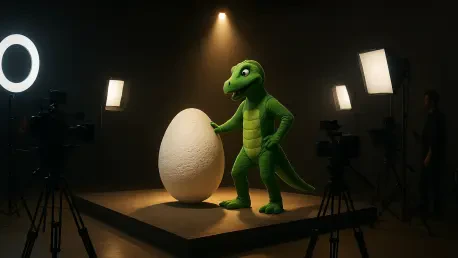
It is a complete shift from seeing a brand as a corporate entity to seeing it as a personality you’d actually want to follow on your feed. In 2026, mascots that truly win are those that behave like they belong online, rather than just standing as a 2D logo brought to life. When you look at what Crocs did with Niles, they didn’t just create a promotional tool; they built a six-foot-tall, bipedal character with a relatable, “sitcom” energy. For example, during his debut, Niles hatched from an egg and immediately began scrambling to put the shells back together because he realized he was early for his 24-hour countdown timer. That moment of awkward panic is a specific flaw that makes him feel human and endearing, which is far more effective for engagement than a “perfect” brand ambassador who never makes a mistake. This kind of storytelling allows a brand to thread a consistent face through microdrama-style series, giving people a reason to come back for the next gag rather than just scrolling past an ad.
Niles is notably silent, which seems like a very intentional creative choice. How does this lack of a voice help a brand scale its content across different global markets and platforms like TikTok?
Choosing a non-speaking character is a masterstroke for global scalability because it removes the friction of language barriers and the need for region-specific voice acting. By relying on physical comedy, expressive reactions, and that specific “awkward office timing” found in their headquarters-based series, the brand can ensure the humor lands in Tokyo just as well as it does in New York. This silence also makes the content incredibly “remixable” for fans, as it’s much easier to layer trending sounds or reaction edits over a silent character than one with a scripted voice. From a creative production standpoint, it allows for much faster edits and shorter-form clips that can fit into any platform’s native comedy style. It forces the brand to communicate through visual storytelling and personality, which often creates a deeper emotional connection than a monologue ever could.
With Crocs recently surpassing $1 billion in quarterly revenue and seeing a 4.3% jump in sales, how does a recurring character like Niles serve as a practical business tool rather than just a fun social media project?
The business logic here is that in 2026, entertainment and shopping have completely collapsed into the same social scroll. When a brand like Crocs experiments with shoppable entertainment formats like “Déjà Shoe” on TikTok Shop, they need a “hook” that keeps people from tapping away. Niles isn’t just a vibe; he is a signature asset designed to drive repeat viewership, which is the most valuable currency in social-first retail. By having a dedicated account for the character, they are creating a long-term piece of intellectual property that can carry storytelling without needing a brand-new concept every single week. This consistency helps turn one-time viewers into loyal followers who treat the brand’s storefront like an entertainment channel, leading to a much more natural path to purchase during global Super Brand Day deals or seasonal drops.
The brand spent months teasing this launch with mysterious egg appearances in marketing and livestreams. What can other marketing teams learn from this “slow reveal” strategy?
The biggest takeaway is that teasing should be viewed as an ongoing content strategy, not just a formality you do right before a launch. By letting a giant mystery egg pop up across various touchpoints for months, the brand created a breadcrumb trail that turned the eventual reveal into a massive payoff for the community. This kind of narrative buildup turns an announcement into a cultural event that fans feel like they are a part of, rather than just another commercial being pushed at them. It creates a sense of curiosity and investment, where people are actively looking for the next hint in every livestream or social post. For any brand team, this shows that if you want to sustain attention in a crowded market, you need to invite your audience into the story early and let the mystery simmer before delivering the final act.
What is your forecast for the future of character-led branding as we look toward the brand’s 25th anniversary next year and beyond?
I believe we are moving toward a world where the most successful brands will operate more like media houses with their own “cast” of characters. As we approach 2027, we will see these character-led assets move far beyond simple social media bits and into more immersive entertainment, where they act as the permanent faces of a brand’s digital universe. The forecast is that retail will become increasingly “character-driven,” where your loyalty is tied to the stories and personalities a brand creates rather than just the products they sell. We will see more companies treating their IP like a long-term product—focusing on character durability, consistent rules, and cross-platform evolution. Ultimately, the winning brands will be those that can keep the story going long after the initial product drop, turning everyday commerce into a recurring series that fans wouldn’t dream of missing.