
Bridging the Gap Between Social Discovery and E-commerce
The rapid convergence of social engagement and direct purchasing has fundamentally reshaped the e-commerce landscape, compelling brands to rethink the linear journey from discovery to checkout. As platforms like TikTok evolve from mere traffic sources into robust, self-contained commerce ecosystems, the distinction between marketing and sales continues to blur. This evolution is not a distant trend but a present reality, underscored by the fact that a significant percentage of households have already completed transactions directly within the TikTok app. The platform has transcended its origins as a hub for viral content, establishing itself as a primary arena where product discovery, user consideration, and the final purchase decision occur seamlessly within a single, fluid experience. For categories such as beauty and personal care, this shift is particularly pronounced, with TikTok Shop consistently driving substantial revenue and setting the standard for social commerce adoption.
In parallel, Shopify has solidified its position as the operational linchpin for modern brands, offering the agility required to navigate a fast-paced market without sacrificing essential control over core business functions. Consequently, the central question for merchants is no longer whether to connect Shopify and TikTok, but rather how to architect an integration that aligns with specific growth objectives and operational capabilities. This guide serves as a comprehensive resource, structured to answer the most pressing questions about creating a synergistic relationship between these two platforms. It provides clear, actionable guidance on navigating the integration process, from selecting the appropriate setup and fulfilling prerequisites to launching effective campaigns and interpreting performance data. Readers can expect to gain a thorough understanding of how to build a scalable growth engine by leveraging the combined strengths of Shopify’s backend stability and TikTok’s unparalleled reach and engagement.
Answering Your Core Integration Questions
What Does Integrating Shopify and TikTok Actually Mean
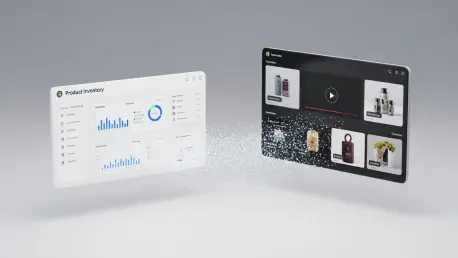
To say one is “integrating Shopify and TikTok” is to oversimplify a multifaceted connection between two distinct but complementary systems. In practice, this process involves establishing a clear data-sharing protocol where each platform fulfills a specific role within the larger commerce stack. Shopify serves as the central nervous system of the operation, acting as the definitive system of record. It is the environment where product catalogs are meticulously managed, inventory levels are accurately tracked, pricing strategies are set, and all customer orders are ultimately processed and fulfilled. Conversely, TikTok functions as the outward-facing layer responsible for discovery, demand generation, and, in increasingly common scenarios, the point of sale itself. The quality and depth of the integration determine how seamlessly these two systems communicate, ensuring that information flows efficiently and accurately between the operational core and the customer-facing storefront.
Maintaining Shopify as the single source of truth is a foundational principle for a stable and scalable integration. Once the connection is established, all critical updates should originate from the Shopify admin panel. When a product title is refined, a price is adjusted, an inventory count is updated, or a fulfillment setting is modified within Shopify, these changes should automatically propagate to TikTok. This disciplined approach is crucial because the TikTok environment is inherently dynamic and fast-moving. Attempting to manage product information natively within TikTok’s interface introduces a significant risk of data fragmentation, leading to common operational pitfalls such as inventory discrepancies, pricing errors, and product disapprovals. By adhering to a source-of-truth model, businesses can effectively mitigate these risks and maintain operational consistency across channels.
The specific function of TikTok within this integrated framework depends entirely on the chosen depth of the connection. In a marketing-centric configuration, TikTok leverages Shopify data primarily to enhance advertising efforts. This includes tracking on-site conversions through events, building sophisticated retargeting and lookalike audiences based on user behavior, and populating dynamic ad formats with a live product catalog. In this model, TikTok is a powerful tool for driving qualified traffic back to the Shopify store. However, when the integration is extended to include TikTok Shop, the platform’s role expands to encompass the entire checkout process. Customers can discover products through organic videos, advertisements, live shopping events, or creator content and complete their purchase without ever leaving the TikTok application. While Shopify continues to manage inventory and order fulfillment on the backend, TikTok takes full control of the front-end customer experience, creating a more integrated and frictionless path to purchase.
How Do You Choose the Right Integration Path
After establishing the distinct roles of Shopify as the operational core and TikTok as the distribution channel, the next critical decision involves determining the appropriate level of integration. This choice is not merely a technical one; it fundamentally shapes subsequent strategies related to account setup, performance measurement, and scaling. There is no single “correct” answer, as the optimal path is contingent upon a brand’s current stage of growth, its operational readiness to handle different fulfillment workflows, and the degree of control it wishes to maintain over the end-to-end customer journey, particularly the checkout experience. Making a deliberate choice at this stage prevents the need for future rework and ensures the entire setup aligns with broader business goals from the outset.
The first option, and the most common starting point for established e-commerce businesses, is to integrate Shopify and TikTok for advertising and conversion tracking purposes. In this configuration, TikTok’s primary function is to drive targeted traffic to the existing Shopify store and to optimize advertising campaigns based on user behavior tracked on the website. The integration is primarily used to install the TikTok Pixel and Events API, enabling the tracking of key conversion events such as product views, additions to the cart, and completed purchases. This data is then used to build powerful retargeting and prospecting audiences and to run conversion-focused ad campaigns that are directly tied to the Shopify checkout flow. The customer journey concludes on the brand’s website, with Shopify managing the entire checkout, payment, and fulfillment process. This path is particularly suitable for brands that have already invested heavily in a high-converting Shopify store, utilize custom checkout logic, or prioritize maintaining tight control over attribution modeling and post-purchase upselling opportunities.
The second, more deeply integrated option is to connect Shopify with TikTok Shop for a native, in-app checkout experience. This approach syncs the Shopify product catalog, inventory levels, and order data directly into the TikTok Shop ecosystem, transforming TikTok from a traffic source into a fully functional point of sale. Customers can discover products through a variety of content formats—including organic videos, live streams, and affiliate posts—and complete their purchase directly within the TikTok app, eliminating the friction of being redirected to an external website. While Shopify remains the backend system for product and inventory management, TikTok controls the front-end checkout experience. The platform often enhances this experience with incentives like exclusive coupons, shipping subsidies, and increased content distribution for Shop-enabled posts. This path is ideal for brands aiming to minimize conversion friction, capitalize on the growing trend of native social shopping, or experiment with in-app commerce without undertaking a complete overhaul of their backend infrastructure. It is important to recognize that these two paths are not mutually exclusive; many brands successfully begin with the advertising integration to build a stable foundation before layering on TikTok Shop to further accelerate growth.
What Are the Prerequisites Before Connecting the Platforms
Having chosen an integration path, it is prudent to pause and conduct a thorough readiness check before initiating the connection process. Experience shows that most issues encountered during and after the integration of Shopify and TikTok do not stem from technical glitches within the integration itself. Instead, they often arise from overlooked prerequisites that only become apparent later, manifesting as rejected product syncs, stalled data flows, or suspended ad accounts. Treating this preparatory phase with diligence can save significant time and resources, preventing the frustrating need to dismantle and reconfigure the setup down the line. A systematic review of both the Shopify store and the TikTok business assets ensures a smoother, more predictable integration experience.
Before any integration with TikTok is attempted, the Shopify store must be structurally sound and fully operational. This means having live products with clear, descriptive titles, high-quality images, and comprehensive descriptions. Critically, every product variant intended for sale must have a unique Stock Keeping Unit (SKU), as this is essential for accurate inventory tracking and order management. Inventory tracking should be enabled within Shopify for all relevant products to prevent overselling. Furthermore, shipping rates and delivery zones must be properly configured to provide customers with accurate cost and timing estimates. Finally, a clearly visible and accessible returns and refund policy must be published on the store, as this is a key compliance checkpoint for TikTok, particularly for businesses planning to use TikTok Shop. Gaps in any of these areas are a common source of delays during the seller and product approval stages.
On the TikTok side, the required setup extends beyond a simple user profile. A foundational requirement is to have a standard TikTok account that has been converted into a Business Account, which unlocks additional analytics and commercial features. This must be accompanied by a TikTok for Business account, which serves as the central hub for managing all business-related assets. Within this structure, a Business Center is essential; it acts as the top-level entity for managing permissions, ownership, and access to various assets like ad accounts and catalogs. For businesses planning to run paid advertising, it is highly recommended to create a TikTok Ads account in advance. Manually creating this account provides greater control and is often a prerequisite for accessing promotional ad credits, which may not be available if an ad account is auto-generated during the Shopify sync process.
Furthermore, businesses aspiring to use TikTok Shop must confirm their eligibility and be aware of any regional constraints. The availability of TikTok Shop varies by country and seller type, so the first step is to verify that the store’s registered country is supported. Prospective sellers must also ensure that their business type and a collection of required legal documents, such as business registration and tax identification numbers, meet TikTok’s stringent verification requirements. Being prepared to provide these details promptly is crucial for a smooth onboarding process. If TikTok Shop is not yet available in a specific region, businesses can still proceed with the full marketing and tracking integration, directing traffic from TikTok ads to their Shopify checkout. Completing these prerequisite steps ensures that the technical connection between Shopify and TikTok can be established with a much lower risk of encountering unexpected roadblocks.
What Is the Step by Step Process for a Marketing Integration
With all prerequisites confirmed, the process of connecting the platforms can begin. This section outlines the steps for establishing the marketing and tracking integration, which serves as the foundational layer regardless of whether TikTok Shop is implemented later. The primary objective of this setup is to facilitate the clean and reliable exchange of data between Shopify and TikTok. This ensures that performance can be accurately measured, audiences can be effectively built, and advertising campaigns can be optimized with a high degree of confidence. This initial integration is what empowers TikTok to function as an intelligent performance marketing channel for a Shopify store.
The process begins within the Shopify admin dashboard by adding TikTok as an official sales channel. Utilizing Shopify’s native integration, rather than a third-party application, is the recommended approach. Installing the TikTok sales channel accomplishes three critical functions simultaneously. First, it establishes a direct and secure connection between the Shopify store and the TikTok for Business platform. Second, it grants TikTok the necessary permissions to access the product catalog and order data, which is essential for dynamic advertising and conversion tracking. Third, it centralizes the majority of the setup and management tasks within the familiar Shopify interface, streamlining the workflow and reducing the need to navigate between multiple tools. This step alone does not activate any ads or tracking; it simply creates the necessary conduit for all subsequent actions.
Once the sales channel is installed, the next prompt will be to connect the various TikTok business assets. This is a critical juncture where many setups falter due to an incorrect sequence of operations. It is essential to have already created a TikTok for Business account, a Business Center that owns the relevant assets, and a dedicated Ads account. Connecting these components in the correct order ensures that ownership hierarchies are properly established and prevents the automatic creation of a new ad account that may lack full administrative control. Following the connection, be prepared for a review period; TikTok’s approval process for these connections can take up to 24 hours, so it is normal for certain parts of the setup to remain in a pending state initially.
Next, the configuration moves to data sharing and tracking. This involves selecting a data-sharing level that aligns with the business’s privacy standards while maximizing measurement reliability. The core of this step is the installation of the TikTok Pixel through the Shopify integration, which enables the tracking of user actions on the website. To enhance this, it is highly recommended to also enable server-side tracking via the Events API. A setup that relies solely on the browser-based Pixel is prone to missing conversions due to ad blockers, browser restrictions, and other client-side limitations. By pairing the Pixel with the Events API, event accuracy is significantly improved, particularly for high-value actions like purchases and checkouts, as data is sent directly from the server to TikTok.
Before launching any paid campaigns, the final and most crucial step is to verify that data is flowing correctly. This involves confirming that key events, such as “View Content,” “Add to Cart,” and “Purchase,” are being tracked and are appearing within TikTok’s Events Manager. It is also important to check that the product catalog has synced successfully and is showing an active status. Skipping this validation step is a significant risk, as it could lead to campaigns being optimized based on incomplete or inaccurate data, ultimately wasting ad spend and hindering performance. Once this marketing integration is confirmed to be stable and accurate, the business is well-positioned to either proceed directly to campaign execution or to layer in the TikTok Shop integration.
What Is the Step by Step Process for a TikTok Shop Integration
After establishing a stable marketing and tracking integration, the connection can be extended to support in-app checkout through TikTok Shop. This phase moves the relationship between Shopify and TikTok beyond simple data sharing and into the realm of true collaborative commerce execution. A key distinction of this process is the introduction of a formal approval layer. Unlike the more straightforward setup for ads and tracking, the TikTok Shop integration is gated by rigorous eligibility checks, documentation reviews, and product compliance processes. Acknowledging and planning for these verification steps from the outset is essential to prevent avoidable and often lengthy delays in getting the shop live.
The initial step in this journey is the creation and verification of a TikTok Seller Center account. This account is a distinct entity, separate from both the standard TikTok profile and the TikTok for Business account. During the setup process, applicants will be required to confirm their country of operation and their seller type (e.g., individual, corporation). Subsequently, they must submit official business or personal identity documentation for verification. This is followed by providing detailed tax and bank account information to facilitate payouts. It is important to note that approval is not instantaneous. The review process typically takes between 24 and 72 hours, and it is not uncommon for TikTok to request additional documentation for clarification. This should be viewed as a standard part of the process and not necessarily an indication of a problem with the application. If TikTok Shop is not yet supported in the business’s region, this step cannot be completed, though the marketing-only integration remains a viable option.
Once the Seller Center account has been successfully approved, the next step is to connect TikTok Shop directly through the TikTok sales channel within the Shopify admin. This native connection is the preferred and most reliable method for linking the two platforms. Activating this connection authorizes Shopify to perform several crucial, ongoing functions. It will push the product catalog into TikTok Shop, ensuring that listings are consistent with the source of truth. It will also sync inventory levels and pricing in near real-time, which is vital for preventing stockouts and maintaining price accuracy. Finally, it will pull completed TikTok Shop orders back into the Shopify dashboard for streamlined fulfillment, allowing merchants to manage all orders from a single interface. This modern, native workflow replaces older, more error-prone methods that relied on manual file uploads or third-party connectors.
Following the connection, Shopify will automatically attempt to sync the entire product catalog to TikTok Shop. It is highly unlikely that all products will go live immediately. A number of common issues can block a product’s approval, including missing or duplicated SKUs, the selection of incorrect or overly broad product categories, and incomplete product attributes such as weight or dimensions. Brand ownership disputes or trademark mismatches can also lead to rejections. TikTok’s system provides specific reasons for why a product was not approved. The correct course of action is to address the identified issue within Shopify and then resubmit the product for review. It is critical to avoid the temptation to edit product details directly within the TikTok Seller Center, as this disrupts the source-of-truth model and can create persistent sync conflicts.
The final step in the setup is to link the business’s primary TikTok profile to the newly created TikTok Shop. This crucial link is what enables the full suite of shoppable content features. Once linked, the account gains the ability to tag products directly in organic videos, creating a direct path from discovery to purchase. It also allows for the creation of dedicated shoppable posts that feature an in-app checkout button. Furthermore, this connection makes the brand eligible to participate in affiliate marketing programs and collaborate with creators on sales-driven campaigns. At the completion of this step, the Shopify backend and the TikTok storefront are fully integrated, empowering the business to sell products directly at the point of discovery within the app.
How Should You Approach Launching Campaigns After Integration
With the technical integration of Shopify and TikTok complete, the focus can now shift from setup and configuration to strategic execution. This is the stage where the investment in a clean integration begins to yield returns, as advertising campaigns can now be powered by real-time product data, reliable conversion signals, and engaging native shopping formats. Instead of directing traffic into a poorly tracked funnel, businesses can now run sophisticated, data-driven campaigns. The specific approach to launching these campaigns will be directly influenced by the integration path—marketing-only or full TikTok Shop—that was chosen earlier in the process.
If the integration is configured to use Shopify as the final checkout destination, campaigns will naturally be optimized for website-based actions. The primary goal is to drive users from their TikTok feed to specific product or collection pages on the Shopify store, with success measured by on-site behaviors like adding to cart and completing a purchase. In this scenario, TikTok’s advertising algorithm leverages the event data captured by the Pixel and Events API to great effect. It will automatically optimize ad delivery toward users who are most likely to complete a purchase or other valuable lower-funnel actions. This data also becomes the foundation for building highly effective retargeting audiences composed of recent site visitors and for expanding reach through lookalike modeling based on the characteristics of existing customers.
Conversely, enabling TikTok Shop unlocks an entirely different set of campaign objectives focused on driving in-app sales. These campaigns are designed to send users directly to a product page that is hosted within the TikTok environment, completely removing the need for the user’s device to load an external website. TikTok’s platform actively prioritizes these ad formats because they contribute to a seamless user experience by keeping individuals within the app. From a technical standpoint, TikTok Shop campaigns behave differently than traditional conversion ads. When the checkout process occurs natively within TikTok, page load times are significantly faster, and the friction associated with navigating to another site is eliminated. This gives TikTok’s system more comprehensive visibility into the entire purchase journey, from initial ad view to final transaction confirmation. The platform often rewards the use of these formats with additional organic distribution and access to platform-funded incentives. For the merchant, the order data is still seamlessly passed to Shopify for fulfillment, but the conversion event itself occurs upstream, which can lead to higher reported performance within TikTok’s ad manager.
Regardless of the chosen path, the initial launch phase should prioritize validation over aggressive scaling. It is wise to begin with a modest daily budget to confirm that all data is being tracked accurately and that the integration is stable under live traffic conditions. Rather than launching the entire product catalog at once, start by testing a limited set of proven top-selling products. For businesses that have both integration paths available, this initial period is an ideal time to run comparative tests between campaigns that drive to the website checkout and those that utilize TikTok Shop. This allows for a data-informed decision on where to allocate future budget. Because TikTok’s algorithm learns and improves based on event volume, consistency in the early days is more valuable than high spending. Once conversions begin to stabilize and the quality of the data is confirmed, businesses can confidently begin to increase budgets, expand creative testing, and broaden product coverage.
What Are the Considerations for Measurement and Attribution
Once advertising campaigns are actively running, the focus inevitably turns to performance analysis and understanding the return on investment. This is often the point where teams begin to question whether the integration is functioning correctly, as discrepancies between the numbers reported by TikTok and those seen in Shopify are almost guaranteed. The key to navigating this challenge is to develop a clear understanding of how each platform measures success, why their methodologies differ, and why these variances are not only normal but also expected. Attempting to force a perfect one-to-one match between the two data sets is an exercise in futility and can lead to misguided optimization decisions.
The fundamental reason why TikTok-reported conversions and Shopify orders rarely align perfectly is rooted in their different attribution models. TikTok attributes a conversion to an ad based on user exposure and engagement (such as a view or a click) that occurs within a predefined attribution window, which can be customized but typically spans several days. In contrast, Shopify simply records a completed order at the moment it occurs, with no inherent awareness of the marketing touchpoints that may have influenced that purchase unless sophisticated third-party attribution tools are implemented. When sending traffic to a Shopify checkout, several scenarios can create discrepancies. A user might see an ad on TikTok, wait several days until the attribution window has expired, and then make a purchase. Another user might see the ad on their mobile device but complete the purchase later on a desktop computer, breaking the tracking chain. Furthermore, browser-based tracking can be blocked by privacy settings or ad blockers, preventing the event from being recorded.
The data gap can appear even more pronounced when using TikTok Shop. Since the entire transaction happens within the TikTok app, Shopify’s analytics will receive the order data for fulfillment but may show significantly fewer website sessions associated with those orders. This is expected behavior, as the user never visited the Shopify storefront. The role of the TikTok Pixel and the server-side Events API becomes particularly critical in improving the reliability of measurement. A tracking setup that relies exclusively on the browser-based Pixel is inherently fragile. Privacy controls and browser restrictions frequently interrupt the flow of client-side data, leading to underreported conversions. This is why TikTok strongly recommends a hybrid approach that pairs the Pixel with the Events API. The Events API sends crucial conversion data, like purchases and checkouts, directly from the business’s server to TikTok’s servers, bypassing the user’s browser entirely. When both are correctly implemented, TikTok’s system can deduplicate events to prevent double-counting, receive stronger and more reliable conversion signals, and improve campaign optimization over time as the data set becomes more robust and stable.
Rather than striving for perfect numerical alignment between the two platforms, a more practical and effective approach is to focus on directional consistency and use each platform’s data for its intended purpose. A sound reporting practice involves using TikTok’s Ads Manager to evaluate campaign-level performance metrics, such as creative effectiveness, audience targeting, and bidding strategies. Simultaneously, Shopify should be treated as the ultimate source of truth for core business metrics like total revenue, profit margins, and fulfillment efficiency. The most valuable insights often come from comparing trends over time rather than scrutinizing daily fluctuations. If running campaigns for both website traffic and TikTok Shop, it is essential to segment the reporting accordingly. Blending the results from these two distinct user journeys without context can obscure valuable insights and mask what is truly driving growth. By aligning on a realistic understanding of how attribution works in a multi-platform environment, the integration becomes a manageable and powerful tool for scalable growth.
What Are the Most Common Issues and How Do You Fix Them
Even with meticulous preparation and a clean initial setup, operational issues can arise once the integration is subjected to the real-world pressures of live traffic and a consistent flow of orders. Fortunately, most of these problems tend to fall into predictable categories and can typically be resolved without resorting to drastic measures like reinstalling the entire integration or creating new accounts from scratch. Knowing where to look first when a problem occurs can save countless hours of troubleshooting and prevent minor issues from escalating into major disruptions.
One of the most frequently encountered problems is products failing to sync from Shopify to TikTok Shop or getting stuck in a perpetual review status. When this happens, the root cause is almost always located within the product data in Shopify. Common culprits include missing or duplicated SKUs, which are essential for unique product identification. Another frequent issue is the selection of product categories that are either too broad or do not accurately match the item, triggering a compliance review. Incomplete product attributes, such as missing weight, dimensions, or brand information, can also prevent a successful sync. Finally, policy conflicts related to restricted product types or branded goods can lead to immediate rejection. The correct workflow for resolving these issues is to make the necessary corrections directly in the Shopify product listing. Once the data is updated, the product can be resubmitted for review in the TikTok sales channel. It is crucial to resist the urge to edit the product details within the TikTok Seller Center, as this breaks the source-of-truth principle and often leads to more complex sync errors in the future.
Another common frustration arises when attempting to build advertising campaigns, only to find that the TikTok Shop or its associated product catalog is not available for selection in the Ads Manager. This is almost invariably a permissions or asset ownership issue within the TikTok for Business ecosystem. The first step in troubleshooting is to verify that the Ads account being used is either owned by or correctly linked to the primary Business Center. Next, confirm that the same Business Center is the designated owner of both the product catalog and the TikTok Shop. Finally, ensure that the ad account has been granted explicit access permissions to use those specific assets. Simply disconnecting and reconnecting the accounts is unlikely to solve the problem if the underlying ownership structure is incorrect. The permissions hierarchy must be corrected first for the assets to become available for campaigns.
Inconsistent or missing conversion event data can also be a major cause for concern, leading to fears of wasted ad spend and poor campaign performance. When reported conversions seem unusually low or fluctuate wildly, the first step should be to audit the tracking setup before making any changes to budgets or creative. This involves confirming that the TikTok Pixel is firing correctly on key pages of the Shopify store, such as product pages, the cart, and the checkout confirmation page. It is equally important to verify that the Events API is active and properly configured to deduplicate events, ensuring that conversions are not being double-counted. Lastly, check that purchase events are being sent with the correct currency and value parameters. If the Events API is disabled or misconfigured, TikTok’s algorithm may be optimizing on incomplete or partial data, which can lead to poor ad delivery and misleading performance reports.
Finally, some businesses may find themselves blocked during the initial TikTok Shop onboarding process. If the setup cannot be completed, the issue is typically related to eligibility or documentation. This often occurs when TikTok Shop is not yet supported in the business’s registered country, or when the submitted business verification documents are incomplete or do not match the registered information. Another common blocker is the absence of required store policies, such as a clearly stated returns and shipping policy on the Shopify site. In such cases, the business can still proceed with a marketing-only integration, running TikTok ads that direct traffic to their Shopify store, while working to resolve the Shop eligibility issues separately. Most integration problems are ultimately structural or data-related rather than purely technical. Once the underlying cause is identified and corrected at the source, performance and stability tend to improve quickly.
Turning Shopify and TikTok Into a Scalable Growth Engine
Integrating Shopify and TikTok is more than a technical task; it represents a strategic alignment with the modern consumer’s path to purchase. It is about meeting potential customers in the dynamic environment where their interest is already piqued and seamlessly connecting that moment of discovery to a robust and reliable commerce system. When this integration is approached with clear intention, Shopify preserves its critical role as the operational backbone of the business, while TikTok is transformed into a powerful, multifaceted engine for driving traffic, securing conversions, and facilitating native in-app commerce. The key to unlocking this potential lies in making a deliberate choice between a foundational advertising integration and a more immersive TikTok Shop experience, executing the setup with precision, and developing a nuanced understanding of how data flows and is measured between the two platforms.
Getting this foundation right is what separates a chaotic, reactive marketing effort from a deliberate, scalable growth strategy. With a clean integration, advertising campaigns benefit from richer data and optimize more quickly. Performance reporting becomes more insightful, providing a clearer picture of what is truly driving results. This clarity and stability, in turn, provide the confidence needed to scale operations, whether that means increasing ad spend, expanding into new product lines, or exploring more advanced features like affiliate marketing and live shopping. At this stage of maturity, Shopify and TikTok cease to function as two separate tools that must be constantly reconciled. Instead, they begin to operate as a single, cohesive, and remarkably flexible growth engine, purpose-built to capitalize on the opportunities of modern social commerce and drive the business forward.
Final Thoughts on the Integrated Commerce Future
The journey of integrating these two powerful platforms revealed a clear evolution in digital retail, where the lines between content consumption and commercial transaction had effectively dissolved. It became evident that success was not merely about connecting systems but about fundamentally rethinking the customer journey as a fluid, non-linear experience that begins and often ends within a social feed. The process underscored the importance of operational discipline, particularly in maintaining a single source of truth for product data, which proved to be the bedrock of a stable and scalable setup. Furthermore, the nuances of attribution in a multi-platform world demanded a shift in mindset, moving away from the pursuit of perfect data alignment and toward an appreciation for directional trends and platform-specific insights. Ultimately, the successful integration of Shopify and TikTok was less a technical achievement and more a strategic adaptation to a new era of commerce, one where businesses that thrive are those that can seamlessly merge discovery with purchase, right at the point of inspiration.