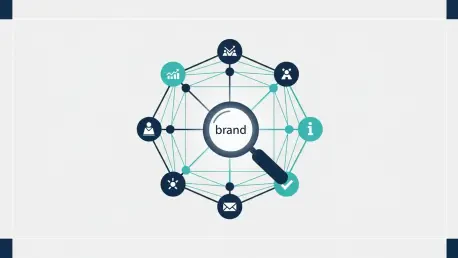

The digital architecture that once relied on a linear exchange between a user query and a list of static web links has fundamentally dissolved into a complex network of real-time synthesis and conversational discovery. This transformation represents the most significant upheaval in information retrieval since the inception of the commercial internet. In this current environment, the concept of the Search Engine Results Page (SERP) is increasingly viewed as a relic of a bygone era. Instead, users engage with sophisticated interfaces that do not merely point to information but actively aggregate, interpret, and present it as a cohesive narrative. For brands, the objective is no longer to rank at the top of a list but to be seamlessly integrated into the AI-generated response that a user consumes.
The Paradigm Shift in Digital Discovery and the Rise of Synthesis Engines
The transition from traditional keyword-based ecosystems to AI-driven interfaces marks the birth of the synthesis engine. In the past, search engines acted as digital librarians, cataloging pages and directing users to relevant shelves. Today, these systems have evolved into expert consultants. They leverage Large Language Models to understand the intent behind a query, moving away from exact-match keywords toward semantic relevance. This evolution has forced a total reimagining of digital strategy. Marketing teams must now optimize for machines that possess a degree of reasoning capability, requiring content that is not just readable by humans but technically structured for advanced computational synthesis.
The 2026 digital landscape is defined by Generative Engine Optimization (GEO), a discipline that has largely superseded traditional SEO. In this environment, the success of a brand is measured by its presence within the primary output of generative models. This shift has turned the internet into a high-stakes meritocracy where only the most authoritative and well-structured information survives the filtering process of the AI. Information retrieval is no longer a passive process of scanning links; it is an active dialogue where the AI decides which brands are worthy of being cited as authoritative sources. This reality necessitates a deep understanding of how generative engines weigh information and the specific criteria they use to validate brand claims.
Technological influences such as OpenAI’s GPT series, Google’s Gemini, and the rise of specialized synthesis engines like Perplexity have restructured the foundations of brand discovery. These models do not just crawl the web; they ingest vast amounts of data to build a conceptual understanding of the world. When a user asks for a product recommendation or a technical explanation, the AI draws from this internal knowledge base, supplemented by real-time web retrieval. Consequently, brands that fail to influence these training sets or provide real-time, verifiable data find themselves invisible in the very place where modern consumers are looking for answers.
The emergence of specialized agencies has created a new competitive landscape where technical depth is the primary differentiator. These organizations have moved beyond simple backlink building and keyword mapping, focusing instead on “Relevance Engineering” and “Entity Authority.” Forward-thinking brands are navigating this shift by moving away from the “blue link” obsession and toward a strategy of authoritative citations. The goal is to ensure that when an AI synthesizes an answer, the brand is not just mentioned but is presented as the definitive solution to the user’s underlying problem. This requires a sophisticated blend of technical excellence, editorial rigor, and algorithmic trust-building.
Mapping the Trends and Data Driving the AI Search Revolution
Emerging Behaviors and the Decline of Traditional Search
Consumer behavior has undergone a radical transformation as users increasingly prioritize “answer-first” interactions. The traditional method of clicking through multiple websites to find a piece of information is being replaced by a preference for natural language processing and distilled summaries. Users now interact with digital assistants through complex, multi-turn conversations rather than isolated, two-word queries. This shift toward conversational entities means that brands must ensure their digital footprint is interconnected and contextually rich. A single landing page is no longer sufficient; the entire brand ecosystem must communicate a consistent level of expertise that an AI can easily interpret.
The strategic pivot to entity authority has become the primary driver of market visibility. In this context, an “entity” is anything that can be uniquely identified and defined within a knowledge graph—a brand, a person, a product, or a concept. AI engines prioritize entities that demonstrate a high degree of niche expertise and topical relevance. By focusing on becoming a recognized expert in a specific domain, a brand can secure its place within the AI’s internal map of the world. This move toward authority is a direct response to the saturation of the web with low-value, generic content, which AI models are increasingly trained to ignore or filter out during the synthesis process.
Furthermore, analyzing traffic patterns reveals that AI-referred visitors represent a new gold standard in lead generation. These users often arrive at a brand’s site after having been “pre-sold” by the AI’s recommendation. Because the synthesis engine has already filtered for relevance and authority, the traffic it refers is highly qualified and demonstrates significantly higher conversion rates than traditional organic search. This phenomenon creates a compelling case for shifting resources toward GEO. The focus is no longer on the raw volume of traffic but on the precision of the referral, ensuring that every visitor coming from an AI interface is someone with a high intent to engage or purchase.
Market Projections and Performance Indicators for 2026
Industry data highlights a significant contraction in traditional web search volume, which has seen a decline of approximately 25% over the past twelve months. This trend is not indicative of a decrease in information seeking but rather a migration to integrated AI platforms. As users find more value in direct answers, the necessity of visiting a traditional search engine results page continues to diminish. This decline poses a catastrophic risk for brands that have failed to adapt their strategies, as their traditional sources of organic traffic are quite literally evaporating. The market is witnessing a redistribution of attention that favors early adopters of AI-centric optimization.
In contrast to the decline of legacy search, referral traffic from AI platforms has experienced an explosive growth rate of over 500%. This surge reflects the rapid adoption of tools like ChatGPT and Gemini as primary research interfaces. Brands that have successfully optimized for these platforms are seeing a massive influx of high-quality sessions that bypass traditional search engines entirely. This data underscores the importance of being included in the “citation box” or the “source list” of an AI response. These referrals are becoming the lifeblood of modern digital marketing, providing a sustainable source of growth in an otherwise volatile environment.
To measure success in this new era, market leaders have established new key performance indicators (KPIs) that prioritize influence over mere visibility. AI Citation Frequency has emerged as a critical metric, tracking how often a brand is mentioned across various synthesis engines for specific topics. Additionally, Share of Voice (SoV) within LLM responses allows brands to benchmark their presence against competitors in a conversational context. These metrics provide a more accurate picture of a brand’s standing in the digital economy than traditional rankings. By monitoring these indicators, companies can adjust their content strategies in real-time to maintain their authoritative position.
Overcoming the Complexities of Generative Engine Optimization
Ensuring a brand is visible to AI models involves overcoming significant technical barriers related to how specialized bots crawl and index content. Modern systems rely on bots like GPTBot, CCBot, and Google-Extended to gather the information that eventually informs their answers. However, many websites are unintentionally blocking these bots or providing them with poorly structured data that is difficult to parse. Implementing protocols like llms.txt— a dedicated file that provides clear instructions and summaries for AI models—has become a prerequisite for visibility. Without these technical adjustments, a brand’s content remains siloed, unable to reach the synthesis engines that consumers are using.
The “Prompt Gap” represents another significant challenge for modern marketers. This gap occurs when there is a misalignment between the specific natural language prompts users enter into an AI and the content a brand has produced. For example, a user might ask an AI for a “step-by-step guide on scaling a decentralized team,” while a brand’s content focuses only on “remote work benefits.” Solving this requires deep gap analysis to identify the conversational queries that are currently being underserved. By creating content that directly addresses these complex, multi-layered prompts, brands can bridge the gap and ensure they are the ones providing the answers the AI synthesizes.
Combating information dilution and preventing AI “hallucinations” is a critical component of maintaining brand integrity. When an AI model lacks sufficient or clear data about a brand, it may generate inaccurate information or misattribute credit to a competitor. Maintaining accuracy requires a proactive approach to managing the brand’s digital footprint across the entire web. This includes ensuring that third-party review sites, industry directories, and news outlets all contain consistent and factual data. By saturating the digital environment with accurate information, a brand provides the AI with a “source of truth” that reduces the likelihood of errors during the synthesis process.
Building authority in the age of AI is a resource-intensive endeavor that requires a long-term commitment to quality. The costs associated with specialized GEO agencies and high-level technical optimization can be significant, often far exceeding the budget required for traditional search marketing. However, the return on investment is found in the longevity and stability of AI visibility. Unlike traditional rankings, which can fluctuate daily based on algorithm updates, AI citations are built on a foundation of established trust and deep data integration. This long-term ROI makes the high initial cost a necessary investment for any market leader aiming to secure their future in the digital economy.
Navigating the Regulatory and Standards Landscape of AI Search
Compliance and data privacy have become central concerns as Large Language Models continue to crawl and utilize brand information for training. Regulations surrounding data scrapers and the rights of content creators are constantly evolving, requiring brands to stay vigilant. Understanding how specific LLMs utilize your data is crucial for protecting intellectual property while remaining visible. Some brands have opted for restrictive protocols to prevent their data from being used in training sets, while others see these sets as the ultimate marketing opportunity. Balancing these interests requires a nuanced legal and technical strategy that respects both privacy and the need for public visibility.
In regulated sectors like Finance and Healthcare, the importance of E-E-A-T (Experience, Expertise, Authoritativeness, and Trustworthiness) has reached new levels of regulatory rigor. AI engines are programmed to be particularly cautious when providing answers in these “Your Money or Your Life” (YMYL) categories. To be cited as a credible source in these fields, a brand must provide clear evidence of professional accreditation, verified author credentials, and a history of factual accuracy. This regulatory oversight by the AI itself means that shortcuts are no longer possible. Visibility in these sectors is now strictly reserved for those who can prove their expertise through a verifiable trail of high-quality, authoritative content.
Standardizing AI interactions through the use of Schema Markup and structured data has become the universal language of the modern web. This technical tagging allows a brand to explicitly tell an AI engine what a piece of content is about, how it relates to other entities, and who the intended audience is. By using standardized vocabularies like Schema.org, brands can remove the guesswork for AI models, making it easier for them to synthesize content into accurate answers. This level of technical clarity is essential for complex product catalogs and service offerings, where a lack of structure can lead to misinterpretation and lost visibility in the synthesis process.
Security measures for brand content have also evolved to include protocols that protect against “data poisoning” or unauthorized manipulation of a brand’s digital identity. As AI models become more reliant on web-retrieved information, the risk of competitors or bad actors attempting to influence those models through malicious content increases. Implementing security protocols to ensure that only legitimate, verified information is accessible to AI retrieval systems is a critical defensive strategy. This involves monitoring the web for false information and using digital signatures or other verification methods to certify the authenticity of the brand’s official publications and data feeds.
The Future of Brand Authority in a Post-Search World
Retrieval-Augmented Generation (RAG) is fundamentally changing the speed at which brand updates influence AI answers. Traditional indexing could take days or weeks for a change on a website to reflect in search results. With RAG, synthesis engines can retrieve the most current information directly from a brand’s site at the moment a query is made. This real-time retrieval means that a brand’s latest product launch, price change, or official statement can immediately inform the AI’s responses. Mastery of RAG-friendly content architectures is becoming a key competitive advantage, allowing brands to maintain a high degree of agility and accuracy in an ever-changing market.
The intersection of digital PR and algorithmic trust has redefined the role of third-party validation in “ranking.” In the absence of traditional backlink metrics as the sole authority signal, AI engines look toward a brand’s broader digital footprint to verify its claims. Mentions in high-trust publications, citations in academic papers, and consistent reviews on reputable platforms serve as the primary signals of trust. Digital PR is no longer just about getting a link; it is about building a verifiable consensus across the internet that a brand is a leader in its field. This third-party validation acts as the “proof” the AI needs to confidently recommend a brand to a user.
Personalized synthesis engines are the next frontier, where AI answers are tailored to an individual user’s history, preferences, and current context. In this future, brand visibility will not be universal but highly personalized. An AI might recommend one brand to a budget-conscious user and another to a user who prioritizes sustainability, based on its understanding of their past behaviors. Preparing for this shift requires brands to be extremely clear about their unique value propositions and target demographics. By being the best choice for a specific type of person, a brand can ensure it is the one surfaced by the AI in these highly personalized discovery journeys.
Innovation in attribution is finally providing the deeper insights necessary to track the customer journey from an initial AI citation to final revenue. Traditional analytics tools often struggle to track users who interact with an AI interface before visiting a brand’s site. However, new emerging tools are bridging this gap by using advanced modeling to attribute conversions to specific AI interactions. This allows marketing teams to see exactly which content pieces are driving citations and which citations are resulting in the highest-value customers. This level of granular attribution is essential for justifying the continued investment in GEO and for refining strategies to maximize profitability.
Summary of Findings and Strategic Recommendations for Market Leaders
The transition toward Generative Engine Optimization represents a permanent shift in the digital marketing landscape, where the distinction between traditional content creation and technical AI optimization has effectively vanished. The findings of this report indicate that brands can no longer afford to treat AI visibility as a secondary concern or an experimental project. The market has moved into a phase where the ability to influence synthesis engines is the primary determinant of a brand’s relevance and commercial success. Maintaining a presence in this environment requires a holistic approach that integrates technical infrastructure, high-authority editorial content, and a sophisticated understanding of AI retrieval patterns.
Investment priorities for the current fiscal cycle should be directed toward selecting agency partners who demonstrate methodological transparency and significant technical depth. The complexity of GEO means that superficial strategies are no longer effective. Leaders must seek out partners who can articulate a clear plan for managing RAG-based retrieval, entity building, and prompt gap analysis. Furthermore, the selection process should prioritize agencies that possess the internal tools necessary to track AI share of voice and citation frequency, as these are the only metrics that provide a true reflection of performance in the current market.
The competitive advantage of early adoption remains significant, but the window of opportunity is narrowing. Brands that act now to influence the pre-trained data of next-generation models and establish a dominant presence in current retrieval sets will hold a lasting advantage. This involves not only optimizing existing content but also actively participating in the broader digital discourse to build algorithmic trust. Those who wait for the landscape to further stabilize risk being permanently excluded from the internal knowledge bases of the major AI models, making subsequent efforts to gain visibility both more difficult and more expensive.
The necessity of “answer-first” content has become the ultimate requirement for maintaining market relevance. In a digital economy where users expect immediate, synthesized solutions, brands that hide their value behind complex navigation or gate their expertise will be ignored by both humans and machines. Success required a commitment to being the most helpful, authoritative, and easily retrievable source of information in a given niche. By prioritizing the needs of the synthesis engine and the conversational user, market leaders established the foundations for long-term visibility and growth. The brands that emerged as winners were those that understood that in the age of AI, being the best answer was the only way to be seen.