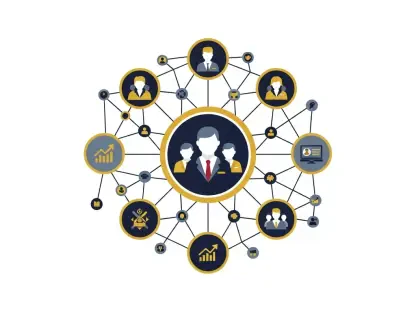

The traditional marketing funnel that once served as the bedrock of global advertising has finally crumbled under the weight of a hyper-connected, social-native digital economy. Modern brands no longer rely on a predictable linear progression from awareness to purchase because the consumer journey has fragmented into a chaotic web of touchpoints. This shift has signaled the decline of the siloed agency model, where creative, media, and production lived in isolated bubbles. In its place, a new integrated ecosystem has emerged, prioritizing the consolidation of specialized talent to meet the demands of a market where social-native content defines success.
To navigate this landscape, industry players are moving away from the rigid structures of the past. The focus has transitioned toward building unified environments that can pivot as quickly as a viral trend. Success is no longer measured by the size of a single agency, but by the strength of its connections within a broader network. This evolution ensures that specialized expertise in areas like creator-led content and community management is not just an add-on but a core component of the brand strategy.
Navigating the Fractured Consumer Journey and Market Shifts
The Rise of Social-First Strategies and Non-Linear Paths to Purchase
The contemporary path to purchase is rarely a straight line; it is a series of sporadic, community-led interactions that happen across various digital platforms. Moving beyond simple brand awareness, companies must now address consumers who are influenced more by peer recommendations and creator-led content than by traditional advertising channels. This change has transformed social media from a mere marketing tactic into the primary foundation of the entire campaign mix.
By placing social-first strategies at the center of operations, agencies are better equipped to handle the non-linear nature of modern consumption. Campaigns are now designed to spark conversation and foster digital communities rather than just broadcast a message. This approach allows brands to remain relevant in a world where the distance between discovering a product and clicking the buy button has shrunk to a matter of seconds.
Benchmarking Growth and Performance in a Consolidated Environment
Recent market data highlights a clear trend: integrated agency partnerships are consistently outperforming independent specialists who attempt to operate in a vacuum. Projections for industry growth are now heavily driven by the fusion of creative expertise and retail conversion capabilities. Agencies that can marry high-level storytelling with the technical precision of modern e-commerce are seeing the most significant returns on investment.
Performance indicators have shifted to measure the effectiveness of these cross-disciplinary teams. It is no longer enough to track impressions or clicks in isolation. Instead, the focus is on how well an agency can bridge the gap between initial attention and final action across multiple channels. This holistic view of performance ensures that every creative asset is optimized for both engagement and measurable retail results.
Overcoming the Structural Limitations of Specialized Independence
Independent agencies often face a breadth gap where their specialized focus limits their ability to handle increasingly complex client briefs. As clients demand more interconnected services, the struggle to remain competitive while staying independent has intensified. To solve this, many agencies are identifying gaps in their service offerings and filling them through strategic acquisitions that provide complementary strengths rather than just increasing their headcount.
Maintaining a unique agency identity and culture during a merger remains a top priority. The goal is not to dilute the specialized talent that made the agency successful, but to provide it with a larger platform and better resources. By integrating social, activation, and retail specialists, agencies can eliminate the problem of isolated production and offer a seamless experience that reflects the reality of how people consume media.
The Role of Governance and Standardized Operations in Agency Mergers
Navigating the regulatory landscape of mid-market agency acquisitions requires a sophisticated approach to partnership agreements and operational synergy. As agencies merge, establishing clear compliance standards for data privacy and security is critical, especially when managing integrated marketing platforms. Standardized operations ensure that while different teams collaborate, they do so within a framework that protects both the agency and the client.
Operational synergy must be balanced with the need to protect the creative autonomy of acquired agencies. Effective governance allows for a unified strategy while giving individual teams the freedom to innovate. Furthermore, industry regulations regarding how integrated groups manage cross-channel consumer data are becoming more stringent, making a centralized approach to data management a competitive necessity for any consolidated entity.
Anticipating the Next Evolution of the Integrated Marketing Ecosystem
Emerging technologies and advanced automation are further complicating the non-linear consumer path, requiring agencies to be more agile than ever before. The next major market disruptor is the convergence of social-native storytelling and direct-to-consumer retail. Predictors for success in this environment center on radical collaboration and a high degree of self-awareness regarding an agency’s specific limitations.
Global economic conditions are accelerating the shift from independent silos to unified specialist networks. Agencies that recognize the need to be part of a larger ecosystem are better positioned to weather market volatility. The future belongs to those who can integrate disparate disciplines into a cohesive whole, ensuring that brand stories are told effectively across an ever-expanding array of digital and physical touchpoints.
Building a Sustainable Competitive Advantage Through Strategic Partnerships
The analysis demonstrated that the traditional marketing funnel was no longer a viable model for reaching the modern consumer. Agencies that thrived were those that moved away from isolated strategies and embraced integrated ecosystems to address the fractured journey. Successful firms recognized that bridging the gap between attention and action required more than just creative talent; it demanded a unified approach to social, retail, and data analytics.
The long-term value of these strategic shifts was found in the honesty with which agencies assessed their own limitations. By pursuing collaborative growth and forming partnerships that offered complementary strengths, agencies protected their specialized identities while expanding their reach. This transition from independence to integration proved to be the most effective way to maintain a sustainable competitive advantage in a social-first world. Moving forward, the industry prioritized radical collaboration as the standard for navigating the complexities of the digital marketplace.