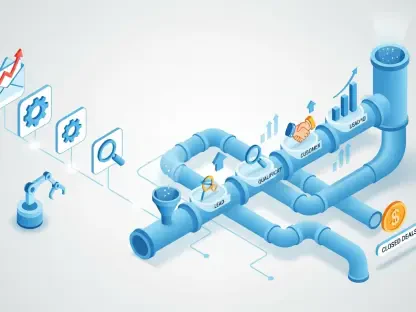

The vast, untapped potential of indirect sales channels has long been understood in theory, yet the practical challenge of mobilizing a diverse partner network has consistently hindered companies from realizing its full value. Today, a new wave of technology is poised to bridge that gap between strategy and execution, fundamentally altering the B2B growth landscape. This shift reflects a broader industry realignment where the success of a business is increasingly tied not just to what it sells, but to the strength and operational efficiency of its partner ecosystem. The central question is no longer if partners are valuable, but how to activate and scale their impact effectively.
The New B2B Playbook: Why Partner Ecosystems Are Taking Center Stage
The traditional go-to-market model, heavily reliant on direct sales and marketing, is proving insufficient for the demands of modern market expansion and customer acquisition. In its place, a more interconnected, ecosystem-driven approach has emerged as the definitive B2B playbook. Companies are strategically cultivating networks of resellers, integrators, affiliates, and technology partners to extend their reach, build credibility, and tap into niche markets that would otherwise be inaccessible. This collaborative model allows businesses to leverage the established trust and expertise of their partners, creating a more authentic and effective path to the end customer.
This pivot toward partner-led growth is not merely a tactical adjustment but a fundamental strategic evolution. By distributing sales and marketing efforts across a broad ecosystem, organizations can achieve a level of scale and market penetration that is simply not feasible through direct channels alone. Partners act as a force multiplier, amplifying a company’s message and value proposition within their own established customer bases. Consequently, the ability to successfully recruit, enable, and co-market with these partners has become a critical competitive differentiator, separating market leaders from the laggards.
The Rising Tide of Automation in Partner Marketing
As the reliance on partner ecosystems intensifies, so does the operational complexity of managing them. Manually coordinating marketing campaigns, distributing assets, and tracking performance across dozens or even hundreds of unique partners is an unsustainable model fraught with inefficiency and inconsistency. Partner Marketing Automation Platforms (PMAPs) have risen to address this precise challenge, offering a centralized system to orchestrate marketing efforts to, with, and through an entire partner network. These platforms provide the technological backbone required to turn a fragmented group of independent entities into a cohesive, revenue-generating machine.
The core function of a PMAP is to streamline and automate the three pillars of partner marketing. First, it aims to boost partner adoption and engagement by making it simple for partners to access marketing resources and launch pre-approved campaigns. Second, it focuses on elevating the performance of those campaigns by providing tools for customization, lead management, and analytics. Finally, it aligns marketing objectives across a diverse ecosystem, ensuring that every partner action contributes to the overarching business goals of the supplier, thereby creating a system where mutual success is not just possible, but predictable.
The Investment Tsunami: Unpacking the Surge in Partner Tech Spending
The theoretical value of partner automation is now being validated by significant financial commitment across the B2B sector. A clear and decisive trend has emerged, with 75% of partner marketing decision-makers confirming plans to increase their overall technology investments. This is not a tentative exploration but a confident and widespread move to equip partner programs with the tools necessary to compete and scale effectively in an increasingly crowded marketplace.
This surge in spending is a direct response to the operational demands of the modern partner ecosystem. As companies lean more heavily on indirect channels for revenue growth, they recognize that their legacy systems and manual processes are inadequate. The investment in technology like PMAPs is therefore viewed less as a cost center and more as a crucial enabler of their core growth strategy, essential for unlocking the full potential of their partner networks.
By the Numbers: Forecasting the Explosive Growth of PMAP Adoption
Drilling deeper into the investment data reveals a market rapidly moving toward maturity. Among companies already utilizing PMAPs, 65% intend to increase their spending, signaling that the technology is delivering tangible value and that users are eager to deepen their integration. This indicates a strong level of satisfaction and a desire to expand the use of automation across more facets of their partner programs, moving from initial adoption to strategic optimization.
Perhaps more telling is the trend among non-users. Nearly 60% of organizations that have not yet adopted a PMAP plan to do so within the next year. This points to an imminent tipping point where partner marketing automation transitions from a competitive advantage for early adopters to a standard operational requirement for any B2B company serious about partner-led growth. The market is swiftly closing the gap between awareness and adoption, solidifying the role of PMAPs as a foundational element of the B2B technology stack.
The Scaling Dilemma: Confronting the Hurdles of Partner-Led Growth
The primary obstacle to successful partner-led growth is not a lack of willing partners but the vast disparity in their marketing capabilities. Data reveals that nearly 70% of partners operate with low to medium demand generation maturity, lacking the resources, expertise, or time to execute effective marketing campaigns. This inconsistency creates a significant bottleneck, as suppliers cannot rely on their network to perform at a uniform level, making scalable and predictable growth an elusive goal.
This challenge is compounded by limited resources on both sides and uneven partner engagement. Suppliers often struggle to provide personalized support to every partner, while partners are frequently overwhelmed by the demands of multiple vendor relationships. Without a system to simplify and automate marketing execution, only the top tier of highly engaged and capable partners will ever contribute meaningfully to revenue. This leaves the vast majority of the partner base underutilized, representing a massive source of untapped growth potential.
Establishing Order: How Automation Enforces Brand and Data Governance
Automation platforms bring much-needed order to the potential chaos of a distributed marketing model by enforcing brand and data governance. PMAPs serve as a single source of truth for marketing assets, providing partners with access to a library of pre-approved, brand-compliant campaigns, templates, and messaging. This ensures that no matter which partner is engaging a customer, the brand experience remains consistent and professional, mitigating the risk of off-brand communication that can dilute market positioning.
Furthermore, these platforms introduce a critical layer of data discipline. By centralizing campaign execution and tracking, PMAPs provide suppliers with clear visibility into partner marketing performance. This allows for the accurate measurement of key metrics, from partner engagement to lead generation and attributed revenue. Such data-driven insight enables marketing leaders to identify what works, optimize their strategies, and demonstrate a clear return on their partner program investment.
The Next Frontier: AI as the Ultimate Accelerator for Partner Marketing
The evolution of partner marketing automation is now entering its next phase, driven by the integration of Artificial Intelligence. All major PMAP vendors are embedding AI capabilities into their platforms, transforming them from tools of simple automation into intelligent systems for growth optimization. AI is being deployed to analyze performance data, predict which campaigns will be most effective for specific partners, and personalize content at a scale previously unimaginable.
This infusion of AI serves as a powerful value accelerant, designed to enhance usability and drive superior outcomes. For partners, AI-driven recommendations can simplify campaign selection and customization, lowering the barrier to entry for marketing activities. For suppliers, AI can identify at-risk partners, suggest enablement pathways, and provide deeper insights into ecosystem health. Ultimately, this technological leap promises to boost platform engagement and fuel greater marketing success, solidifying the ROI of partner automation technology.
The Verdict: From Belief to Execution with Partner Marketing Automation
The core challenge within B2B ecosystems was never a lack of belief in the power of partnership; it was the persistent inability to execute that vision at scale. Companies understood the potential value locked within their partner networks, but they lacked the operational framework to systematically unlock it. The manual, one-to-one management style that characterized early partner programs simply could not support the complexity and dynamism of a modern, growth-oriented ecosystem.
Partner Marketing Automation Platforms directly addressed this execution gap. By providing the technological infrastructure to standardize processes, distribute resources efficiently, and measure outcomes consistently, PMAPs transformed the abstract concept of partner-led growth into a tangible, repeatable, and scalable business strategy. These platforms became the essential bridge between ambition and reality, enabling organizations to finally activate the full power of their partner networks and turn their ecosystem from a strategic asset into a primary engine for revenue generation.