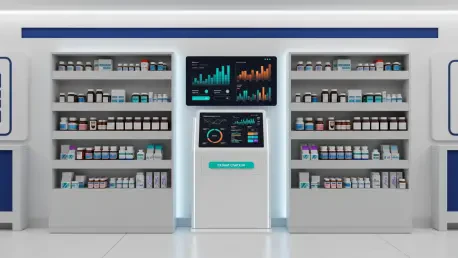

The sheer volume of digital health advertisements flashing across mobile screens and television monitors has reached a saturation point where many patients simply tune out the noise entirely. As 2026 progresses, the pharmaceutical industry is undergoing a radical transformation that prioritizes high-impact physical touchpoints over the broad, impersonal reach of traditional media campaigns. This shift is driven by a realization that while a digital banner can build general awareness, it rarely influences the final decision made at the pharmacy counter where therapy actually begins. Marketing experts are now focusing their resources on point-of-care strategies that intercept the patient during the most critical moments of their healthcare journey. By moving away from the “spray and pray” methodology, brands are finding that they can achieve significantly higher conversion rates through targeted interventions. This evolution represents a fundamental change in how drug manufacturers perceive the retail environment.
The Strategic Pivot: Moving Toward Point-of-Care Environments
The decline of traditional digital advertising efficacy has forced pharmaceutical companies to rethink their multi-billion dollar budgets in favor of more tangible results. In recent times, the industry has relied heavily on programmatic ads and search engine marketing, yet the rise of artificial intelligence in search algorithms has made it harder for branded content to stand out among generic advice. Consumers are increasingly reporting feelings of “screen fatigue,” leading to a noticeable drop in click-through rates for health-related content appearing on social media platforms. In contrast, the physical environment of a pharmacy offers a sensory-rich experience where information is delivered by a trusted professional rather than a cold algorithm. This transition toward point-of-care marketing is not merely a trend but a strategic response to the changing habits of a population that seeks authentic human interaction when dealing with complex medical issues in a physical setting.
Recent industry data suggests that revenue from point-of-care marketing is growing at an unprecedented rate, outpacing many other categories of healthcare expenditure. This growth is largely due to the “moment of truth” phenomenon, where a patient holding a prescription decides whether to initiate treatment or abandon the medication based on perceived value and cost. Digital ads might introduce a brand name to a consumer’s mind, but the pharmacy serves as the location where financial and psychological barriers are either overcome or reinforced. By placing educational materials and affordability tools directly in the path of the patient, marketers can effectively mitigate the risk of prescription abandonment before it occurs. This proximity to the decision-making process allows for a level of influence that is impossible to replicate through a television commercial or a targeted email blast. Consequently, the pharmacy has become an arena where marketing success is measured by prescriptions filled.
Leveraging Trust Capital: Why Retail Pharmacies Lead the Way
One of the most significant advantages of the modern pharmacy is the deep-seated trust that local communities place in their pharmacists compared to other healthcare entities. Statistics indicate that the average patient visits their local pharmacy nearly twice as often as they see their primary care physician, creating more frequent touchpoints for education. Because nearly 90 percent of Americans view pharmacy-based care in a positive light, these environments are uniquely positioned to deliver marketing messages that are perceived as helpful clinical advice. Unlike an intrusive pop-up ad, a well-placed educational brochure or a digital screen in a waiting area feels like a natural extension of the healthcare experience. This high-trust environment allows pharmaceutical brands to establish a more meaningful connection with patients who are already in a “health-conscious” mindset. By aligning marketing efforts with the pharmacist’s role as a trusted advisor, companies can ensure that their messaging is respected.
The landscape of primary care has shifted rapidly as retail pharmacies expanded their clinical services to include diagnostic testing, vaccinations, and chronic disease management. Projections indicate that by 2030, retail clinics will capture nearly a third of the primary care market, making them a central hub for medical consultation. This migration is particularly evident in the way pharmacies have taken the lead in seasonal health initiatives, often serving as the primary source of preventative care for rural and underserved populations. This shift positions the pharmacy as a comprehensive medical destination rather than just a place to pick up pre-packaged medications. For pharmaceutical marketers, this means the scope of opportunity has expanded to include patients who are seeking advice on everything from weight management to complex specialty therapies. The convergence of retail convenience and clinical expertise provides a fertile ground for brands to engage with patients throughout their entire healthcare lifecycle.
Collaborative Engagement Strategies: Empowering the Clinical Advisor
To truly capitalize on the pharmacy environment, marketers must recognize that pharmacists are the ultimate gatekeepers of clinical information and patient adherence. Success in this space requires a strategy that provides pharmacists with the tools they need to educate patients effectively without adding to their already heavy workloads. By developing high-quality educational resources that address common concerns like potential side effects or drug-to-drug interactions, brands can earn the “buy-in” of these professionals. When a pharmacist feels confident in the accuracy and utility of the materials provided by a drug manufacturer, they are far more likely to use them as a reference during consultations. This face-to-face reinforcement is incredibly powerful, as it adds a layer of professional endorsement that no other marketing channel can offer. Effective programs often involve integrating digital training modules for pharmacy staff to ensure they are fully informed about new data.
Financial barriers remain the most significant reason for prescription abandonment, often occurring right at the checkout counter when a patient learns the final cost of their therapy. Modern pharmacy marketing must therefore go beyond simple brand awareness to provide immediate, actionable financial solutions like co-pay vouchers and discount cards. When these programs are integrated directly into the pharmacist’s workflow, they can be offered to the patient in real-time, effectively saving a sale that might otherwise have been lost. This level of support demonstrates a brand’s commitment to patient access and can significantly improve long-term adherence rates for chronic conditions. Furthermore, automated systems that remind patients of upcoming refills or provide text-based support can bridge the gap between a written prescription and a loyal customer. By addressing the economic realities of healthcare, pharmaceutical companies can build a more resilient and supportive relationship with their entire patient base.
Driving Longitudinal Adherence: From First Fill to Long-Term Care
As the industry finalized its transition toward more integrated point-of-care models, the results proved that the pharmacy was indeed the most effective venue for patient engagement. Successful brands moved away from generalized messaging and instead focused on delivering highly specific content to the right patients at the right time. They invested in technology that allowed for niche targeting, ensuring that elderly patients or those managing specific chronic illnesses received information that was directly relevant to their needs. This precision not only boosted conversion rates but also fostered a sense of personalized care that resonated deeply with a weary consumer base. The synergy between initial digital discovery and the final physical interaction at the counter created a multiplier effect that solidified the patient’s commitment to their therapy. By the time many patients reached the checkout, they felt empowered and informed, rather than confused by a sea of conflicting pharmaceutical ads.
Industry leaders ultimately found that the most effective strategy involved moving beyond simple awareness to focus on the full clinical lifecycle of the patient. They implemented advanced analytics to determine which pharmacy locations required the most support, allowing for a more efficient allocation of marketing resources. Companies that integrated their digital platforms with retail pharmacy management systems successfully reduced the time pharmacists spent on administrative tasks, freeing them to provide more direct patient counseling. This integration proved to be the key to maintaining long-term adherence and preventing the costly cycle of treatment discontinuation. By prioritizing these collaborative efforts, the sector established a blueprint for how to navigate the complex relationship between patients and providers in an increasingly retail-centric world. The success of these initiatives demonstrated that the pharmacy counter was not just a point of sale, but a critical site for improving global health outcomes.