
A perplexing trend has emerged from the advertising battlegrounds of 2025, where marketers, armed with more performance data than ever, are making decisions that appear to defy the very logic of return on investment. While social media platforms delivered significantly stronger returns, their share of advertising budgets actually shrank, signaling a profound disconnect between channel efficiency and strategic capital allocation. This paradox reveals a landscape shaped not just by performance metrics, but by a complex interplay of platform volatility, legacy budget inertia, and a strategic rebalancing of the entire marketing funnel. The industry is at a crossroads, navigating a new era where the simple pursuit of high ROI is no longer the only factor guiding multi-billion dollar decisions.
The 2025 Advertising Battlefield: a Data-Driven Panorama
Mapping the $42 Billion Media Landscape
To understand the strategic shifts currently underway, one must first grasp the sheer scale of the media ecosystem. A comprehensive analysis of over $42 billion in historical media investments from 2025 offers a clear map of this territory. This extensive dataset, drawn from more than 400 diverse brands, provides a definitive look at how advertising dollars were distributed across a fragmented and highly competitive marketplace. The findings paint a picture of an industry in transition, where established giants are being challenged and emerging platforms are rapidly carving out significant roles.
This financial mapping is more than just an academic exercise; it serves as a critical framework for understanding the collective decision-making of the marketing world. The allocation of billions of dollars reflects not only current performance but also perceived future value, risk tolerance, and the enduring influence of legacy media structures. As audiences continue to migrate and technology evolves, this data-driven panorama acts as both a report card on past strategies and a navigational chart for the year ahead, highlighting where momentum is building and where caution is warranted.
The Dominant Channels Shaping Modern Marketing
In 2025, a clear hierarchy of advertising channels emerged based on investment share. Search marketing solidified its position as the undisputed leader, commanding a formidable 25% of total budgets. Its role as the primary tool for capturing consumer intent at the bottom of the funnel remains unchallenged. Following closely was Linear Television, which, despite facing significant headwinds, retained a substantial 19% share, a testament to its long-standing role in mass-market brand building.
The digital video space demonstrated its growing power, with Streaming Video and Social Media each securing a 17% share of spending. This parity highlights the intense competition for audience attention in video-first environments. Meanwhile, Display advertising saw a significant surge in investment, growing to capture 15% of total budgets. This increase indicates a strategic move by marketers toward reliable, scalable channels that can deliver consistent reach across the consumer journey, filling gaps left by other, more volatile platforms.
Decoding the Great Disconnect: Performance Metrics vs. Budget Realities
The Social Media Paradox: Why Efficiency Isn’t Winning the Budget War
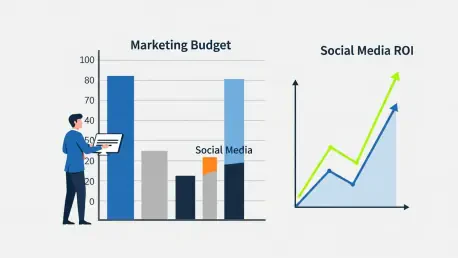
The most counterintuitive trend revealed in the 2025 data is the divergence between social media’s performance and its budget allocation. While the channel’s return on investment jumped significantly, its overall share of advertising expenditure actually declined from 18% to 17%. This paradox suggests that marketers are weighing factors beyond simple efficiency, grappling with external pressures that temper their enthusiasm for the channel despite its strong returns.
The pullback is not an indictment of social media’s effectiveness but rather a reflection of its increasing complexity. Marketers are becoming more discerning, shifting away from broad, high-volume spending toward more targeted, platform-specific investments. This strategic refinement is a response to a volatile ecosystem characterized by platform fragmentation, escalating creative demands for engaging content, and the looming shadow of regulatory scrutiny. In this new reality, raw ROI is just one piece of a much larger strategic puzzle.
By the Numbers: a Channel-by-Channel Performance Breakdown
A granular look at performance metrics across channels illuminates the complex trade-offs marketers faced in 2025. Search marketing proved its value as the bedrock of performance-driven campaigns, delivering a solid and reliable ROI of $1.70 for every dollar spent. This predictable efficiency is why it continues to command the largest share of budgets, anchoring bottom-of-the-funnel strategies designed to convert active interest into sales.
In stark contrast, Linear Television’s ROI experienced a consistent and significant decline throughout the year, raising serious questions about its long-term viability at current investment levels. Conversely, its successor, Streaming Video, demonstrated a steady upward trend in ROI, solidifying its position as the premier channel for top-of-funnel reach and engagement. This performance gap between traditional and digital video formats underscores the urgency for brands to realign their media mix with modern viewership habits to avoid diminishing returns.
Navigating the New Complexities: Beyond ROI to Strategic Headwinds
The Hidden Costs Driving the Social Media Pullback
The decision to reduce social media spending, even as its direct ROI climbed, was heavily influenced by indirect costs and operational challenges. The fragmented nature of the social landscape demands a more sophisticated and resource-intensive approach. Brands can no longer apply a one-size-fits-all strategy; instead, they must tailor content and campaigns for distinct platforms like Meta, TikTok, and Pinterest, each with its own audience, algorithms, and creative best practices. This multiplies the creative and managerial burden, increasing the true cost of execution.
Furthermore, the inherent volatility of the social ecosystem introduces a level of risk that is not captured in a simple ROI calculation. Algorithm changes can drastically alter campaign performance overnight, while shifting cultural trends and the potential for brand safety crises require constant vigilance. These hidden complexities and operational headwinds are prompting a more cautious and calculated approach, leading marketers to favor efficiency and proven results on select platforms over broad-based, high-volume spending across the entire social sphere.
Legacy Budgets vs. Evolving Audiences: The Linear TV Dilemma
The resilience of Linear Television’s budget share, which remained at a substantial 19% despite its faltering ROI, highlights a persistent dilemma in corporate budgeting. Large, established brands often operate with legacy budget structures that are slow to adapt to rapid changes in consumer behavior. The annual planning cycles and entrenched relationships that have long favored television can create a powerful institutional inertia, making it difficult to pivot funds swiftly toward more effective channels like streaming.
This disconnect between spending and audience behavior represents a significant opportunity cost. As viewers continue to cut the cord and migrate to on-demand digital platforms, every dollar allocated to underperforming linear campaigns is a dollar that could have generated a higher return elsewhere. The challenge for modern marketing leaders is not just to recognize this shift but to build the organizational case for breaking from legacy models and reallocating resources to align with where audiences are actually spending their time.
Unlocking Latent Value: The Critical Challenge of Timing and Pacing
One of the most profound findings from the 2025 analysis is the immense, often untapped value hidden within campaign timing. The research reveals a dramatic difference in profitability between traditional “flighted” campaigns, which run for short, intensive periods, and an “always-on,” sustained media presence. Many channels that appear marginally profitable under a flighted model become exceptionally lucrative when investments are spread more evenly over time.
This principle is starkly illustrated by the performance of video advertising. When executed in concentrated flights, Linear Television generated an ROI of just $1.26. However, when the same budget was optimized for a continuous presence, its potential ROI soared to an incredible $6.64. Similarly, Display advertising’s ROI jumped from under $1.00 to over $3.50. This demonstrates that the conventional wisdom of concentrating budgets into short bursts may be leaving significant money on the table, and that a strategic shift toward sustained investment is critical for maximizing long-term profitability.
The Growing Influence of Regulation and Platform Volatility
How Regulatory Headwinds are Reshaping Social Strategy
The specter of increased government regulation is casting a long shadow over the social media landscape, fundamentally reshaping how brands approach the channel. The potential for new laws governing data usage, content moderation, and advertising practices introduces a significant layer of uncertainty and risk. This regulatory pressure forces marketers to think beyond immediate campaign metrics and consider the long-term strategic implications of over-reliance on platforms that could face operational constraints or reputational damage.
In response, many brands are adopting a more conservative stance, diversifying their media mix to mitigate the risk associated with any single platform. The threat of regulatory action acts as a catalyst for this diversification, encouraging investment in more stable and predictable environments. This strategic pivot is less about abandoning social media entirely and more about rebalancing the portfolio to ensure that brand messaging is not overly dependent on a volatile and increasingly scrutinized ecosystem.
Data Privacy and the Rising Power of First-Party Data
The global movement toward greater data privacy, exemplified by the phasing out of third-party cookies and stricter consent requirements, is profoundly altering the digital advertising playbook. This shift diminishes the effectiveness of traditional targeting methods and elevates the strategic importance of first-party data—information that a company collects directly from its customers. Brands with robust first-party data strategies are gaining a significant competitive advantage, as they can continue to deliver personalized and relevant advertising in a privacy-compliant manner.
This new reality is accelerating the rise of retail media networks and other closed ecosystems where valuable, purchase-based data can be leveraged for precise targeting. Marketers are increasingly prioritizing partnerships and channels that offer access to high-quality, permission-based data. The ability to effectively collect, analyze, and activate first-party data has become a critical competency, separating the brands that will thrive in the next era of digital marketing from those that will struggle to reach their audiences effectively.
The Future of the Media Mix: Where the Smart Money is Heading
The Unstoppable Rise of Streaming and Retail Media
The trajectory of the modern media mix points decisively toward two dominant forces: streaming video and retail media. Streaming has firmly established itself as the heir apparent to linear television, capturing eyeballs and ad dollars with its compelling content and sophisticated targeting capabilities. Its consistent ROI growth makes it a non-negotiable component of any top-of-funnel strategy aimed at building brand awareness and reaching audiences at scale.
Simultaneously, retail media has grown from a niche tactic into a foundational pillar of the advertising ecosystem, with its share of media budgets expanding from 15% to 22% in just three years. This explosive growth is fueled by its unparalleled access to first-party purchase data, allowing for hyper-targeted campaigns that close the loop between ad exposure and sales. The convergence of these two powerhouses, particularly through the use of retail data to target ads on connected television, is set to define the next wave of advertising innovation.
From Niche to Necessity: Capitalizing on Undervalued Channels
While major channels dominate the conversation, savvy marketers are finding outsized returns by investing in undervalued and overlooked segments of the media landscape. Audio, for instance, demonstrated a significantly strengthened ROI in 2025. The shift toward on-demand listening through podcasts and streaming services has created new opportunities for highly targeted advertising in an intimate and engaging environment.
Surprisingly, even terrestrial radio delivered a powerful performance, achieving a remarkable $4.00 ROI. This surge was likely driven by reduced advertiser competition, which created a buyer’s market for brands willing to invest against the prevailing trend. This proves that significant opportunities exist for those who look beyond the crowded mainstream channels. Testing and scaling investments in these less competitive arenas can unlock exceptional efficiency and provide a distinct advantage.
The Strategic Shift Toward an Always-On Advertising Presence
The most significant strategic evolution for the coming year is the move away from intermittent, flighted campaigns toward a sustained, “always-on” advertising model. Data from 2025 conclusively showed that maintaining a continuous presence, particularly for brand-building video tactics, dramatically enhances long-term profitability and unlocks latent value that is otherwise lost between campaign bursts. This approach ensures that a brand remains top-of-mind with consumers throughout their entire purchase journey, not just during promotional windows.
This shift requires a fundamental change in both mindset and media planning. It means moving from a project-based campaign mentality to a continuous investment strategy designed to build brand equity and drive steady growth over time. The evidence is clear: the most profitable path forward involves smoothing out investment schedules to optimize for long-term impact rather than short-term spikes, thereby maximizing the cumulative return on every advertising dollar spent.
A Blueprint for 2026: Actionable Insights for Smarter Spending
Rebalancing the Funnel for Maximum Impact
The data from 2025 provided a clear mandate for rebalancing the marketing funnel to align with contemporary consumer behavior. At the top of the funnel, the strategic shift from declining linear television to ascending streaming video must continue and accelerate. This ensures that brand-building investments are directed toward platforms where audience attention is growing and ROI is trending positively. Social media has also cemented its role as a primary awareness driver, requiring thoughtful investment to capture its full potential.
At the bottom of the funnel, search marketing remains the essential foundation for capturing high-intent consumers. However, its dominance is now complemented by the rapid growth of display advertising, which has become a crucial secondary channel for driving conversions. The rebalancing act involves diversifying away from an over-reliance on any single channel, instead creating a synergistic mix where streaming and social build awareness that is then effectively converted by a powerful combination of search and display.
Key Recommendations for Profitable Growth
The analysis of the 2025 advertising landscape offered a clear blueprint for navigating the complexities of the current market. To achieve profitable growth, marketers were advised to increase overall social media investment but to do so with greater discipline, focusing on proven platforms like Meta while carefully testing others. Expanding investment in reliable workhorse channels like display was recommended to provide a consistent backbone for both awareness and conversion objectives.
Furthermore, the data signaled a prime opportunity to test undervalued channels like audio at a meaningful scale, capitalizing on strong ROI in less competitive environments. A critical emerging strategy was to embrace the convergence of retail media and connected television, leveraging first-party data to power a new generation of highly effective video advertising. Above all, the most impactful strategic shift was the move toward a more sustained, always-on media presence to unlock the significant hidden value lost in traditional flighted campaigns, setting the stage for more efficient and profitable marketing outcomes.