
As the media landscape undergoes a radical transformation, Milena Traikovich stands at the forefront of helping brands navigate the shifting tides of digital distribution. With an extensive background in demand generation and performance optimization, Milena has built a reputation for turning complex market shifts into actionable growth strategies. Today, she joins us to dissect the recent restructuring at People Inc., where the company has cut 195 positions—roughly 6% of its workforce—to pivot away from legacy print and web operations toward high-engagement formats like social video.
In this conversation, we explore the broader implications of these layoffs for the PR industry, the necessity of format-agnostic storytelling, and why communications teams must rethink their media outreach in an era where social-first distribution is no longer optional.
Given the recent reduction of 195 roles at People Inc., how do you interpret this move from a legacy publishing powerhouse toward a social-video-first strategy?
The decision to cut 195 positions, which represents about 6% of the workforce, is a visceral reaction to the changing economics of how people consume stories today. When you look at the brands involved—iconic names like People, Food & Wine, and Travel + Leisure—you realize that even the giants are feeling the weight of maintaining legacy web and print operations. This isn’t just a cost-cutting measure; it is a calculated redirection of resources into social video, following a previous round of 226 cuts in 2025. In a world where publishers are spending $113 million a month just to buy search traffic, People Inc. is essentially choosing to meet the audience where they live rather than fighting an uphill battle for organic search referrals. For us in the industry, it feels like the definitive end of the “static page” era, requiring a much more dynamic, sensory-rich approach to content delivery.
With so many shifts in personnel at major outlets, what steps should PR professionals take to ensure their media lists and pitches remain relevant?
The most immediate action is to move away from the “spray and pray” mentality and adopt a rigorous verification process for every single contact. Before hitting send on a pitch, you must confirm that the journalist or editorial desk is still active, as a corporate-level cut of 6% doesn’t automatically mean every department is shuttered. You should look at the recent output of brands like Better Homes & Gardens to see if your primary contact is still the one signing off on stories. It is no longer enough to rely on a database that was updated last month; you need to see real-time evidence of life. If you find that a desk has transitioned toward social-first distribution, your pitch needs to reflect that shift immediately, or you risk being viewed as out of touch with the publisher’s new reality.
As publishers like People Inc. prioritize social video, how should communications teams evolve the materials they provide to editorial desks?
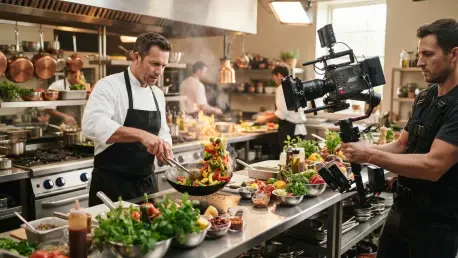
We have to stop thinking of a press release as just a block of text and start treating it as a multimedia kit designed for quick consumption. When a publisher is pivoting to social video, your spokespeople need to be ready to step in front of a lens, providing clear, charismatic on-camera explanations that can be dropped into a reel or a TikTok segment. This means offering high-quality visual assets and concise soundbites alongside traditional background information to make the editor’s job as seamless as possible. We are seeing a move away from traditional magazine layouts toward fast-paced, direct-to-audience products that demand a different kind of preparation. If you can provide a ready-to-use visual hook, you are significantly more likely to secure a placement in a landscape where production resources are being stretched thin across 40 different brands.
How should brands redefine “success” when their coverage moves from a traditional website article to a social-first format?
Measuring success in 2026 requires looking beyond the prestige of a print page and focusing on the depth of audience engagement within these new ecosystems. A mention in a social-first video can often generate a more immediate and visceral reaction than a standard web article, but it requires tracking different metrics like watch time, shares, and subsequent community interaction. You shouldn’t treat a social-first placement as equivalent to a legacy web link; instead, evaluate it based on the context of the platform and how it aligns with your lead-generation goals. It’s about understanding that a digital property’s value is now tied to its ability to capture attention in a zero-click environment. Success is no longer just about the placement itself, but about how effectively that content survives and thrives in a competitive social feed.
What is your forecast for the publishing industry over the next few years?
I anticipate a complete decoupling of “brand” from “format,” where the identity of a publication like Food & Wine exists almost entirely independently of its original print or web structures. Publishers will likely continue to trim any overhead that doesn’t directly contribute to social video or direct-to-consumer revenue, leading to even leaner newsrooms that rely heavily on automated tools and highly specialized creators. We will see a surge in publishers acting more like influencer agencies, where the focus is on building hyper-niche communities rather than mass-market traffic. For PR teams, this means the window for traditional “earned media” is narrowing, and those who cannot provide the visual and digital fuel for these new formats will find themselves locked out of the conversation. Expect to see more consolidation and a relentless focus on mobile-first, video-centric storytelling as the only sustainable path forward.