
The ability to instantaneously reshape live video broadcasts with a simple text command has officially moved from the pages of science fiction into the practical toolkit of digital creators. A new frontier in artificial intelligence is emerging, shifting the focus from pre-rendered clips to live-edited realities. This technology, exemplified by groundbreaking models like Decart’s Lucy 2, grants the power to manipulate live streams instantaneously, heralding a transformative era for digital interaction. This analysis explores the rise of this technology, its revolutionary applications in marketing, and its profound potential to redefine the digital landscape.
The Rise of Instantaneous Video Manipulation
From Generative Clips to Live Streams a Technological Leap
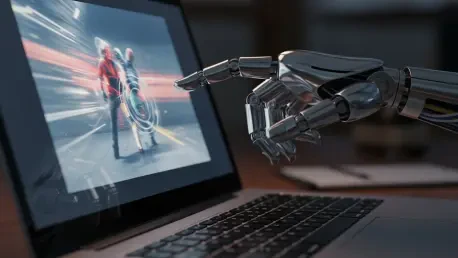
A fundamental paradigm shift is underway in the world of generative AI. Until recently, the conversation was dominated by models like OpenAI’s Sora and Google’s Veo, which excel at creating high-quality video clips based on text prompts in a post-production environment. However, the latest evolution is a move toward live, real-time processing. Models like Lucy 2 operate not by generating a clip from scratch but by manipulating an incoming video feed as it happens, marking a significant leap from static creation to dynamic, interactive modification.
This real-time capability is powered by significant performance breakthroughs. Lucy 2 achieves sub-second latency, processing each frame in under 100 milliseconds while maintaining a high-quality 1080p output at a fluid 30 frames per second. Such performance makes the technology viable for demanding live broadcast applications where any delay would shatter the illusion of reality. These benchmarks are the result of core innovations, specifically the use of integrated diffusion models optimized for temporal consistency. This sophisticated architecture ensures that changes made to the video stream are coherent over time, effectively eliminating the flickering and bizarre artifacts that plagued earlier AI video tools.
Crucially, this advanced technology is not prohibitively expensive. With an operational cost of approximately $3 per hour on standard cloud infrastructure, real-time AI video generation is positioned for widespread adoption. This economic accessibility ensures that startups and independent creators can leverage the same powerful tools as large enterprises, democratizing high-end video production and accelerating innovation across the market. The flexibility to run on common cloud platforms or on-premise hardware further lowers the barrier to entry for businesses of all sizes.
Real-World Applications Redefining Engagement
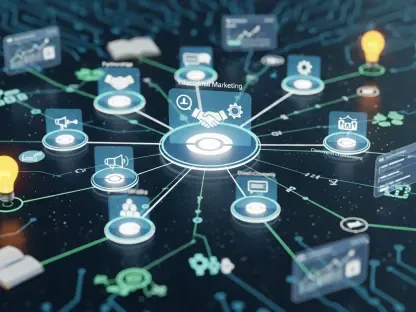
The impact of this technology is most immediately apparent in influencer marketing and live streaming. Creators on platforms like Twitch and TikTok can now dynamically alter their appearance, transform their surroundings, or apply complex thematic filters in direct response to audience commands. This creates a deeply interactive and collaborative viewing experience. Moreover, it enables seamless, context-aware product placement; a streamer could instantly insert a sponsor’s product into their live environment, showcasing it in a natural and engaging way that feels less like a traditional advertisement.
This trend also paves the way for the creation of tireless, 24/7 virtual brand ambassadors. Brands are no longer limited to human influencers; they can now develop their own highly realistic digital personas with unique personalities and backstories. These virtual ambassadors can host continuous livestreams, engage with a global audience in multiple languages, and build profound brand connections without the physical limitations of a human counterpart. They represent a persistent, controllable, and infinitely scalable marketing channel.
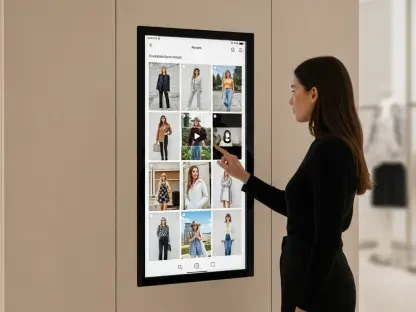
E-commerce is set to be transformed by hyper-realistic virtual try-on experiences. Moving far beyond current augmented reality filters, this technology can model the complex physics of fabrics and lighting, allowing a shopper to see how a garment moves and fits with startling accuracy. A customer could not only see a new pair of jeans on their avatar but also visualize themselves walking through a bustling city park in them, providing a rich, contextual understanding of the product that is nearly indistinguishable from reality and drives purchase confidence. A single live broadcast can now be uniquely tailored for millions of viewers simultaneously, with products inserted into the stream based on individual user data and past engagement.
An Industry GPT-3 Moment: Expert Commentary
The launch of real-time video models is being framed by industry leaders as a pivotal moment for artificial intelligence. Decart CEO Dean Leitersdorf characterized the arrival of Lucy 2 as the “GPT-3 moment for world models.” This comparison signifies the point at which a complex technology matures, becoming powerful and accessible enough to operate effectively in a live environment without sacrificing quality. It marks the transition from a novel experiment to a foundational platform capable of supporting a new ecosystem of applications.
This technological advancement is projected to do more than simply enhance existing video applications; it is expected to forge entirely new, multi-billion dollar markets. Leitersdorf and other experts predict that the ability to manipulate reality in real-time will create novel opportunities in live media, interactive entertainment, dynamic gaming environments, and even robotics. The technology acts as a catalyst, enabling business models and creative expressions that were previously impossible.
A key factor driving this potential is the model’s advanced ability to adhere to complex natural language prompts. Creators can issue intricate, multi-layered commands—such as “add three fire-breathing dragons of different colors without altering the scene’s original lighting”—and expect the AI to execute the instructions with high fidelity. This level of nuanced control is critical for professional creative applications, giving artists and marketers a reliable tool to bring their most ambitious visions to life in real-time.
The Future Outlook: Promises and Perils of Live AI
The trend points decisively toward a future of hyper-personalized media consumption. As this technology matures, every viewer of a live event, from a sporting match to a product launch, could experience a version uniquely tailored to their preferences and history. Advertisements, product placements, and even narrative elements could be dynamically altered for each individual, fundamentally changing the nature of mass communication from a one-to-many broadcast to a collection of one-to-one experiences.
The potential benefits of this shift are immense. It promises to democratize video production, drastically lower marketing costs, and create more immersive and helpful e-commerce experiences that boost consumer engagement and satisfaction. For businesses, it offers a direct line to customers that is more relevant and impactful than ever before. For consumers, it holds the promise of content that is perfectly aligned with their interests.
However, this powerful capability introduces significant challenges and ethical considerations. The ability to alter live video instantaneously raises profound concerns regarding authenticity and the potential for misuse. The technology could be weaponized to create highly convincing deepfakes in real-time, spreading misinformation or creating deceptive content with alarming speed and scale. Establishing safeguards and digital provenance standards will be a critical hurdle for society to overcome. In the long term, real-time AI video is expected to integrate seamlessly with augmented reality and robotics, further blurring the lines between the digital and physical worlds and creating interactive environments that adapt to our presence and commands.
Conclusion: A New Reality in Real-Time
The emergence of real-time AI video, spearheaded by models like Lucy 2, represented a monumental shift from static generation to dynamic, live interaction. The underlying technological prowess unlocked a new class of powerful applications in marketing, e-commerce, and entertainment that were previously confined to the imagination. This movement was not an incremental improvement but a foundational change in how we create, consume, and interact with digital video content. As the technology became more accessible, it compelled businesses and creators to adapt to a future where live content was infinitely malleable. The central challenge became harnessing its immense creative power responsibly while navigating the complex ethical landscape it created.