
With nearly a decade of experience shaping campaigns for global brands and a formative period inside TikTok, Polina Zueva has built her career on a powerful argument: creator partnerships should be treated with the same rigor and accountability as any other revenue-driving channel. She advocates for a systems-first approach that moves beyond vanity metrics to focus on structured testing, deep integration with other marketing functions, and scalable, performance-driven outcomes. Our conversation explored the critical shift from chaotic experiments to data-backed hypotheses, the necessity of building multi-format creator funnels, and the role of AI in managing programs at scale. We also touched upon the persistent challenge of attribution and the untapped potential of B2B influencer marketing.
You’ve argued that influencer marketing should be treated like any other revenue-driving channel. What specific performance metrics should brands prioritize over vanity metrics, and what is the first step a company should take to start tracking them effectively?
The first thing brands need to do is shift their mindset entirely away from likes and follower counts. Those are nice, but they don’t pay the bills. The focus needs to be on acquisition, conversion, and measurable return on investment. I always push my clients to look at customer acquisition cost (CAC), conversion rates from specific creator links or codes, and ultimately, the lifetime value (LTV) of the customers that influencers bring in. The very first step to track this is simple but crucial: implement the basics of performance marketing. This means ensuring every single creator is using a unique promo code or a trackable UTM link. Without that foundational layer of data, you’re flying blind and are just left hoping for results, which is never a sustainable strategy.
Many brands approach creator partnerships with unstructured, “chaotic” experiments. Could you walk us through how to build a hypothesis log for an influencer campaign and share an example of a test that generated valuable, actionable conclusions, even if it failed?
Absolutely. The chaos comes from brands just throwing different briefs at creators without a clear question they’re trying to answer. A hypothesis log fixes this. It’s essentially a structured document where you state a clear assumption, like: “We believe long-form YouTube reviews from mid-tier tech creators will drive a higher sign-up conversion rate than short-form TikTok clips because the audience is more invested.” You then define your test, the creators involved, the budget, and the primary success metric—in this case, the conversion rate. I remember a fintech client that ran a test based on the hypothesis that humorous, skit-style videos would perform best. The test “failed” in that the conversion numbers were terrible. But the conclusion was incredibly valuable: we learned their audience didn’t want comedy when it came to their finances; they wanted direct, trustworthy, educational content. That single failed test saved them from wasting a massive budget on a full-scale campaign and completely reshaped their creative strategy for the better.
When influencer marketing is isolated from other departments, it often struggles. What are the most critical connections to make between a creator strategy and teams like product or lifecycle marketing, and what does that day-to-day collaboration look like in practice?
It’s a huge red flag for me when influencer marketing operates in a silo. If it’s not deeply connected to the rest of the business, it’s destined to fail. The most critical connection is with the product team. Creators are a direct line to your audience; their comment sections are a goldmine of feedback. This feedback needs to be systematically shared with product managers. Day-to-day, this could look like a weekly meeting where the influencer manager presents a summary of audience sentiment and feature requests gathered from creator content. The other vital link is with lifecycle marketing. When a creator drives a new sign-up, the lifecycle team needs to know the source so they can tailor the onboarding flow, perhaps referencing the creator or the specific value proposition that drew the user in. It makes the entire customer journey feel seamless, not disjointed.
Instead of buying one-off posts, you propose a “ladder” or funnel approach. For a B2C app, what would this multi-format funnel look like, and how should a brand measure the unique value of a long-form video versus a short-form discovery clip?
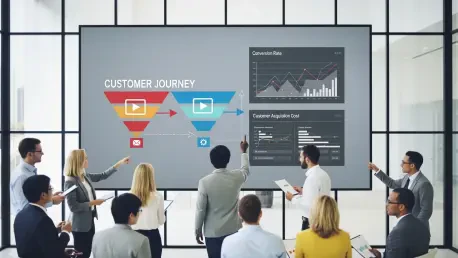
This ladder approach is about moving a customer through a journey, not just hitting them with a single ad. For a B2C app, the funnel would start at the top with broad-reach, short-form content on platforms like TikTok or Instagram Reels. These are designed purely for discovery and awareness. You’d measure these with metrics like views and reach, but with a low CPM expectation. The next step down the ladder would be a longer-form YouTube video. This is where a creator can build trust, tell a compelling story, and really demonstrate the app’s value. This format might get moderate views, but its impact is immense—it can often be the final, trust-building video someone watches right before they sign up. Trying to measure this on CPM is completely unfair. Its unique value lies in its high conversion rate and the credibility it builds, which you can measure through direct link tracking and post-purchase surveys.
Attribution is a persistent challenge that prevents brands from scaling their programs. Beyond standard promo codes and UTMs, what creative measurement techniques can give marketing leaders the confidence to reinvest in the channel, even when direct conversions are hard to prove?
Attribution is the main reason so many brands feel unsure about scaling their influencer spend. Even if they’re seeing great results, if they can’t prove it in a dashboard, they can’t justify the budget. Beyond the basics, I rely heavily on “spike tests.” This involves having a creator post at a specific, pre-planned time when no other marketing campaigns are running and then watching for a clear lift or “spike” in direct traffic, organic searches for the brand name, or app installs. Another powerful tool is the post-purchase survey. Simply asking customers “How did you hear about us?” and including an option for specific creator names can reveal the huge, indirect influence of the channel. This combination of quantitative and qualitative data gives leaders the confidence that even if attribution isn’t perfect, the channel is undeniably driving growth.
You’ve highlighted AI’s role in managing creators at scale. Can you describe how a single senior specialist could use AI agents to automate workflows for a micro-influencer program, from outreach and negotiation to creative testing and reporting?
The main struggle with micro-influencer programs has always been the sheer manpower required to manage hundreds of relationships. It was a logistical nightmare. Now, with AI agents, that’s changing completely. A single senior specialist can oversee a whole system. They can use an AI agent to handle the initial outreach, personalizing hundreds of emails based on a creator’s profile. Another AI agent can manage the negotiation process within pre-set budget parameters. For creative testing, AI can analyze incoming content for brand safety and guideline adherence, flagging only the exceptions for human review. Finally, AI can pull all the performance data from different platforms into a unified report, saving dozens of hours a week. The specialist’s role shifts from manual execution to strategic oversight, allowing one person to manage a program that used to require a whole team.
B2B influencer marketing is still an emerging field. What are the key strategic differences in building creator partnerships for a B2B audience with long buying cycles versus a fast-moving consumer brand, particularly when it comes to establishing credibility?
While I truly believe B2B influencer marketing is poised for massive growth, you can’t just copy the B2C playbook. The biggest difference is the buying cycle and the depth of trust required. For a B2C brand, a fun video can lead to an impulse purchase. In B2B, the decision involves multiple stakeholders and significant investment, so credibility is everything. Instead of lifestyle influencers, you’re partnering with respected industry experts, analysts, and practitioners who have genuine authority. The content isn’t about short-form trends; it’s about in-depth case studies, detailed product walkthroughs, and thought-leadership webinars. The goal isn’t a quick conversion; it’s about building long-term trust and becoming a valued resource for a smaller, more discerning audience.
What is your forecast for influencer marketing?
My forecast is that influencer marketing will become completely integrated as a core pillar of the marketing stack, right alongside paid media and lifecycle marketing. The brands that win will be the ones that stop treating it as a speculative, separate experiment and start building internal systems to manage it with rigor. We’ll see a move away from headcount and toward highly skilled specialists who know how to leverage AI and automation to manage programs at scale. Ultimately, success won’t be about having the biggest team; it will be about having the smartest, most efficient system for turning creator partnerships into a predictable, measurable growth engine.