
With extensive experience in analytics and lead generation, Milena Traikovich is a leading expert in demand generation. She helps businesses navigate the complexities of modern marketing, and today she’s here to discuss a seismic shift in the advertising landscape: the introduction of ads into AI answer environments like ChatGPT. We’ll explore the deep psychological changes this brings, moving beyond keyword targeting to focus on user behavior, and what it takes to create ads that are genuinely helpful rather than just intrusive.
Advertising in AI answer environments is seen as fundamentally different from search or social media. Could you explain the key psychological shifts, such as “goal shielding,” and what initial steps a brand should take to avoid creating ads that users find irritating or irrelevant? Please share some practical advice.
The psychological shift is the most critical piece of this puzzle, and it’s something many brands are unprepared for. Unlike social media, where users are scrolling passively and open to discovery, someone using ChatGPT is on a mission. They are in a task-based environment, trying to solve a problem, plan something, or make a decision. This triggers a state I call “goal shielding,” where their attention narrows intensely on completing that task. Anything that doesn’t directly help them move forward isn’t just ignored; it feels like an irritating distraction. The tolerance for poor or intrusive advertising is practically zero because you’re interrupting a focused thought process. The first practical step is to completely reframe the goal of your ad. It’s not about grabbing attention; it’s about offering assistance. Before you even think about creative, map out the jobs your customers use AI for. Ask yourself, “How can my brand be genuinely helpful at this specific moment?” If your ad doesn’t serve the user’s task, it’s already failed.
With no keyword data to rely on, marketers must now plan around “behavior modes.” Could you walk us through the ‘Confirm’ and ‘Act’ modes? What specific ad creative would be genuinely helpful for a user in each mindset, and what metrics would you use to measure success?
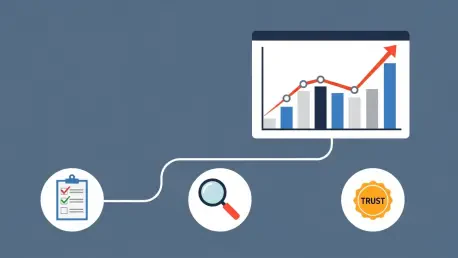
Absolutely. This move from keywords to “behavior modes” is a strategic pivot. We’re no longer targeting what people type, but the mindset they’re in. Let’s take ‘Confirm’ mode. A user in this mode has likely narrowed their options and is now seeking reassurance before they commit. They’re looking for proof and signals of trust. An effective ad here isn’t a flashy banner; it’s a tool for validation. Think of an ad creative that highlights customer reviews, displays a money-back guarantee, or links to a credible third-party case study. It’s all about reducing their perceived risk. Then you have ‘Act’ mode. This is the final step where the user is ready to complete the task. The biggest enemy here is friction. A helpful ad would clearly state pricing, show immediate availability, detail the next steps, or offer a direct “buy now” path that simplifies the process. It’s functional, direct, and removes any final barriers. For metrics, a click is nice, but I’d look deeper. For a ‘Confirm’ ad, success might be a branded search lift afterward, showing they remembered and trusted you. For an ‘Act’ ad, it’s about assisted conversions or direct traffic uplift, proving your ad was the final, helpful nudge they needed.
It’s been suggested that in a task-focused AI environment, relevance is about being useful rather than just topically related. What does an ad that functions like a “tool” or “checklist” actually look like in practice? Could you provide a concrete example, contrasting it with a traditional ad that would likely fail?
This is the core concept that changes everything. Relevance is now functional. A traditional ad that would fail is one that simply promotes brand awareness. Imagine a user asks ChatGPT to help them plan a week-long hiking trip in Colorado. A generic ad from a big outdoor clothing brand saying “Explore the Great Outdoors with [Brand Name]” is pure friction. It’s topically related but doesn’t help the user plan. It’s a detour. A successful ad, functioning as a tool, would look completely different. It might be a “Colorado Hiking Trip Checklist” from that same brand. It could offer a downloadable packing list, a guide to trail difficulty levels, or a template for a daily itinerary. The ad becomes part of the solution, fitting seamlessly into the user’s activity. It’s not just an ad; it’s a decision aid, a shortcut. The brand becomes associated with being helpful and competent, which is far more powerful than just being present.
Creating “helpful ads” requires input that bridges SEO, PR, and brand teams, as authority and trust signals converge. What does a practical, cross-team workflow look like to develop these assets? How can leaders encourage this collaboration and break down traditional marketing silos? Please provide some step-by-step details.
Silos are the single biggest threat to success here. A practical workflow has to start with a shared mission centered on the user’s “job-to-be-done.” Step one for a leader is to get the heads of Paid Media, SEO, PR, and Brand in the same room. The goal isn’t to discuss budgets, but to map the customer’s journey and identify where AI is used to reduce effort or uncertainty. Step two is to create a unified “helpful content” backlog. The SEO team brings insights on what questions build authority, PR contributes ideas for third-party validation and expert quotes, and the brand team ensures the voice is consistent and trustworthy. They aren’t creating separate assets anymore; they’re co-creating a single, authoritative piece of content. Step three is the feedback loop. The paid media team tests these assets as ads in ChatGPT and reports back not just on clicks, but on branded search uplift and assisted conversions. This data then informs the next cycle of content creation for SEO and PR. Leaders must incentivize this shared accountability. Performance can no longer be measured in a vacuum; it has to be a shared metric that reflects the full, cross-channel impact.
Judging ChatGPT ads by click-through rate alone may be misleading. What alternative success indicators, such as assisted conversions or branded search uplift, should teams prioritize? How can marketers set up their measurement frameworks to capture this broader, cross-channel impact effectively?
Focusing solely on click-through rate is a recipe for misinterpreting performance and making poor decisions. An ad in ChatGPT can be wildly successful without ever being clicked. It might be the very thing that gets your brand onto the user’s mental shortlist, or the piece of validation that makes them feel safe choosing you later. The key is to measure influence, not just interaction. The most meaningful indicators are things like branded search uplift—did more people search for your brand name directly after the campaign ran? We should also be looking at direct traffic uplift and, most importantly, assisted conversions in our analytics platforms. Did a user see the ChatGPT ad and then convert a week later through a different channel? To set this up, marketers need a robust, cross-channel analytics setup. This isn’t just about last-click attribution anymore. It requires a model that can connect the dots across the entire journey, recognizing that the initial touchpoint in an AI environment might be the most crucial step, even if it doesn’t get the final “credit” for the sale.
What is your forecast for the future of AI-led discovery and advertising?
My forecast is that the line between content, advertising, and credibility will essentially disappear. The brands that win in this new era won’t be the ones with the biggest ad budgets, but the ones who are most consistently and genuinely helpful. We’re moving away from a model of interruption and toward a model of integration, where brands must earn their place in the user’s decision-making process by providing real value. This means marketing teams will need to be restructured around behavioral insights rather than channel-specific tactics. The most valuable skill will be a deep, empathetic understanding of what job a customer is trying to get done and how to make that job easier. Ultimately, AI-led discovery will force all of us to be better marketers, because in a world where users outsource their thinking, the brands that help them think best will be the ones that succeed. Behavioral intent is the new keyword, and helpfulness is the new creative.