
Beyond the Binary: Reimagining Marketing for a Connected Age
For decades, marketers have operated within a fractured landscape, forced to choose between two seemingly opposing camps: brand and performance. Brand marketing, the art of building long-term equity and emotional connection, was often seen as slow and difficult to measure. Performance marketing, the science of driving immediate, quantifiable results, became the darling of the digital age. This article challenges that outdated dichotomy, exploring the rise of an integrated model that finally bridges the divide. We will delve into how “full-funnel performance” synergizes the foundational strengths of branding with the tactical precision of performance marketing. The key insight is that sustainable, future-proof growth is no longer about choosing one over the other but about orchestrating both in a powerful, self-reinforcing cycle.
The Great Divide: How Brand and Performance Became Siloed Disciplines
The historical separation of brand and performance marketing is a direct result of their differing objectives and measurement frameworks. Traditionally, brand marketing focused on the top of the funnel—building awareness, shaping perception, and fostering trust over long periods. Its success was measured through proxies like brand recall and sentiment, metrics that were notoriously difficult to link directly to revenue. With the advent of digital platforms, performance marketing emerged as a powerful counterpoint. It offered real-time, granular data on clicks, conversions, and return on investment, providing the immediate accountability that modern businesses craved. This focus on short-term, measurable outcomes made it the preferred strategy for companies focused on rapid scaling, cementing a division that treated brand-building and revenue generation as separate, often competing, functions.
The Mechanics of a Unified Strategy
The Limits of Transactional Thinking: Why Performance-Only Strategies Fall Short
An over-reliance on performance marketing, while initially effective, eventually reveals significant drawbacks. Its primary flaw is viewing customers as transactional data points rather than complex individuals. This approach operates on the flawed assumption that consumer decisions are linear and instantaneous, driven solely by the last ad they saw. It fails to account for the nuanced, multi-touchpoint journey of the modern consumer, where trust and familiarity are critical precursors to a purchase. In a market saturated with ads, targeting “cold” audiences who have no prior connection to a company becomes increasingly expensive and inefficient. This leads to diminishing returns, rising customer acquisition costs, and a shallow customer base with little long-term loyalty.
The Virtuous Cycle: How Brand and Performance Create a Flywheel Effect
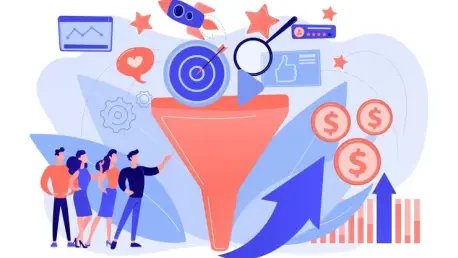
The solution to these challenges is the emergence of full-funnel performance, a hybrid model where brand and performance work in concert to create a powerful, self-reinforcing cycle. Brand marketing lays the essential groundwork by communicating the company’s values, mission, and unique identity. This creates an emotional connection and establishes trust, giving customers a reason to care long before they are asked to buy. Performance marketing then acts as a highly effective conversion layer built upon this foundation. It leverages data and precise targeting to convert the interest and trust generated by brand activities into measurable actions like leads and sales. This synergy creates a virtuous cycle: brand-building “warms up” the audience, leading to higher conversion rates for performance campaigns, which in turn reinforce the brand’s credibility and foster loyalty that reduces future acquisition costs.
Redefining the Brand: From Abstract Asset to Measurable Driver of Growth
This integrated model forces a re-evaluation of what a “brand” truly represents. It is not merely a logo, a color palette, or a single campaign; it is the holistic sum of a customer’s experiences, memories, and perceptions. It embodies identity, trust, and the fundamental meaning a company provides. In this context, full-funnel marketing does not replace brand-building but enhances it, making it accountable, quantifiable, and directly linked to business outcomes. The tangible benefits are clear: performance campaigns targeting familiar audiences achieve higher ROI, brand familiarity lowers customer acquisition costs by reducing friction, and the entire marketing engine becomes more efficient and scalable. This approach successfully marries the art of storytelling with the science of data.
The Future is Integrated: Charting the Course for Tomorrow’s Marketing
The definitive trend shaping the future of the industry is a move away from siloed marketing functions toward a unified, comprehensive strategy. The “brand vs. performance” debate is no longer relevant; in today’s competitive digital landscape, neither is sufficient on its own. A brand without a performance component struggles to convert interest, while a performance strategy without a brand foundation faces unsustainable costs. Sustainable, future-proof growth is only achievable through this deliberate integration. As technology evolves, AI-driven analytics and advanced measurement models will further break down data silos, allowing marketers to map the entire customer journey and optimize the interplay between brand touchpoints and conversion events with unprecedented precision.
Putting Theory into Practice: A Blueprint for Full-Funnel Success
To implement a full-funnel strategy, organizations must move beyond theoretical appreciation to concrete action. The first step is to break down internal silos, fostering collaboration between brand and performance teams so they work toward shared goals and metrics. Businesses should invest in top-of-funnel brand initiatives—like content, social engagement, and storytelling—to build an audience that knows and trusts them. This creates a valuable asset of “warmed-up” prospects. Concurrently, performance marketing tactics should be deployed to convert this pre-existing interest with targeted, relevant messaging. Crucially, measurement must evolve beyond last-touch attribution to more sophisticated models that recognize the value of every touchpoint in the customer journey, ensuring both brand and performance efforts are credited appropriately for their contribution to the bottom line.
Building Meaning and Momentum: The Enduring Power of a Unified Approach
The core theme is undeniable: the era of choosing between brand and performance is over. The future belongs to businesses that master the art of integrating them into a single, cohesive engine for growth. This full-funnel approach transforms marketing from a series of disconnected activities into a strategic system that builds both immediate revenue and lasting customer relationships. By uniting the emotional power of a strong brand with the data-driven precision of performance marketing, companies can create a sustainable competitive advantage. In a world of fleeting attention, the ultimate goal for successful brands is no longer just to be seen, but to build meaning that endures.