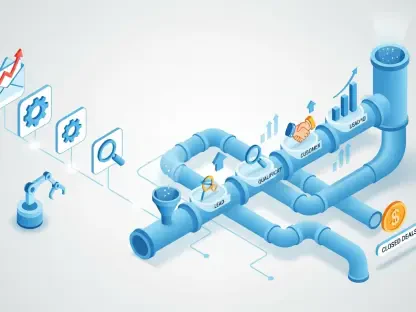

For years, affiliate marketing operated on a deceptively simple premise where the final click before a sale received all the credit, a model that now crumbles under the weight of today’s intricate and multi-layered consumer journeys. This last-click attribution model provided a clean, straightforward report card, but its simplicity has become its greatest liability. As consumer behaviors evolve, the path to purchase is no longer a direct sprint but a winding marathon with multiple touchpoints.
The growing necessity for marketers to evolve beyond these convenient but flawed short-term metrics is palpable. To build sustainable, ambitious affiliate programs, a strategic shift is required—one that values the entire customer journey, not just the finish line. This analysis will dissect the profound limitations of traditional affiliate models, introduce a comprehensive full-funnel framework, and provide actionable strategies for re-evaluating partner value in a more holistic and impactful way.
The Shifting Paradigm: Data and Real-World Application
The Statistical Divide in Partner Performance
A deep dive into performance data reveals a stark statistical divide between different types of affiliate partners, highlighting the inadequacy of a one-size-fits-all measurement approach. Content partners, such as niche blogs and media publishers, typically exhibit direct conversion rates hovering around 1.5%. In contrast, bottom-funnel partners focused on deals, such as coupon and loyalty sites, often boast conversion rates of 5-6% or higher. Judged by last-click attribution alone, the value seems skewed heavily toward the latter.
However, this narrow view misses the bigger picture. Credible industry reports consistently highlight a significant growth trend in top-of-funnel content affiliate partnerships. These partners excel at brand discovery and audience engagement, introducing products to new customers who are not yet actively searching for a deal. Their impact, while less direct, is foundational to long-term growth, seeding interest that bottom-funnel partners later capitalize on. Overlooking their contribution is akin to ignoring the first half of a story and only judging its conclusion.
Mapping the Modern Path to Purchase
The modern path to purchase is a testament to the complex, non-linear reality of consumer decision-making. Consider a concrete example: a potential customer, casually browsing, discovers a new skincare product through an influential beauty blogger’s detailed article. Intrigued but not yet convinced, they later search for reviews and land on a trusted product comparison site that reinforces the product’s benefits. Days later, having made the decision to buy, they perform a final search for a discount and click through a coupon site to complete the purchase.
This multi-touchpoint journey renders the one-dimensional view of last-click attribution obsolete. In this scenario, the coupon site gets 100% of the credit, while the blogger who initiated the entire journey and the review site that nurtured the interest receive nothing. This flawed model not only undervalues the partners responsible for demand generation but also encourages marketers to over-invest in closing existing demand, ultimately stifling the program’s ability to attract new customers.
The Expert Consensus: Why a Single KPI Fails
A growing consensus among marketing experts asserts that not all conversions hold equal value. There is a critical distinction between generating a sale from a brand-new customer and closing a deal with a returning visitor who was already on the path to purchase. Top-of-funnel partners are instrumental in the former, expanding the brand’s reach and building an incremental audience. Bottom-funnel partners, conversely, are masters of the latter, efficiently converting high-intent traffic.
Therefore, evaluating both a top-funnel content partner and a bottom-funnel deal partner with a universal metric like Return on Investment (ROI) is a fundamentally flawed strategy. It creates a system that inherently penalizes partners focused on awareness and consideration, leading to underinvestment in the very activities that fuel future growth. This approach stifles innovation and prevents the development of a truly diverse and resilient affiliate program.
Future-Proofing Your Program: The Affiliate Mix Modeling Framework
The strategic future of the channel lies in “affiliate mix modeling,” a framework that demands a holistic view of the entire partner ecosystem rather than measuring individual performance in isolation. This approach recognizes that different partners play distinct, complementary roles and that their collective effort is greater than the sum of its parts. It shifts the focus from “which partner drove the last click?” to “how did our mix of partners guide this customer from discovery to conversion?”
Adopting this model unlocks significant developments in program management. It allows for smarter, more nuanced budget allocation, where top-of-funnel partners might be compensated based on assisted conversions or engagement metrics, while bottom-funnel partners remain on a cost-per-acquisition model. Furthermore, it transforms partner onboarding from a volume game into a strategic expansion of audience coverage, ensuring the program effectively reaches consumers at every stage of their journey. The primary challenge, however, lies in adopting more sophisticated attribution technology and fostering a cultural shift within marketing teams to move beyond their long-standing dependency on last-click data.
Conclusion: Maximizing Program ROI Through a Full Funnel Lens
The analysis concluded that the reliance on last-click metrics was no longer adequate for understanding the complex dynamics of modern affiliate marketing. It became clear that partners performed distinct and equally vital roles across the marketing funnel, a reality that a single, universal KPI could not capture. The data revealed a significant performance gap between top-funnel and bottom-funnel partners, which highlighted the flaws in valuing them with the same yardstick.
Ultimately, the key insight was the necessity of shifting focus from optimizing per-partner ROI to maximizing the ROI of the entire affiliate program. This holistic perspective was identified as the foundation for building a sustainable and ambitious strategy. The path forward for marketers involved a comprehensive audit of their current partner mix and the implementation of a balanced, full-funnel measurement framework that properly valued every touchpoint in the customer journey.