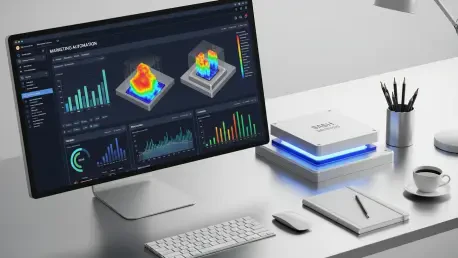

The historical divide between creative visual production and technical data execution is finally dissolving as integrated AI platforms reshape how modern businesses manage their entire content lifecycle. Historically, marketing teams operated in fragmented silos where designers produced assets in one environment while data analysts measured performance in another. This shift toward unified AI-driven ecosystems represents a significant paradigm change, moving away from static design tools and toward dynamic, data-responsive environments that prioritize both productivity and strategic output.
The Evolution of Marketing Ecosystems and the Shift to Unified AI Platforms
This technological evolution is driven by the rapid transition from simple creative interfaces into comprehensive, data-driven operating systems. By incorporating robust data frameworks, modern platforms have fundamentally altered the context of digital work for professionals. This move embeds intelligence directly into the creative process, ensuring that every visual asset is designed with its eventual performance and audience engagement in mind.
Moreover, the shift reflects a broader industry consensus that creative tools must do more than just facilitate aesthetics. Today, the focus is on building “systems where work happens,” where the context of a project is as important as the pixels themselves. This transition helps organizations move past the limitations of traditional software, fostering an environment where data insights are no longer a separate consideration but a core component of the creative workflow.
Core Components of Modern AI-Driven Automation
Agentic AI and Multi-Step Task Execution
Agentic AI serves as the core component enabling this transformation by moving beyond passive content generation. Unlike older generative tools that require constant prompting, these custom agents handle complex, multi-step workflows, such as selecting appropriate assets and deploying them across various channels with minimal human intervention. This capability drastically reduces the digital friction caused by switching between disconnected software applications.
Customer Data Platforms and Real-Time Orchestration
The integration of Customer Data Platforms (CDPs) allows for sophisticated, real-time orchestration across email, SMS, and in-app messaging. By linking live user behavior directly to creative tools, systems can automatically adjust visual content based on specific engagement metrics. This synchronization ensures that marketing efforts are not only aesthetically pleasing but also strategically relevant to the evolving needs of the target audience.
Emerging Trends in End-to-End Workflow Management
Emerging trends point toward a singular workspace that manages the entire content lifecycle from ideation to deployment. This integration allows professional teams to bridge the gap between creative ideation and technical execution without losing data integrity. By centralizing these functions, organizations can maximize the impact of their visual content, using data-driven insights to inform the entire process in a continuous loop.
Strategic Applications in Professional Marketing Suites
Professional marketing suites now consolidate ideation, creation, and optimization within a single cohesive platform. Specialized tools like Canva Grow, supported by acquisitions such as MagicBrief and MangoAI, allow teams to iterate on designs based on real-time conversion data. This level of cohesion makes advanced, high-velocity marketing strategies accessible to a wider range of professional users than ever before.
Technical and Operational Challenges in Platform Consolidation
However, merging disparate AI systems presents significant technical hurdles and sensitive data privacy concerns. The centralization of vast amounts of customer information requires careful navigation of international regulatory landscapes to prevent security breaches. Furthermore, managing multi-channel automation remains a complex task as organizations struggle to eliminate persistent data silos that can hamper the effectiveness of AI agents.
The Future of Actionable AI and Data Integration
The future points toward fully autonomous agents that manage entire campaigns with only high-level strategic guidance from humans. This potential breakthrough will likely redefine the global digital workforce, shifting human roles toward strategic curation and high-level decision-making. As data integration deepens, the boundary between design and marketing tools will continue to blur, creating a more holistic and efficient digital environment.
Final Assessment of the AI-Driven Marketing Landscape
The transition to unified AI platforms established a new standard for bridging the gap between design and data. This movement recognized the strategic necessity of operational efficiency in a crowded digital landscape, moving beyond the fragmented workflows of the past. While technical hurdles existed during the consolidation phase, the integration of these technologies provided the necessary infrastructure for more impactful marketing outcomes. This evolution ultimately offered a robust foundation for the next generation of marketing professionals to thrive in an increasingly data-centric world.