
Milena Traikovich has spent her career at the vital intersection of predictive analytics and creative strategy, helping brands transform cold data into high-performance demand generation engines. As an expert in performance optimization, she has witnessed the evolution of marketing technology from static, manual workflows to the current era of autonomous, agentic systems that think and act in real-time. In this discussion, we explore the recent shifts in how platforms like Braze are integrating artificial intelligence to lower technical barriers, automate the grueling work of quality assurance, and provide a headless infrastructure that allows marketers to execute complex strategies from their preferred digital workspaces. Our conversation moves through the democratization of data science, the emotional relief of automated compliance, and the strategic liberation that comes when marketers finally step away from repetitive execution to focus on driving genuine growth.
How does the move from high-touch data science models to streamlined, self-service tools like Decisioning Studio Go reshape the daily rhythm and creative potential of a modern marketing team?
The shift is fundamentally about removing the agonizing “bottleneck” feeling that historically stalled even the most brilliant campaigns. Previously, if you wanted to utilize reinforcement learning to determine the perfect next-best-action for a customer, you were essentially at the mercy of a data science queue that could take weeks or even months to clear, requiring heavy engineering lift just to get a single test off the ground. With the general availability of Decisioning Studio Go on October 14, 2026, that friction essentially evaporates because the sophisticated intelligence is baked directly into the marketer’s self-service workflow. Imagine a single email campaign where you are juggling eight base emails, 25 different subject lines, 10 distinct calls-to-action, and five varied images; the mathematical complexity is staggering, resulting in hundreds of thousands of possible combinations that no human could ever hope to optimize manually. Instead of a strategist guessing which variant might work for a specific segment, the AI calculates these optimal paths instantly and refines its logic based on real-time engagement and click-through rates. It is an incredible professional relief to see a system handle that level of complexity post-launch, allowing the team to feel the excitement of strategy again rather than the exhaustion of manual multivariate testing.
When we consider the burnout associated with repetitive execution, what kind of psychological and operational impact does delegating QA and compliance to autonomous agents have on a department?
There is a very specific, draining kind of mental fatigue that comes from the manual QA routines that have plagued marketing departments for years—the “fear of the send” that stems from scouring every single link, verifying complex audience logic, and checking every creative asset against rigid brand standards. The introduction of Agentic Standards addresses this directly by turning AI into a vigilant, reliable partner that manages these backend review workflows with a level of precision that human eyes simply cannot maintain over a ten-hour shift. It is a powerful, grounding feeling to define your organizational rules once—covering accessibility, brand voice, and regulatory requirements—and then watch an autonomous agent audit an entire multi-stage journey, providing a clear, transparent audit log of every finding. If the system detects a broken link or a breach in brand guidelines, it doesn’t just flag the error for a tired human to fix; it can automatically execute the necessary corrections to ensure the campaign remains compliant and professional. This shift preserves the team’s precious mental bandwidth for high-level strategic work, ensuring that brand consistency isn’t sacrificed in the rush of a massive rollout, and it replaces the anxiety of manual checking with the confidence of automated validation.
With the introduction of headless AI assistants like Operator Connect, how do you see the workspace environment evolving for marketers who prefer to work within external AI environments?
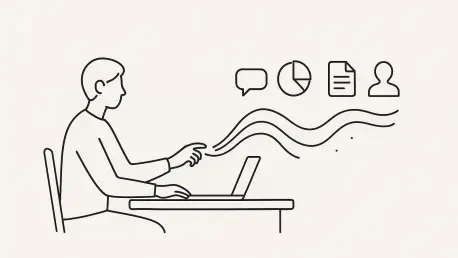
This is where the marketing workflow truly becomes fluid and, frankly, much more intuitive for a generation of professionals who are tired of being tethered to a single platform’s user interface. Operator Connect utilizes the Model Context Protocol to bridge the gap between the brainstorming environment and the execution environment, effectively making the platform “headless” so it can exist wherever the marketer is most productive. For instance, a strategist might be sitting in an external workspace like Claude, meticulously drafting a campaign brief or a complex predictive model, and instead of having to manually port that data over, they can simply instruct the assistant to build the campaign structure directly inside the platform. The system then understands the underlying logic and account configurations to set up creative and copy elements automatically, leaving the human lead free to jump into the dashboard only for the final review and aesthetic approval. It is a sophisticated way of respecting a professional’s preference for their primary workspace, removing the “context switching” tax that often kills creative momentum and slows down the time-to-market for critical lead-gen initiatives.
As marketing technology shifts toward agents that take direct action within platforms, what is your forecast for the role of the human marketer over the next few years?
I expect we will see a near-total disappearance of the “campaign” as a static, scheduled event, replaced instead by perpetual, self-optimizing journeys that exist in a state of constant, intelligent flux. As tools like Braze’s new AI suite become the industry standard, the barrier between a raw spark of an idea and a live, hyper-personalized customer experience will be measured in minutes or hours rather than weeks of technical setup. Marketers will inevitably move away from being the primary executors of repetitive tasks and toward being the high-level architects of experiences, spending their time reviewing audit logs, setting agentic guardrails, and refining the philosophical logic that guides their AI partners. The real winners in this landscape will be the organizations that embrace this headless, agentic future to deliver individualized value at a scale that was physically and financially impossible just a few years ago. We are moving toward a world where the “drudgery” of marketing is handled by machines, leaving the “delight” of marketing—the storytelling, the connection, and the deep strategy—entirely in the hands of the people.