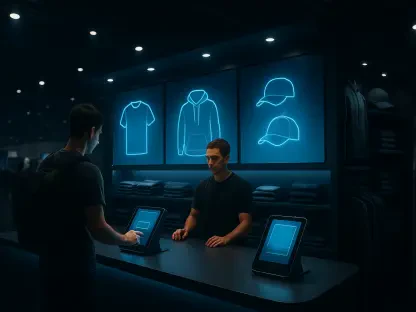

The global fashion sector has transitioned from a series of static seasonal launches into a hyper-dynamic ecosystem where every consumer interaction is mediated by sophisticated machine learning algorithms and real-time data streaming. This shift represents more than a digital upgrade; it is a fundamental reconfiguration of the relationship between apparel manufacturers and their end users. As mobile-first consumer journeys become the standard, the focus has pivoted away from simple click-through rates toward creating seamless, high-velocity experiences that unify disparate touchpoints. Computer vision and spatial technology now serve as the primary conduits for this transition, enabling a hybrid retail environment where physical inventory and digital discovery coexist without friction. Brands that successfully harness these tools are distinguishing themselves by their ability to offer value beyond the garment, positioning themselves as technology-led lifestyle partners rather than mere commodity providers.
The Modern Fashion Landscape: From Transactional E-Commerce to Immersive Ecosystems
The current retail climate is defined by a move away from the traditional online catalog toward immersive, high-velocity environments that prioritize immediate engagement. Mobile devices have become the central hub of the shopper experience, serving as the bridge that connects social media discovery to physical store visits. In this landscape, the success of a brand depends on its ability to minimize the distance between a consumer seeing an item and completing a purchase. This has led to the adoption of sophisticated visual search tools and spatial mapping that allow shoppers to interact with products in three dimensions, effectively erasing the boundaries between the couch and the fitting room.
Furthermore, market leaders are increasingly using technology to create brand differentiation in an oversaturated marketplace. By integrating AI into the core of their marketing strategy, these companies are shifting the focus from mass-market appeal to hyper-localized relevance. This evolution recognizes that the modern consumer expects more than a product; they demand an ecosystem that understands their aesthetic preferences, sizing requirements, and ethical considerations. Consequently, the role of traditional marketing has been superseded by a new paradigm of algorithmic engagement that continuously learns and adapts to individual behaviors.
Decoding the Strategic Drivers of the AI-Enhanced Retail Market
The Rise of Hyper-Personalization and Predictive Styling Models
Generic retargeting ads have largely become obsolete, replaced by predictive styling models that utilize real-time behavioral data to anticipate consumer needs. These systems go beyond recommending similar items; they synthesize data points such as local weather, upcoming calendar events, and historical color preferences to curate personalized outfits. Augmented reality try-ons and sophisticated sizing algorithms have also played a crucial role in stabilizing the market by significantly reducing return rates. By allowing a customer to see exactly how a fabric drapes over their unique body scan, retailers are fostering a higher level of purchase confidence that was previously unattainable in digital commerce.
Moreover, short-form video and user-generated content are being filtered through AI to ensure maximum resonance with target audiences. Machine learning tools now identify which community-led videos are likely to go viral or drive sales, allowing brands to amplify authentic voices rather than relying solely on polished corporate imagery. This strategy creates a feedback loop where the consumer feels represented, leading to a deeper sense of community and brand loyalty. The result is a marketing approach that feels less like an intrusion and more like a curated service.
Statistical Forecasting and the Economic Trajectory of Fashion AI
The financial impact of these technological integrations is measurable through substantial improvements in conversion rates and return on investment. Retailers leveraging automated personalization have reported that their marketing efficiency has doubled, as algorithms identify high-intent shoppers with remarkable precision. As we move from 2026 toward 2028, the projected growth of AI adoption across global apparel segments suggests that market share will continue to shift toward companies that prioritize data-driven agility. This economic trajectory favors those who can pivot their inventory and messaging in response to real-time trend shifts.
Forward-looking assessments indicate that luxury sectors, in particular, are finding value in AI to maintain their exclusivity while scaling personalized service. By utilizing predictive analytics, these brands can manage production more sustainably, creating smaller, targeted collections that align with actual demand rather than forecasted guesses. This shift not only improves margins but also aligns with the growing consumer demand for environmental responsibility. The technological integration is thus becoming a requirement for survival rather than a luxury for the few.
Overcoming Operational Friction and the Challenge of Technical Integration
A significant challenge facing the industry is the dilemma between chasing digital hype and securing a tangible return on investment. Many organizations have historically over-invested in experimental platforms that failed to align with actual consumer habits. To mitigate this risk, successful brands are now focusing on unifying fragmented data through robust Customer Data Platforms (CDPs). By creating a golden record of the consumer, these retailers can ensure that every touchpoint—from an Instagram like to an in-store return—is part of a single, coherent narrative.
Solving the disconnect between digital algorithms and the physical shopping experience remains a priority for operational leaders. The smart fitting room represents the final frontier of this integration, where digital recommendations are brought into the physical world. When a customer enters a stall, the environment should already be aware of their online wish list, offering complementary items via interactive mirrors. Achieving this level of synergy requires a total overhaul of legacy systems, replacing siloed databases with cloud-native architectures that support real-time interaction.
The Regulatory Framework Governing Consumer Privacy and Data Security
As marketing becomes more aggressive in its use of behavioral tracking, the ethical implications of biometric data collection have moved to the forefront of industry discussions. Navigating the fine line between helpful personalization and intrusive surveillance is essential for maintaining consumer trust. Compliance with emerging global data protection laws is no longer just a legal requirement but a strategic necessity. Brands must be transparent about how they use consumer profiling and offer clear value in exchange for the data they collect to avoid triggering data fatigue.
Implementing rigorous security measures is the only way to safeguard the vast amounts of personal information required to power AI models. Consumers are increasingly aware of their digital rights and are likely to abandon brands that suffer from data breaches or unethical tracking practices. Therefore, the future of fashion marketing depends as much on cybersecurity as it does on creative design. By prioritizing privacy-by-design, retailers can build long-term relationships that are based on mutual respect and security rather than just transactional convenience.
Anticipating Market Disruptors: Spatial Commerce and Generative Innovation
The emergence of spatial computing is fundamentally altering the purchasing habits of younger demographics. Generation Z and Alpha are moving toward gamified environments where the line between gaming and shopping is entirely blurred. In these digital spaces, fashion is not just something to be worn in the physical world but a way to express identity through virtual avatars. Generative AI is accelerating this trend by automating the creation of dynamic merchandising and personalized digital assets that can be updated in real time based on user interactions.
This wave of innovation forces a re-evaluation of the brand soul. In an era dominated by algorithmic precision and automated discovery, maintaining a unique voice becomes more challenging. Brands must find ways to use generative tools to enhance their creativity rather than replace it. The evolution of the fashion market will likely see a rise in co-creation, where consumers use AI tools provided by the brand to design their own unique pieces, further deepening the emotional investment in the product and the company.
Final Perspectives on Balancing Algorithmic Precision with Human Resonance
The industry recognized that the successful integration of artificial intelligence required a delicate balance between data-driven efficiency and the timeless power of human storytelling. It became clear that while algorithms could predict what a consumer might buy, they could not fully replicate the emotional spark that a well-crafted brand narrative provided. Leading organizations moved beyond purely transactional metrics, focusing instead on how technology could be used to amplify the core values and heritage of their labels. They discovered that the most effective strategies were those that utilized the precision of machine learning to clear the path for more meaningful, human-centric interactions.
Strategic recommendations for the coming years emphasized the necessity of converting one-time purchasers into lifelong advocates through personalized post-purchase engagement. This involved using AI not just for the sale, but for long-term wardrobe management and circular fashion initiatives. The outlook for investment remained focused on scalable, consumer-centric technologies that prioritized ease of use and emotional resonance. Ultimately, the transformation of fashion marketing proved that technology was most powerful when it remained invisible, serving as the quiet engine that powered a more intuitive and inspiring consumer journey.