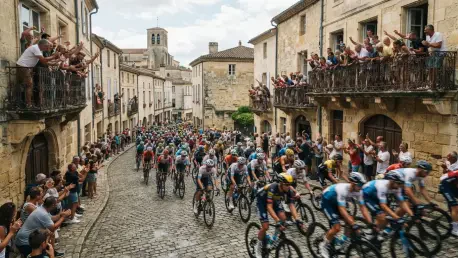

Instead of focusing solely on the yellow jersey contenders, the Inside My Race feature provides deep tactical insights and progress updates for every single competitor on the course. This monumental shift in broadcasting philosophy represents the biggest modernization of the Tour de France since color television first brought the rolling hills of the French countryside into living rooms. The Amaury Sport Organisation recognized that while the century-old tradition of the race remains a pinnacle of human endurance, the way modern audiences consume content has changed fundamentally. By collaborating with specialized technical partners like Capgemini and their experience-focused team, frog, the organizers moved away from a static broadcast model. They focused on catering to a younger, more global demographic that demands instant, hyper-personalized updates. This initiative ensures the race remains relevant in an increasingly crowded digital sports market.
Turning Raw Data into Real-Time Narratives
The technical backbone of this transformation is a sophisticated storytelling engine that processes more than 20 distinct data streams to create a cohesive live experience. By integrating GPS coordinates, instantaneous speeds, and shifting team standings, the system generates automated race summaries that refresh every two minutes throughout the entire stage. This goes far beyond the simple display of numbers on a dashboard; it involves a complex fusion of historical performance metrics and real-time occurrences. The Generative AI platform interprets these inputs to construct a narrative that keeps fans updated on the pulse of the peloton as it moves through various terrains. This level of granular detail allows viewers to maintain a constant connection with the action, even when they cannot watch a live video feed. It effectively bridges the gap between raw telemetry and the human drama that defines professional cycling at its most intense levels.
A primary challenge in covering a race with 184 participants is the natural editorial bias toward the leaders, which often leaves the stories of most riders untold. Traditional television broadcasts must focus on the main contenders to maintain a broad appeal, but this means that significant tactical moves further down the field are frequently ignored. The AI-driven platform addresses this by democratizing content, ensuring that every rider in the peloton receives a dedicated digital presence. This is particularly beneficial for fans from smaller nations who want to follow their local representatives or support specific riders who are playing vital supporting roles for their teams. By providing these constant updates for everyone on the course, the technology ensures that no narrative is lost to the constraints of airtime. This comprehensive approach transforms the race into a multi-layered event where every individual effort is visible to a global audience.
Personalized Insights and Tactical Mastery
Hyper-personalization serves as the cornerstone of the user experience, allowing fans to bypass a generic overview in favor of a customized dashboard. Users have the flexibility to select up to four specific competitors, prompting the AI to generate a private narrative that tracks these athletes against the wider field. If a fan chooses to follow four riders from different teams, the system provides a real-time breakdown of how their specific strategies are intersecting on the road. This transition from a mass-audience product to an individualized digital experience caters to the modern consumer’s preference for on-demand, relevant content. The platform allows users to filter by nationality, jersey category, or team affiliation, which simplifies the process of tracking favorites across thousands of kilometers. This level of agency empowers the viewer to become their own race director, choosing which storylines to prioritize based on their interests.
Beyond simply reporting positions, the system provides deep tactical clarity that helps demystify the complex chess game played on two wheels. Professional cycling involves subtle movements, where a team pushing the pace at the front might be setting up a sprint or attempting to isolate a rival who showed a moment of weakness. The AI analyzes these developments and provides contextual explanations, clarifying why certain breakaways are dangerous or how specific terrain changes will affect team formations. By integrating expert commentary and contextual analysis, the platform ensures that even casual viewers can appreciate the high-level strategy required to win a Grand Tour stage. It identifies tactical shifts as they happen, explaining the significance of every acceleration and defending maneuver. This educational component adds a layer of intellectual engagement to the viewing experience, turning raw athletic feats into a high-stakes strategic battle.
Expanding the Global Standard for Sports Engagement
The successful integration of these technologies during the most recent iterations of the race established a sustainable model for the modernization of traditional sporting events. The strategic decision to move away from a one-size-fits-all model allowed the organizers to reach a more diverse audience than ever before. By prioritizing accuracy and personalization, the project demonstrated that heritage sports could thrive in a digital-first environment without losing their core identity. The collaboration between sports professionals and engineers was pivotal in creating a system that translated the chaos of a 200-kilometer stage into a series of meaningful, digestible narratives. This evolution was not merely about adding digital features, but about fundamentally reimagining the relationship between the athlete and the spectator. The project proved that AI could act as a bridge between the physical exertion on the road and the intellectual curiosity of the fan.
Moving forward, the industry looked to these advancements as a blueprint for how to handle large-scale data in real-time environments. The next logical step involved the integration of predictive modeling, which allowed fans to see potential outcomes based on current rider fatigue and terrain profiles. Organizations were encouraged to invest in robust data architectures that supported multilingual, hyper-localized content to ensure global inclusivity. Furthermore, the focus shifted toward making these tools available for amateur cycling events, thereby democratizing the technology and encouraging wider participation in the sport. The lessons learned from this transition emphasized the importance of maintaining data sovereignty through closed-loop systems to protect the integrity of the information. As other major sporting competitions adopted similar frameworks, the focus remained on refining the balance between automated content and human expertise.