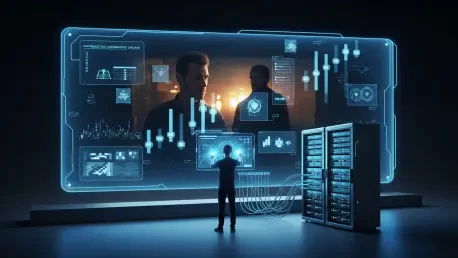

The traditional wall separating the spectator from the protagonist has finally collapsed, leaving behind a digital landscape where viewers no longer just watch a story; they interrogate it. This shift marks a pivotal moment for digital media, as the era of passive consumption gives way to an interactive paradigm where the audience demands agency. While traditional streaming platforms struggle to maintain focus in an age of fragmented attention, Character.ai is positioning itself as the architect of a new narrative form. By launching the “c.ai Series,” the platform has moved beyond its origins as a conversational chatbot to become a sophisticated multimedia environment.
The significance of this transformation lies in the fusion of cinematic production with large language models, creating a feedback loop that has never existed in Hollywood. Unlike conventional television, where the relationship between the viewer and the content ends when the screen goes dark, this model encourages an ongoing dialogue. It represents a fundamental change in how entertainment is valued, shifting the focus from one-off views to long-term digital companionship. As users migrate toward platforms that offer participation, the industry is forced to reconsider what constitutes a “show” in the modern age.
The End of Passive Viewing: Why Interaction Is the New Entertainment Gold Standard
The era of simply watching a screen is fading as audiences increasingly demand a seat at the writer’s table. Modern consumers, particularly younger demographics, find less satisfaction in one-sided narratives that offer no room for input or exploration. While traditional streaming services struggle to keep viewers from scrolling past their latest releases, Character.ai is betting that the future of storytelling isn’t just something you watch—it’s someone you talk to. This evolution turns the viewer into a co-conspirator who can influence the emotional weight of a scene through direct interaction.
By launching the “c.ai Series,” the platform is transforming from a simple chatbot interface into a multimedia powerhouse where the credits rolling on an episode are just the beginning of the conversation. The transition signals a move away from static video toward a dynamic interface where characters possess memory and personality. This allows for a deeper level of immersion, as the narrative continues to breathe long after the visual sequence has ended, fostering a sense of presence that traditional media cannot replicate.
The Explosion of Microdramas and the Limits of Transactional Cliffhangers
The microdrama market has rapidly become a juggernaut in mobile entertainment, generating nearly $3 billion in 2026 alone with projections to more than double by 2028. Currently, the industry is dominated by a “pay-to-unlock” model where apps like ReelShort and DramaBox rely on aggressive marketing and high-tension cliffhangers to monetize individual episodes. This approach forces a high frequency of micro-transactions, often creating a barrier to entry for users who want to engage with a story without being interrupted by a paywall every sixty seconds.
Furthermore, this transactional approach treats stories as disposable commodities, often ignoring the long-term value of character development in favor of immediate, short-lived engagement. Many existing platforms focus on quantity over quality, pumping out dozens of generic scripts that follow predictable tropes to maximize clicks. This creates a saturated market where content is easily forgotten once the next trend arrives, leaving little room for the cultivation of a dedicated and loyal fan base.
The c.ai Series Model: Transforming Ephemeral Episodes into Lasting Relationships
Unlike its competitors, Character.ai focuses on the “durable asset” of the character rather than the fleeting nature of a single episode. Its inaugural slate—featuring the anime romance Last Summer, the paranormal horror The Nighttime Game, and the thriller Eden Fall—emphasizes depth and consistency. By treating fictional personas as entities with whom users can build history, the platform ensures that the emotional investment remains high even between content drops. This strategy elevates the microdrama from a quick distraction to a meaningful social experience.
The implementation of a unique “return mechanism” is the core of this strategy, allowing users to step out of the viewer role and enter a chat interface immediately after a scene ends. Within this space, users question protagonists about their motivations, roleplay new outcomes, or explore hidden plot points that were only hinted at in the video. This effectively blurs the line between watching a show and living it, as the AI-driven characters react with specific knowledge of the events that just transpired on screen.
Strategic Repositioning: How Deep Fan Engagement Outpaces Traditional Marketing
Following a massive $2.7 billion licensing deal with Google and a leadership pivot under CEO Karandeep Anand, Character.ai is leveraging its most significant advantage: an obsessed user base. With 20 million monthly active users spending an average of 75 minutes per day on the platform, the company bypasses the high user-acquisition costs that plague other microdrama apps. Instead of spending millions on social media ads to find new viewers, the platform integrates new content directly into the existing habits of its community.
By utilizing a “relationship-first” model, the platform turns user feedback and chat data into a scientific tool for content development. This data-driven approach ensures that new series are tailor-made for existing audience cravings, reducing the risk associated with traditional production. The interactions between users and characters provide a constant stream of insight into what plot lines are resonating, allowing the studio to adapt narratives in real-time to match the evolving interests of the public.
Maximizing the Platform: A Guide to the Integrated AI Entertainment Hub
To fully engage with this new era of connected entertainment, users and creators can navigate a tripartite ecosystem designed to merge different forms of media. The “c.ai Series” provides the visual foundation, while “c.ai FM” offers immersive audio dramas for those who prefer an auditory experience. Completing the hub is “c.ai Reads,” which caters to long-form fiction, ensuring that every type of storyteller and consumer has a place within the digital environment. This integration creates a seamless transition between reading, listening, and watching.
The company moved toward opening its in-house production tools to external creators and professional studios, establishing the framework for a decentralized, interactive Hollywood. This expansion allowed users to transition from consumers to co-creators, fostering a community where the boundaries of a story were no longer fixed by a single director. The initiative successfully demonstrated that the future of digital media lay in the hands of those who combined high-quality production with the limitless potential of conversational intelligence. This strategic evolution ensured that the relationship between the story and the consumer remained the most valuable asset in the modern entertainment economy.