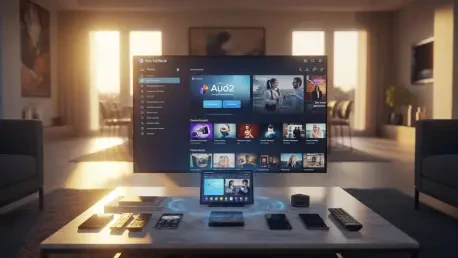

The traditional television set, once a passive receiver of broadcast signals, has fundamentally transformed into a sophisticated command center for digital consumption and global commerce, disrupting decades of established media patterns. This shift is not merely a change in viewing habits but a monumental reallocation of economic power within the media landscape. Current projections indicate that Connected TV advertising revenue will surge from approximately forty-four billion dollars in the current market of 2026 to an astounding eighty-one billion dollars by 2030. This trajectory suggests that by the middle of the next decade, digital ad revenue will definitively eclipse that of traditional linear television. This transition is being accelerated by the rapid expansion of streaming platforms, the increased sophistication of television operating systems, and a more robust integration of advertising technology that allows for unprecedented levels of consumer targeting and measurement across the globe.
The Power Dynamics of Global Streaming
Consolidation Among Industry Leaders
Central to this transformation is the consolidating power of major technology and streaming giants who are effectively capturing the lion’s share of the market. By 2030, it is anticipated that Google, Amazon, and Netflix will collectively control nearly half of the global Connected TV advertising sector. Google remains the undisputed leader in this space, projected to maintain a twenty-six percent market share, largely due to the massive, ubiquitous reach of the YouTube platform. Amazon follows closely with a projected thirteen percent share, achieved through the strategic integration of its retail media operations with the Prime Video streaming service. Meanwhile, Netflix is expected to secure approximately nine percent of the market as it continues to aggressively scale its ad-supported subscription tiers in international territories. These companies are not just competing for viewers but are establishing deep-rooted ecosystems that make their platforms essential for advertisers.
Strategic Control of Operating Systems
The competitive landscape has shifted fundamentally from a simple battle for content to a broader strategic struggle for control over the entire consumer experience. This “battle for the living room” requires companies to dominate the hardware interface, the software operating system, and the underlying data layer that tracks viewer behavior. In the European market, for example, the operating system hierarchy is undergoing significant shifts as proprietary platforms compete with global giants. While Android TV and Tizen currently lead the market, the VIDAA platform is projected to rise as the third-largest provider in the coming years. Controlling the television interface allows these companies to own the primary relationship with the consumer, enabling them to curate content, manage user data, and directly integrate transactional commerce into the viewing experience, thereby creating a closed-loop ecosystem that maximizes revenue from every interaction.
Integrating Commerce Into the Viewing Experience
Retail Media and Programmatic Advertising
The convergence of retail media and programmatic advertising is rapidly turning the modern television into a primary gateway for digital commerce. This evolution allows brands to bypass traditional advertising silos and reach consumers at various points in the purchasing funnel directly through their TV screens. As streaming platforms integrate more deeply with retail databases, the ability to serve highly personalized advertisements becomes a reality, shifting the television from a brand-awareness tool to a direct-response vehicle. This integration is particularly potent because it combines the emotional impact of large-screen video with the precision of digital data analytics. Advertisers can now track a viewer’s journey from seeing a commercial to making a purchase on a connected mobile device or directly through the television interface. This seamless connection between entertainment and shopping represents the new frontier of the digital economy, where every frame of content has the potential to become a point of sale.
The Future of Hardware Manufacturing
As television hardware becomes increasingly commoditized and less profitable for manufacturers, these companies are being forced to develop more aggressive strategies to protect and expand their advertising revenues. Many hardware brands have realized that the thin margins on physical units are no longer sustainable in a market dominated by software-driven services. To survive, manufacturers must transform their business models to prioritize their proprietary operating systems and ad-tech stacks. Failure to secure this digital real estate risks ceding valuable ground to global tech giants who are better positioned to leverage comprehensive data analytics and targeted advertising solutions. By focusing on the post-sale lifecycle of the television, manufacturers can tap into recurring revenue streams that far outweigh the initial profit from the hardware sale. This shift necessitates a complete reimagining of the television as a service-oriented platform rather than a simple piece of household electronics.
Strategic Directions for the Post-Linear Era
The global battle for the living room reached a critical juncture where the integration of entertainment, commerce, and digital infrastructure became the definitive hallmark of success. Stakeholders who prioritized the development of robust data layers and seamless user interfaces managed to secure their positions in an increasingly crowded marketplace. The focus transitioned from merely acquiring subscribers to maximizing the lifetime value of each user through integrated retail opportunities and hyper-targeted advertising. Moving forward, companies should have invested in interoperable software solutions that bridge the gap between television screens and personal mobile devices to ensure a cohesive consumer experience. This evolution demonstrated that the value of the television resided not in its physical presence, but in its role as a central hub for the digital life of the household. Organizations that successfully navigated this transition effectively utilized advanced analytics to anticipate consumer needs before they were even expressed.