
The subjective nature of human analysis brings necessary judgment to data sets, though it requires methodological transparency to distinguish causation from correlation. This foundational principle is more relevant than ever in 2026, where the average marketing executive is bombarded by thousands of distinct data points every hour, creating a paradox where more information actually leads to less clarity. The relaunch of HumanView by the LEAP Group exemplifies a calculated pivot toward human-led interpretation as the primary antidote to this overwhelming “data noise.” By prioritizing the underlying drivers of consumer behavior over simple pattern recognition, the framework seeks to transform vast quantities of behavioral signals into a coherent strategic narrative. This transition reflects a broader recognition that while machines are exceptional at tracking movements, they remain incapable of understanding the deeper motivations that govern high-stakes business choices in a complex global market.
Moving Beyond Pattern Recognition to Strategic Meaning
Artificial intelligence and advanced statistical software have reached unprecedented levels of efficiency, yet they continue to struggle with the contextual nuance required for high-level strategy. A machine can effortlessly identify a significant spike in social media mentions or a sudden drop in website traffic, but it lacks the cognitive ability to distinguish between a celebratory viral moment and a burgeoning public relations crisis. Human analysts act as the critical bridge between raw pattern recognition and the fundamental “so what” of the information, ensuring that executives receive actionable guidance rather than just a collection of impressive charts. Without this interpretive layer, brands run the risk of reacting to superficial trends that do not align with their long-term objectives. The presence of a professional researcher allows for the filtering of statistical anomalies that might otherwise trigger expensive and unnecessary pivots in marketing strategy.
The evolution of the HumanView model specifically centers the analyst as the primary product, a stark contrast to the software-heavy iterations that defined the previous few years. This strategic shift addresses a common frustration within modern corporations where access to data is plentiful but clear strategic direction remains elusive. By applying specialized insight to statistical outputs, human experts can determine if a specific shift in market sentiment represents a temporary anomaly or a fundamental change in consumer values that necessitates a brand overhaul. This human-centric approach ensures that the final intelligence remains relevant to the specific business goals of the organization, rather than being a generic summary of industry trends. The analyst’s role is to interrogate the data until it reveals the underlying truth, providing a level of depth that automated systems simply cannot replicate regardless of their processing power or the size of their training sets.
Integrating Diverse Consumer Signals into a Single Narrative
Effective market research must transcend siloed data streams to capture the full breadth of the modern customer journey across multiple digital environments. Instead of relying on traditional static surveys, which are frequently compromised by the “observer effect” or biased by the specific framing of questions, current frameworks monitor naturally occurring signals. These signals are harvested from platforms where consumers speak most authentically, such as Reddit, TikTok, and YouTube, providing a more accurate reflection of sentiment than a controlled focus group ever could. By combining these social interactions with search engine activity and real-time retail commerce data, researchers can finally bridge the gap between what a consumer says they intend to do and what they actually purchase. This holistic data capture is essential in a world where the path to purchase is no longer linear, but instead involves a complex series of interactions across various touchpoints.
This multimodal approach allows brands to identify the intricate connections between different stages of the purchase cycle that might otherwise remain hidden in isolated reports. For example, a consumer might initiate their journey by searching for a product on Google, validate that interest by reading independent reviews on a niche forum, and eventually express a post-purchase grievance on a social media platform. Human interpretation is vital in this context to weave these fragmented interactions into a single, cohesive story that highlights both the brand’s strengths and its operational failures. By understanding the relationship between these different signals, analysts can provide a more comprehensive view of the customer experience, identifying exactly where a brand is losing momentum. This narrative depth allows for the creation of more targeted interventions, ensuring that marketing resources are allocated to the specific stages of the journey where they will have the most impact.
The Three-Layer Methodology of Modern Intelligence
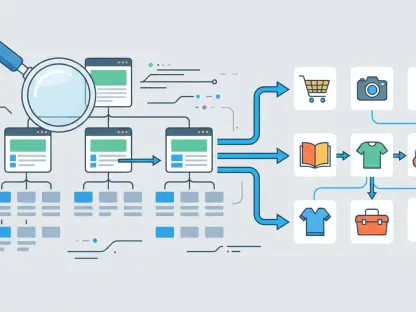
Turning raw information into a viable business strategy requires a disciplined and structured workflow that begins with the capture layer. This initial stage involves the collection of massive datasets from natural consumer environments, ensuring that the information being analyzed is free from the biases often found in structured interviews. Once the data is secured, the process moves to the modeling layer, where sophisticated statistical methods such as regression analysis and clustering are applied to the raw numbers. These models are designed to filter out the inherent noise of the digital landscape, highlighting recurring themes and statistical relationships that are often invisible to the naked eye. This computational phase is necessary for organizing the sheer volume of signals into manageable categories, but it is not the final step in the process. The modeling layer provides the “what” of the situation, setting the stage for the deep qualitative work that follows.
The interpretation layer is where the human element becomes the central focus, transforming statistical clusters into actionable business intelligence. Analysts scrutinize the correlations identified by the software through the lens of real-world business challenges to find the actual drivers of consumer behavior. If the data indicates a decline in brand loyalty among a specific demographic, the analyst does not simply report the drop; they investigate whether the cause is a pricing discrepancy, a lack of representation in advertising, or a functional flaw in the product itself. This deep dive ensures that the brand is responding to the root cause of a problem rather than just reacting to the outward symptoms. By applying this level of critical thinking, researchers can provide recommendations that are not only statistically sound but also practically feasible. This stage of the process is what ultimately converts a report from a historical document into a forward-looking roadmap.
Targeted Applications for Brand Growth and Innovation
Human-led intelligence proves particularly effective when applied to the core areas of growth intelligence and market category analysis. Growth intelligence focuses on uncovering the fundamental motivations that lead a consumer to choose one brand over its competitors, allowing for the development of more precise messaging and positioning. In contrast, market and category intelligence looks toward the broader competitive landscape to identify “unmet needs”—those specific areas where consumers are expressing frustration with the existing solutions provided by the industry. This type of insight provides a clear roadmap for product development teams that are looking to innovate in ways that actually matter to the target audience. By understanding these gaps in the market, companies can avoid the common mistake of developing features that nobody wants, instead focusing their engineering efforts on solving the real-world problems that their customers are currently facing.
Audience intelligence represents another critical application of human interpretation, allowing brands to identify emerging customer segments before they become mainstream. By monitoring the nuances of search and social behaviors, analysts can find niche groups that are growing in influence but have not yet been targeted by major competitors. This provides an early-mover advantage that can be the difference between market leadership and obsolescence. Identifying these segments requires more than just looking at demographic data; it requires an understanding of the cultural and psychological factors that bind these groups together. Analysts look for the unique vernacular, shared interests, and specific pain points that define these emerging audiences, allowing brands to engage with them in a way that feels authentic and personalized. This proactive approach ensures that marketing efforts are always directed toward the most promising future opportunities, rather than merely chasing trends.
Differentiating Insights From Automated Platforms
In a marketplace currently dominated by software-as-a-service giants, the emphasis on human interpretation offers a distinct value proposition for brands that prioritize results over tools. While many automated platforms provide the necessary instruments for brands to perform their own data mining, a service-based model like HumanView provides the final strategic hypothesis and the resulting report. This approach significantly reduces the “insight-to-action” timeline, as clients receive a refined strategy that they can implement immediately, rather than a complex software suite they must first learn to navigate. For busy marketing departments, this move from “do-it-yourself” tools to “done-for-you” insights is a major advantage that allows them to focus on execution rather than data management. The value lies in the delivery of a finished product that has already been vetted for accuracy and relevance by a professional who understands the broader market context.
However, the reliance on human judgment also introduces a specific set of considerations that organizations must manage, such as the potential for subjective bias. To mitigate this risk, it is essential for brands to demand a high degree of methodological transparency from their research partners. A “black box” approach, where strategic recommendations simply appear without a clear and documented trail back to the raw signals, can be incredibly risky for high-stakes decision-making. Successful market research in 2026 must allow marketers to trace every recommendation back through the modeling and capture layers to the original data points. This transparency ensures that the findings are based on solid causation rather than mere correlation, providing the confidence needed to invest significant capital in a new direction. By balancing the strengths of human intuition with the rigor of statistical evidence, brands can achieve a level of strategic clarity that is impossible to reach through automation alone.
Strategic Integration: The Path Toward Decisive Action
The relaunch of HumanView successfully addressed the systemic failures of automated reporting by reintroducing the analyst as the central figure in market intelligence. Organizations that moved beyond raw data realized that the most valuable asset was not the volume of information but the quality of the strategic narrative derived from it. Decisions were grounded in a deeper understanding of human motivation, which allowed brands to navigate the complexities of 2026 with greater precision. Leaders focused on the synthesis of behavioral signals and statistical modeling to provide a roadmap for sustainable growth and innovation. By prioritizing methodological transparency, these businesses ensured that their strategies remained robust against the inherent biases of subjective analysis. Ultimately, the integration of human insight proved to be the decisive factor in converting fragmented metrics into long-term market dominance and improved consumer experiences.