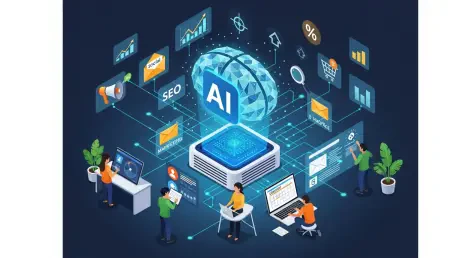

The traditional digital marketing agency model is facing a systemic collapse as autonomous software begins to outperform human-led teams in both speed and precision. Small and medium-sized businesses have long been trapped in a cycle of hiring expensive consultants who struggle to keep pace with the volatile algorithms of Google and Meta. However, the emergence of Brooklyn-based Mega represents a definitive shift toward a future where marketing is treated as a high-performance utility rather than a variable manual service. By securing $11.5 million in Series A funding, the company is signaling that the era of the “human-in-the-loop” bottleneck is nearing its end.
This significant capital injection, led by Goodwater Capital with participation from heavyweights like Andreessen Horowitz and SignalFire, highlights a growing institutional appetite for execution-first AI. Interestingly, the round also attracted investment from WNBA icons like Diana Taurasi and Breanna Stewart, suggesting that the drive to empower local entrepreneurship resonates far beyond the tech corridors of Silicon Valley. Mega’s core mission is to bridge the widening competitive gap between local enterprises and global corporations by providing the former with the same level of digital infrastructure used by the world’s most sophisticated brands.
The Modern Landscape of AI-Powered Growth for Small Businesses
Small businesses are currently navigating an environment where being “online” is no longer enough to ensure survival. The shift from human-led agencies to autonomous digital marketing ecosystems is driven by the sheer volume of data that must be processed to remain visible in a fragmented media landscape. Mega acts as a democratizing force, allowing a neighborhood medical spa or a local law firm to access high-level digital strategy that was once the exclusive domain of companies with million-dollar monthly retainers.
The recent $11.5 million Series A funding is more than just a financial milestone; it is a validation of the move toward “silent” automation. Unlike the early wave of AI tools that required business owners to spend hours crafting the perfect prompt, this new generation of technology operates in the background. It effectively eliminates the digital divide by automating the most complex aspects of growth, from technical search optimization to cross-platform lead generation, allowing founders to focus on their actual trade.
Disrupting the Status Quo of the Digital Marketing Industry
Emerging Trends in Autonomous Execution and GEO
The industry is rapidly moving away from simple AI toolkits toward execution-first autonomous agents that perform tasks without being asked. One of the most significant developments is the rise of Generative Engine Optimization (GEO). As consumers increasingly turn to ChatGPT, Perplexity, and Gemini for recommendations instead of traditional search bars, Mega is positioning its clients to appear in these conversational AI results. This pivot ensures that a business remains discoverable in the evolving landscape of synthetic search.
Furthermore, the focus of the marketing sector is transitioning from “hours worked” to “measurable, repeatable outcomes.” Traditional agencies often billed for the time spent on a campaign regardless of its performance. In contrast, autonomous systems leverage the “Flywheel Effect,” where cross-platform data improves AI performance over time. Every new data point from an ad click or a website interaction is fed back into the system, making the automation smarter and more efficient with each passing day.
Market Projections and the Explosion of AI Agency Alternatives
The financial trajectory of the AI marketing sector for the SMB demographic is unprecedented, as evidenced by Mega’s internal growth. Reaching $10 million in revenue within a mere ten months of operation demonstrates a desperate market demand for alternatives to the traditional agency model. Forecasts suggest that software-as-a-service platforms will continue to devour the market share of boutique firms that rely on manual labor.
Performance benchmarks from early adopters provide a glimpse into why this shift is accelerating. Some case studies have documented traffic increases of up to 100 times for niche businesses, such as legal firms and health brands. These results are not just marginal improvements but represent a fundamental reorganization of how growth is achieved. As these SaaS models replace traditional service contracts, the cost of customer acquisition for small businesses is expected to drop significantly, permanently altering the economic landscape of local commerce.
Overcoming the Structural Hurdles of the SMB Digital Divide
Managing the interlocking gears of SEO, paid advertisements, and website conversion simultaneously is a burden that most small business owners are ill-equipped to handle. This complexity created the “Agency Dilemma,” where firms were either too cheap to be effective or too expensive to be sustainable. Mega solves this by removing the human inconsistency that often leads to campaign failure. By utilizing a hybrid 55/35/10 operational model, the platform ensures that while 55% of tasks are fully autonomous, there is still enough expert oversight to prevent the “hallucinations” often associated with raw AI.
This structural approach navigates the difficult transition from manual, prompt-based tools to background automation. Instead of forcing a business owner to learn how to communicate with an LLM, the system functions as a set-and-forget engine. This transition is crucial for the SMB sector, where time is the most valuable commodity. By mitigating technical friction, the platform allows a florist or a contractor to benefit from advanced data science without ever having to look at a line of code or a complex dashboard.
Navigating Regulatory and Security Standards in Automated Marketing
As automation becomes the standard, compliance with data privacy laws like GDPR and CCPA has become a non-negotiable requirement for autonomous lead generation. Mega integrates these regulatory frameworks directly into its algorithmic logic, ensuring that customer data is handled with transparency. This built-in compliance reduces the legal risk for small business owners who might otherwise unknowingly violate digital privacy standards during their pursuit of growth.
Beyond legalities, the platform must also maintain high ethical standards in automated paid advertising bids to ensure brand safety. Without proper guardrails, AI could place ads in inappropriate contexts or generate content that misrepresents the business. Maintaining quality control through a combination of algorithmic checks and expert oversight ensures that the high speed of automation does not come at the expense of a brand’s reputation or the accuracy of its messaging.
The Future of Integrated Revenue Infrastructure
The utility of AI is expanding far beyond mere marketing automation. We are witnessing the evolution of “Revenue-Generation Infrastructure,” a unified business utility that handles everything from outbound sales to lead qualification. In this future, the traditional agency model will likely continue its decline as businesses opt for algorithmic growth engines that connect directly to their bottom line. This shift is particularly relevant in the current economic climate, where SMBs are seeking cost-efficient, AI-led operational models to combat rising labor costs.
Predicting the next phase of this integration involves looking at how AI will manage the entire customer lifecycle. Soon, these systems will likely handle organic social media management and automated email sequencing with the same autonomy they currently apply to search ads. This convergence will turn marketing into a predictable line item on a balance sheet, much like electricity or internet access, rather than a speculative gamble on human talent.
Redefining Entrepreneurship Through Autonomous Marketing
The rise of autonomous platforms has fundamentally leveled the playing field for local and niche businesses that previously lacked the resources to compete with national brands. This transition from marketing as a service to marketing as a utility allowed entrepreneurs to reclaim their time and refocus on product quality and customer service. By removing the technical barriers to entry, the industry successfully shifted the focus of small business management from digital troubleshooting to strategic expansion.
The long-term outlook for investment in autonomous operations remained robust as more founders adopted AI-first growth strategies. Those who integrated these systems early found themselves with a significant competitive advantage, benefitting from years of accumulated data that refined their marketing accuracy. Ultimately, the successful deployment of $11.5 million in capital toward these ends proved that the future of business growth lies in the seamless integration of algorithmic execution and human vision. Moving forward, stakeholders should prioritize the adoption of unified revenue platforms that consolidate disparate marketing tasks into a single, self-optimizing ecosystem.