
Milena Traikovich has spent years at the intersection of performance optimization and audience psychology, helping brands move past traditional advertising to find what truly resonates with modern consumers. As a Demand Gen expert with a deep focus on lead quality and campaign analytics, she understands that the modern traveler is no longer swayed by the “perfect” image; instead, they seek the “real” experience. In this discussion, we explore the shifting dynamics of travel marketing, where the polish of a high-budget production is often outshined by the raw honesty of a guest’s smartphone photo. We delve into why community-led content serves as a more powerful trust mechanism than any scripted advertisement, the strategic importance of micro-influencers in niche markets, and the specific metrics that prove why authenticity is the ultimate driver of conversion in today’s digital economy.
High-gloss campaign videos often feel less “real” to consumers than a traveler’s shaky phone footage of a street market. How can a travel brand balance professional production with authentic content, and what specific elements of an unfiltered snapshot drive a customer to complete a booking?
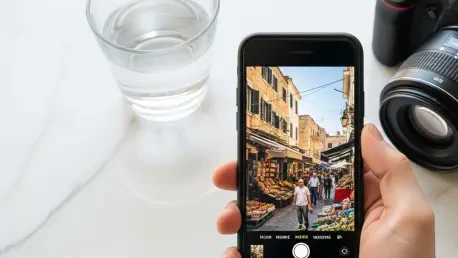
The tension between high-gloss production and raw authenticity is one of the most fascinating challenges in travel marketing today because the more polished a brand becomes, the less relatable it often feels. While a professional video can set an aspirational tone, it is the shaky, handheld footage of a bustling street market or the unfiltered photo of a morning coffee on a balcony that actually convinces a traveler to book. These snapshots work because they are lived-in; they show the rumpled sheets of a real hotel bed or the candid chaos of a local festival rather than a sanitized, staged version of reality. For a brand to find balance, they must treat professional assets as the “vision” and user-generated content as the “proof.” When a customer sees a photo of a guest navigating a delayed ferry with a smile or a spontaneous video of a hidden alleyway, their internal filter for inauthenticity turns off. They aren’t being sold a dream; they are being invited into a real community where the experiences are tangible and the mistakes are part of the charm.
Social proof often lowers the barrier between a traveler’s curiosity and their final commitment to a trip. How does seeing a diverse range of peer perspectives help a destination appeal to niche audiences, and what shifts occur when a prospect places themselves inside a stranger’s experience?
When a traveler looks at content created by someone who looks like them or travels like them, a neurological shift occurs where curiosity transforms into a sense of belonging. Social proof acts as a digital word-of-mouth that reassures prospects that others have taken this specific leap and found it deeply rewarding. By showcasing a diverse array of guest perspectives—ranging from solo female travelers to adventure seekers on a budget—a brand signals that it truly understands and welcomes everyone, rather than just broadcasting to a generic demographic. This variety is crucial because it allows the prospect to mentally “rehearse” the trip, placing themselves inside a stranger’s video of a sunset or a review of a local eatery. Once that psychological barrier is lowered, the destination is no longer just a dot on a map; it becomes an accessible reality where they can see their own travel style reflected and validated.
Repurposing guest content without proper attribution or consent can quickly damage brand trust. What practical steps should hospitality groups take to ensure a reciprocal relationship with their community, and how does public validation through branded hashtags keep travelers engaged with a brand over time?
Building a content strategy on the backs of your guests requires a foundation of absolute respect, as repurposing content without consent can undo years of brand-building in a single moment. Hospitality groups must treat the relationship with their community as a reciprocal exchange where the traveler is not just a source of free material, but a valued storyteller. When a brand asks for permission and provides clear attribution, they are publicly validating that guest’s experience, which creates a powerful incentive for that traveler to stay engaged and continue sharing. Branded hashtags serve as the architectural backbone of this relationship, creating searchable, live archives where authentic stories live forever rather than disappearing into a feed. This strategy transforms a one-time guest into a long-term advocate who feels seen by the brand, fostering a loyal community that is far more valuable than any one-off marketing campaign.
Beyond simply reposting a photo, many brands are now integrating guest galleries and live archives directly into their booking flows. Could you walk through a step-by-step audit to help an organization identify if their current content mix is too focused on sterile, polished assets?
To determine if a brand’s content mix has become too sterile, the first step is to perform a visual audit of every owned channel, from the Instagram feed to the main website landing pages. An organization should look at the ratio of professional stock photography versus images that feature real people having unscripted, organic experiences. If ninety percent of your imagery features models in perfectly lit rooms, you are likely failing the authenticity test. The second step is to look at the booking flow itself; if a traveler reaches the “reserve” button and only sees high-res renders of a room, they may feel a sudden spike in skepticism. A successful audit identifies opportunities to inject guest galleries or live social feeds at these high-friction points to reassure the buyer. Finally, analyze the engagement—if your polished campaign posts are getting fewer comments and saves than a simple guest repost, it is a clear signal from your audience that they crave the human element over the corporate one.
Content creators with followings between ten and fifty thousand often maintain deeper trust with their audience than traditional celebrities. Why is it vital for brands to resist over-directing these partners with scripts, and how can they provide context without sacrificing the creator’s organic voice?
Micro-influencers in the ten to fifty thousand follower range represent a unique “editorial layer” of user-generated content because their audiences follow them for their specific, trusted perspective rather than just their aesthetic. When a brand hands a creator a rigid script, they immediately kill the very thing that makes that creator valuable: their organic voice. Travelers can sense a transactional celebrity partnership from a mile away, but they trust a micro-influencer whose journey they have followed for years. Brands should provide these creators with the necessary context—the key values of the property or the history of the location—but then step back and let the creator tell the story in their own way. The goal is to facilitate a genuine experience that feels like a recommendation from a friend, which is only possible when the creator has the freedom to be honest about the small details that made their stay special.
Measuring the ROI of content that is not produced in-house can be a persistent challenge for performance marketers. What specific metrics, such as engagement rates or customer acquisition costs, prove that community-led content is more effective than traditional paid media?
While community-led content might seem harder to track than a traditional ad, the metrics actually reveal a much more compelling story of efficiency and trust. We consistently see that engagement rates on user-generated content outperform branded assets across every major platform because people are naturally more inclined to interact with a peer than a corporation. Furthermore, embedding guest photos on product and booking pages has been shown to directly improve conversion rates, as it provides the final piece of social proof needed to close a sale. From a performance standpoint, customer acquisition costs often decrease when organic content takes over the heavy lifting, reducing the constant need for expensive, high-production paid media. Even brand sentiment, which can be tracked through social listening tools, tends to rise in direct proportion to how often a brand highlights its actual community, proving that the ROI of trust is both measurable and sustainable.
What is your forecast for the role of user-generated content in the travel industry?
In the coming years, I believe we will see user-generated content move from being a “secondary” marketing tactic to becoming the primary philosophy of how travel brands communicate. We are moving toward an era where the most enduring brands won’t be the ones with the biggest production budgets, but the ones who have fostered the most loyal and vocal communities. I forecast that the line between “marketing” and “community management” will continue to blur, with brands increasingly acting as curators of real-world experiences rather than just broadcasters of polished dreams. Trust cannot be manufactured in a studio anymore; it has to be earned story by story, and the brands that embrace the beautiful, messy, and unfiltered reality of their guests’ journeys are the ones that will win the next generation of travelers.